Tracking Calories and Workouts Together When You and Your Fiancé Live Apart
Long-distance couples need separate logs paired with one shared accountability layer.
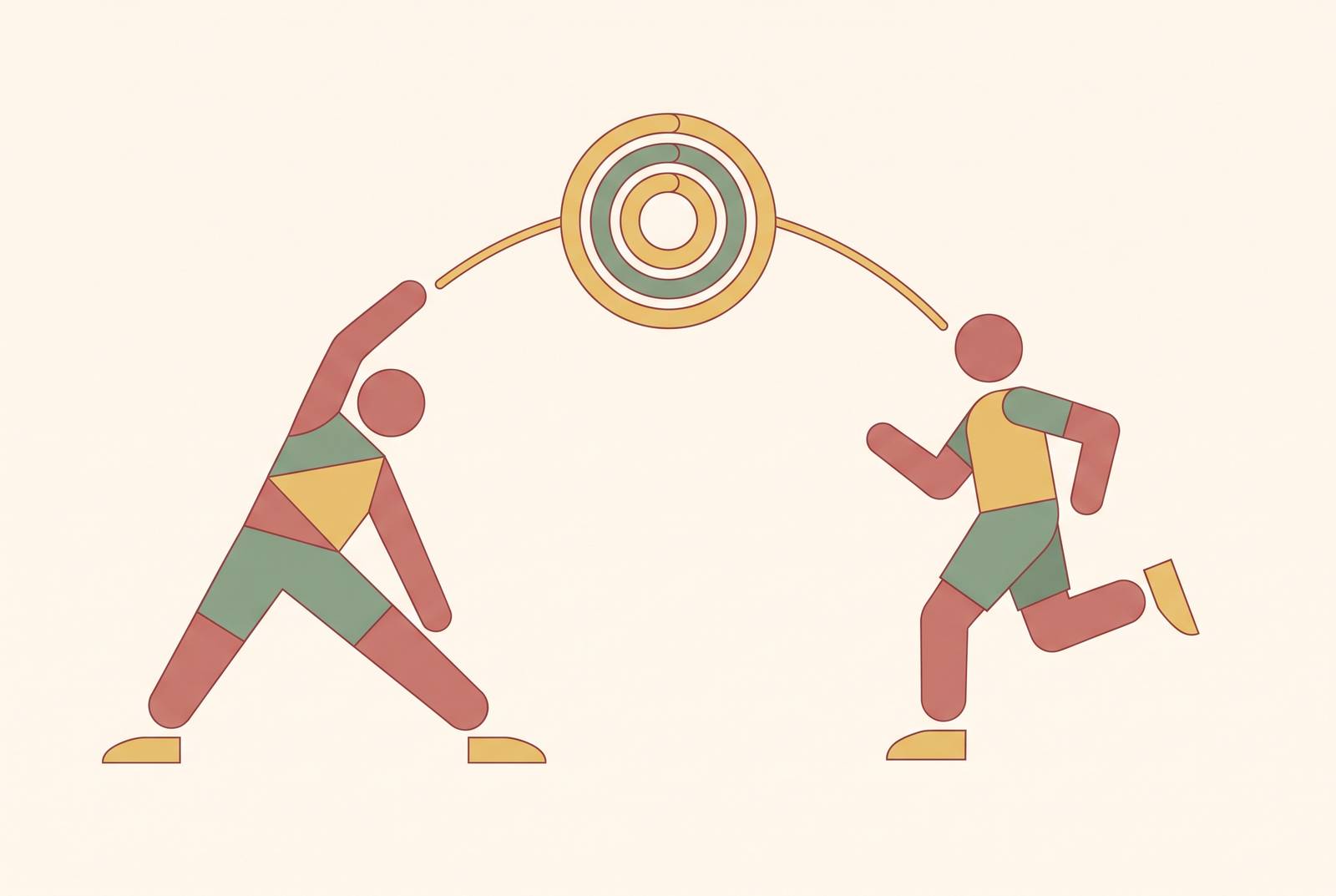
Tracking calories and workouts with a partner gets complicated fast when that partner lives in a different city from you. Most fitness apps are built for one person, one goal, one phone, and that setup breaks the moment two people with different bodies, different schedules, and different training goals try to build one shared habit across two addresses. The fix is a system with two layers: individual logs underneath, and a shared accountability layer on top. That's the short answer. The rest of this comes down to why that structure matters and which tools actually deliver it.
Start with the kitchen. Calorie tracking leans on convenience features like shared meal logging and recipe splitting, but those only work if both people are cooking the same dinner in the same kitchen. Long-distance couples aren't. Each partner needs an individual calorie target based on their own body and their own goals, so the "shared meal" features that make couples nutrition apps look appealing on the App Store are mostly beside the point.
Workouts have their own version of the same problem. No shared gym floor means no one glancing over to check your form, no one to spot you on a heavy set, and none of the natural check-ins that happen when two people train in the same room. A couple who used to catch a 6 a.m. class together now has two separate 6 a.m.'s, in two separate gyms, with nothing connecting them unless they build that connection on purpose.
None of this comes down to willpower. It's an infrastructure gap. The tools most couples default to were built for a household of one, not two people trying to run a shared fitness habit out of two separate addresses. Closing that gap takes a system built for two households acting like one: individual logs for the parts that are genuinely personal, and a shared layer for the parts that need to stay visible to both people. That's the architecture the rest of this guide builds out.
How a partner's involvement raises the odds of sticking with a routine
The case for building a shared system is a real, measurable gap in outcomes, not a nice-to-have.
The mechanism behind it is social cost: a promise made out loud to another person is harder to break than a private intention. Quitting a workout is easy when it's a private intention you can quietly let slide. It gets a lot harder when quitting means walking back a promise you made out loud to a specific person. That's the lever a good shared system pulls. It turns "I should probably work out today" into "Sam is expecting to see my session logged tonight," and the second version is a lot stickier.
Logistics alone don't drive that stickiness. A shared spreadsheet full of numbers doesn't root for you. A person does.
That's also why something as small as a workout photo sent at 7 a.m. carries more weight than it looks like it should. Relationship researchers call this kind of small gesture a "bid for connection," a tiny signal that says someone is thinking of you and here's proof they're trying. Apps like Sweatmates, built around shared photo check-ins and weekly recaps, turn that signal into the actual accountability layer, and this helps most when partners are in separate cities with no shared gym floor to lean on. Treat the photo as a connection bid instead of a box to check, and the whole system starts to feel less like homework and more like a running conversation.
The two-layer system: individual logs underneath, a shared accountability surface on top
The system that works across two cities pairs individual logs with a shared layer sitting on top. Layer one is personal. Nobody's forcing a 5'2" runner and a 6'4" powerlifter onto the same calorie number, because that was never going to work anyway.
Layer two is shared. This is the surface both partners can see: a weekly goal, a photo feed, a friendly wager, a streak counter. The architecture that works at distance pairs each partner's individual calorie and workout logs, with their own targets and their own data, with a lightweight shared layer of weekly goals, streaks, photo proof, or wagers that builds social accountability without forcing identical routines. Tools like Sweatmates are built around exactly that separation: each person owns their own effort, but both see the surface that turns quitting into letting down someone specific.
The two layers need to stay loosely connected, not welded together. Sessions completed, streak days, minutes moved: these are the fair currency for a shared system, because they hold up across different bodies, different sports, and different starting points. A guide to couples fitness competition from Flamme identifies effort metrics as the fairest default for exactly this reason: any kind of movement counts, and the measure stays fair no matter how different the two training styles are.
The shared layer needs to feel supportive, not like surveillance. The goal is connection. A partner double-checking whether the other hit their calorie number is doing something very different from two partners celebrating a completed week together, and that gap decides if the system feels like a team effort or an audit.
Workout accountability at a distance: apps that make the shared layer feel real
If you're trying to track workouts across two cities, you need the shared layer to feel real day to day, so a tool both people will open without being nagged beats a feature-packed app that needs calendar coordination neither of you has time for.
Sweatmates: Partner Fitness, available on the App Store for iOS and on Google Play as Sweatmates: Couples Fitness, leads this list because it's the most clearly built for distance out of the primary-sourced options here. The setup is straightforward: set a weekly workout goal together, log each session with a photo through SweatCam, and your partner sees it the moment you post it. Miss the weekly goal and you owe a small wager, like buying dinner or taking on a chore. Hit it and you're off the hook. Sweatmates logs that a workout happened, not the details of what it was, so there's no duration tracking, no exercise type, and no intensity data. Couples who want a detailed training log should pair it with a second app for that purpose. One user also flagged some discomfort with the app's dual-camera requirement (front and back) at a public gym, which is worth knowing before relying on it as your only workout camera.
FitWithLove: Couple Workout, on Google Play, takes a different approach: guided partner workouts that need no equipment, with calorie tracking per person built in after every session, streak tracking, and more than 30 achievement badges spread across six categories, including ones called "Week Warrior" and "Calorie Legend," plus completion certificates. A September 23, 2026 update redesigned the home, achievements, and history screens, added a streak card to the home screen, brought in a Calories per Day history view with a four-week trend chart, and expanded the app into eight languages.
Edge, a UK-based app reviewed in July 2026, takes a third approach: instead of putting both partners on one shared program, it builds a separate personalized plan for each person based on their own level and goals. That makes it a strong fit for couples with mismatched fitness levels or different training styles, say, one who runs and one who lifts, who still want a shared accountability surface tying it together. It's most active in the UK market.
Layering in some light competition on top of any of these tools can push consistency even further. A framework from Flamme suggests challenges like "most sessions logged," a "sunrise club" for whoever gets in the most workouts before 9 a.m., or a cooperative mode where both partners work toward one joint weekly total. All of these run on the same effort metrics, so they work exactly as well across two cities as they would across one living room.
Calorie tracking at a distance: separate kitchens, separate goals, one shared system
Calorie tracking across two kitchens works differently than it does in one. The shared-meal logging features that make a lot of couples nutrition apps attractive barely matter when both people are cooking and eating separately. Instead, you need each partner to log accurately and both to see it.
That shift actually simplifies things. At a distance, there is no shared plate to begin with, so individual logging is the whole workflow by default.
AI photo logging is what makes this practical day to day. PlateLens has been noted as a strong performer in recent calorie tracker testing for couples and families, and its dual-account testing was run across real households. If you're a long-distance couple, you'll lean on its individual photo logging and separate profile setup more than its shared-meal feature, since each of you is photographing your own plate independently anyway.
If you want more clinical-grade nutrition data and don't mind logging independently, Cronometer Gold suits you, since each partner can track on their own account at a high level of accuracy. Lose It! You get the lowest-barrier way into a combined nutrition and workout system, even if its accuracy and feature depth don't match the dedicated nutrition apps.
None of this requires picking one app that does everything. A couple can log calories individually in whichever app suits each person's needs and share only the result, a simple "hit my goal today," through their workout accountability app or a plain text message. The shared layer just needs the outcome, not every data point.
Setting up the system together before relying on it separately
You build this system best as a joint project before it ever becomes two separate habits running in parallel. Whether the shared layer holds up past the first couple of weeks comes down to the setup conversation, not which app either partner downloaded.
Start by agreeing on effort metrics instead of outcome metrics. The prize was never really the point. The weekly reset is.
It also helps to decide on the photo ritual up front instead of improvising it later. Naming that ritual in advance turns it into a habit the two of you built together, rather than an obligation one partner feels stuck enforcing. Along the same lines, decide ahead of time what a missed week actually means. Most of these apps offer a free trial, so pick one week to test a tool together before paying for it, treating that trial less as a product test and more as a practice run for the ritual itself.
None of this needs to be perfect on the first attempt. The system holding up over months comes down to how easy it is to restart after a rough stretch, not how smoothly it launched.
Where the system can collapse
Two failure modes tend to sink a long-distance tracking system. The first is structural: one partner stops logging, and the shared layer goes quiet. The second is quieter but just as real: tracking stops being about connection and starts feeling like pressure.
Structural collapse looks like this. If one partner falls off for a week, the other has nothing to respond to, so the system quietly turns into solo tracking with a few extra steps nobody's using anymore. The fix is the weekly reset built into the setup conversation from the start, the one that treats a missed week as a check-in instead of a verdict.
The surveillance risk is subtler, and it comes down to intent more than feature set. A partner checking whether the other hit their calorie number is doing something fundamentally different from two partners celebrating a completed week together. The shared layer should be set up to surface effort and connection, not to hand one partner a second audience for a private struggle. This isn't an abstract concern, either: one gender-focused study on long-distance couples found that women in particular tend to lean on more collaborative and pressurizing strategies when trying to influence a partner's health. Encouragement works better than monitoring, no matter which partner is doing the monitoring.
Long-term, goal-driven calorie tracking can turn compulsive for some people. The way around that isn't to avoid tracking altogether, but to track with a clear purpose and a defined end point, then ease off once that purpose is served. The system is there to support the relationship, not replace it.
Life also doesn't hold still, and the system needs to bend instead of break when it doesn't. An injury, a stretch of heavy work travel, a shift in priorities, any of these can throw off one partner's goals without needing to throw off the whole setup. Individual logs are easy to pause. The shared layer, a weekly photo, a standing wager, a quick check-in, can keep running at a lower intensity without either person feeling like they've quit on the other.
That's really the throughline here. The workout photo and the meal log are small touchpoints in the relationship, bids for connection showing up in a slightly different form, and treating them that way is what keeps the whole system sustainable over the months before the two cities become one. The job of any of this is to make two people, living apart, feel a little less alone in the routines they're each building on their own.