Pre-Wedding Fitness Milestones to Celebrate Remotely
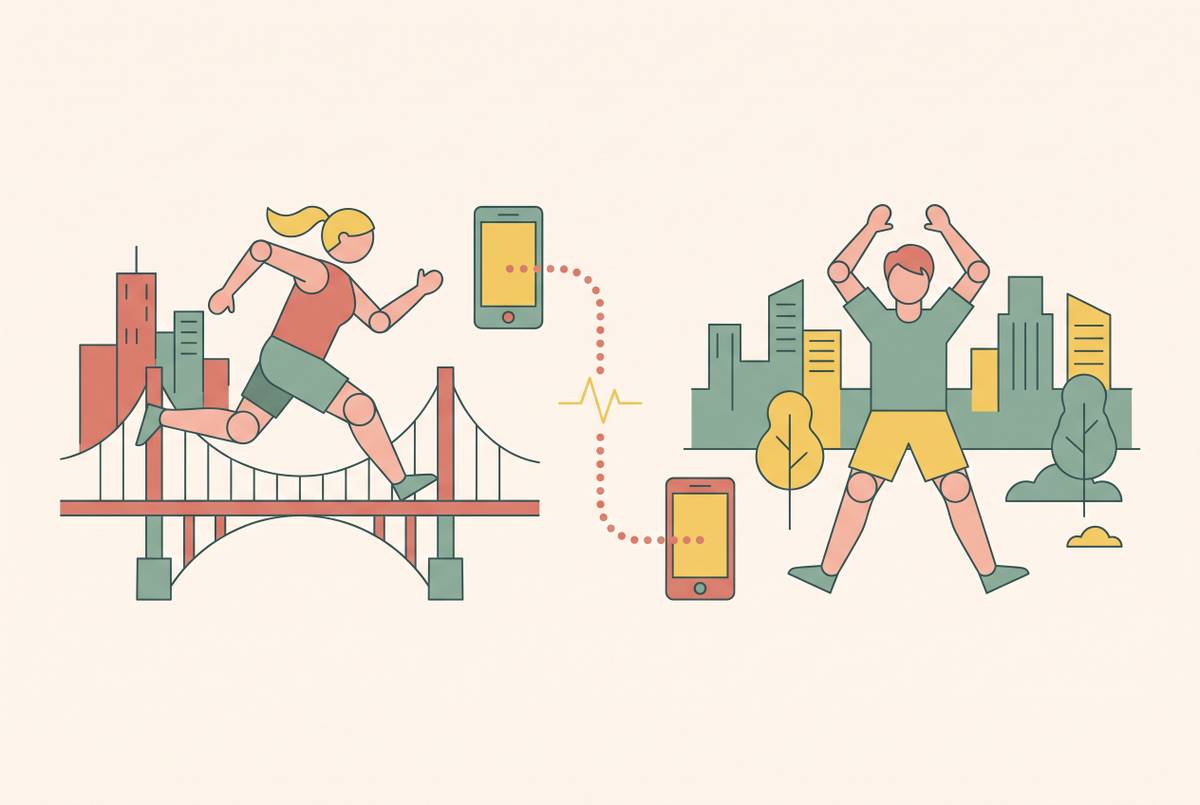
Remote supporters can celebrate pre-wedding fitness wins without being in the same room.
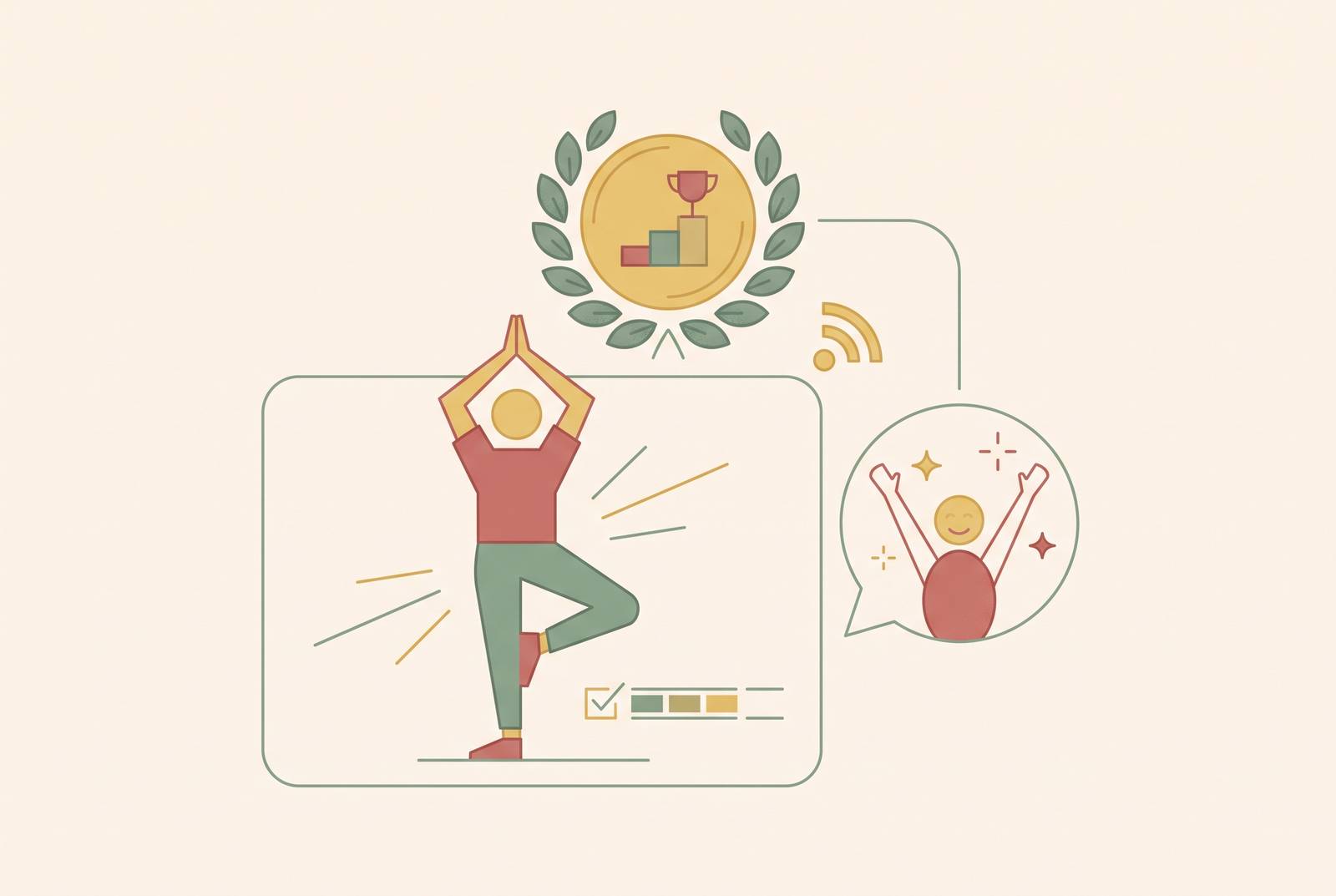
Wedding fitness culture is finally dropping the "shred for the dress" script. What's replacing it is something less punishing and more useful: a six-to-twelve-month stretch full of small, real wins, spread out across a couple, a bridal party, and a support network that's often scattered across three time zones and a group chat. The problem isn't motivation. It's that nobody built a format for celebrating a milestone when half the people who care about it live somewhere else entirely.
That gap matters more than it sounds. Wedding planning is legitimately hard on people. Engaged couples report leaning on each other constantly to get through it, and guest lists alone rank as the single most stressful part of the whole process for a huge share of brides. Fitness milestones happen inside that pressure cooker, for both partners, not just the one in the dress. A milestone nobody names is just a hard week you survived. A milestone somebody celebrates becomes part of the story you tell later.
How the pre-wedding fitness timeline creates natural celebration pegs across six to twelve months
Many trainers recommend starting six to nine months out. Start at twelve, and you've basically been handed a gift that most engaged people waste by procrastinating until month four and panicking. The length of the runway is what determines how many milestone moments actually exist to celebrate, so a longer runway isn't just "more time to work out." It's more chances to mark progress.
The timeline breaks into phases, and each phase transition works as its own milestone:
Months twelve through nine are about habit, not transformation. This is the build phase: figuring out what routine actually sticks, what time of day works, whether the gym near the venue-planning coffee shop is any good. Months eight through five are the strength phase, where compound lifts (squats, deadlifts, overhead presses) do the heavy lifting on body composition. Months four through two shift into toning and silhouette work, tailored to how a dress or suit actually fits, and this is when the first fitting usually lands, typically two to three months out. The final eight weeks are the glow phase: cortisol management, mobility, Pilates, Zone 2 cardio like steady incline walks. Less grind, more polish.
Layered on top of all that are the social checkpoints wedding planners already build in: pre-wedding photos around seventeen weeks out, the dress fitting around twelve weeks, the engagement party around eight weeks. Remote supporters usually know these dates already. That's the built-in advantage: no one has to invent a reason to check in. The reason already exists on the calendar.
Frame the whole thing as a sequence of firsts, not a countdown. Firsts are what get celebrated. Countdowns just get survived.
The specific milestones worth naming and celebrating (organized by what they actually represent)
Not every milestone looks the same, and lumping them together flattens what makes each one worth marking.
Consistency milestones are the least visible and the hardest to sustain: a first full week of hitting every planned workout, a first unbroken month, a streak of fifteen-minute movement bursts squeezed between vendor calls. The "micro-movements" trend gaining traction now means even a short daily streak counts as real progress, not a consolation prize.
Strength benchmarks are concrete and easy to share: a first unassisted set of push-ups, squats, or deadlifts, or a personal record on any single lift. Ten extra push-up reps by the engagement party is a specific, nameable win. Group chats love a number they can react to.
Cardio milestones come with a built-in timestamp: a first race finish line that produces a screenshot the moment it happens. Cardio also does quiet work on stress. Thirty minutes of moderate daily cardio has been shown, per a Harvard Health study, to measurably improve stress resilience, so a full week of hitting that threshold is its own reason to celebrate, medal or no medal.
Scale-independent wellness milestones matter most precisely because no one can see them from the outside: a week of consistent quality sleep, a month of improved daily habits, a new resting-heart-rate low showing up on a wearable. These fit the broader shift toward wellness over weight, and they deserve just as much noise as anything measured in pounds or inches.
Fitting milestones carry emotional weight because they're already tied to a real event on the calendar. A first fitting that needs nothing but a standard hem is a genuinely big deal, one remote supporters understand instantly with zero fitness background required.
Nutrition milestones are quiet but hard-won: a first full week on an 80/20 eating approach (trainers put roughly 80 percent of the wedding "glow" down to nutrition and hydration, not workouts), a real switch to complex carbs like quinoa and sweet potatoes, a stretch of hitting two litres of water a day, consistently.
None of these should get treated as a warm-up act for a scale number. If weight comes up at all, it's one data point among many, not the boss battle everyone's really working toward.
Simple ways remote supporters can actually celebrate these moments when they happen
Some milestones need to be celebrated right now. Others can wait a few days for something more planned. Knowing which is which saves a lot of wasted effort.
For anything time-sensitive, react fast: a flood of voice notes and video clips in the group chat within an hour of the milestone beats a beautifully produced tribute two weeks later. Timing a small gift to arrive on fitting day or race day, so there's something to unwrap on a video call, works the same way. Speed is the whole point.
For milestones with a lead time (a month of consistency, a phase graduation), a planned virtual hangout earns its production value: a toast over video, a shared cooking or cocktail class, a group order-in dinner where everyone eats on camera at the same time. Low effort, genuinely high connection.
Then there's the ongoing stuff that isn't a single celebration so much as a structure: a dedicated thread just for fitness wins (kept separate from the seating-chart chaos), small playful wagers tied to hitting the next phase (a coffee, a playlist, a handwritten card on the line), a photo shared the moment someone finishes a first run or walks out of a fitting that actually fits. A photo, oddly, often lands harder than any stat ever could.
And when the couple wants to reward themselves, remote supporters can chip in on something non-food: a massage, a new piece of gear, a small wellness treat. This kind of reward reinforces the habit without tangling it up with food.
The goal in all of this: make the person feel seen, not graded. "You showed up every single day this month" lands completely differently than "you're almost there."
How virtual fitness challenges let a remote bridal party share the journey, not just watch it
Celebrating someone's milestone and sharing in it are two different things. A group challenge means the bridal party isn't just cheering from the sidelines, they're also logging miles, also hitting their own small wins, also getting cheered back. The couple stops performing for an audience and starts being part of one.
A few formats hold up well across time zones. Relay challenges have team members take turns logging miles toward one shared target, so every single contribution is visible and needed. Collective distance challenges pool everyone's mileage into one running total, the kind of setup where a group can "walk" the length of a famous trail without anyone leaving their own neighborhood. Points leaderboards reward steps, minutes, and bonus activities like a yoga session or a new PR, which keeps things fair across wildly different fitness levels.
Team formats build camaraderie and chase one big collective number. Individual formats reward personal growth without turning the whole thing into a competition nobody signed up for. A bridal party with a marathoner and someone who just started walking regularly probably wants a bit of both, not one or the other.
Streaks, percentage improvement over a baseline week, tiered levels people "graduate" through at their own pace, these mechanics all exist specifically to make consistency visible, not just outcomes. Couples training together, even asynchronously, across different cities and different sleep schedules, build shared effort during the exact stretch when everyone's patience is thinnest. Apps like Sweatmates, a shared fitness tracking app for partners, let two people log workouts separately while staying connected through photo check-ins and weekly recaps. Shared effort has a way of doing that, especially during the exact stretch of planning when everyone's patience is thinnest.
Apps and tools that make remote milestone sharing practical in 2025 and 2026
The wearable market has been climbing fast, projected to hit 431.8 million units by 2024 with a compound annual growth rate of 11.7 percent from 2020 to 2024. All that heart-rate, step-count, and sleep data is the raw material milestones are increasingly made of.
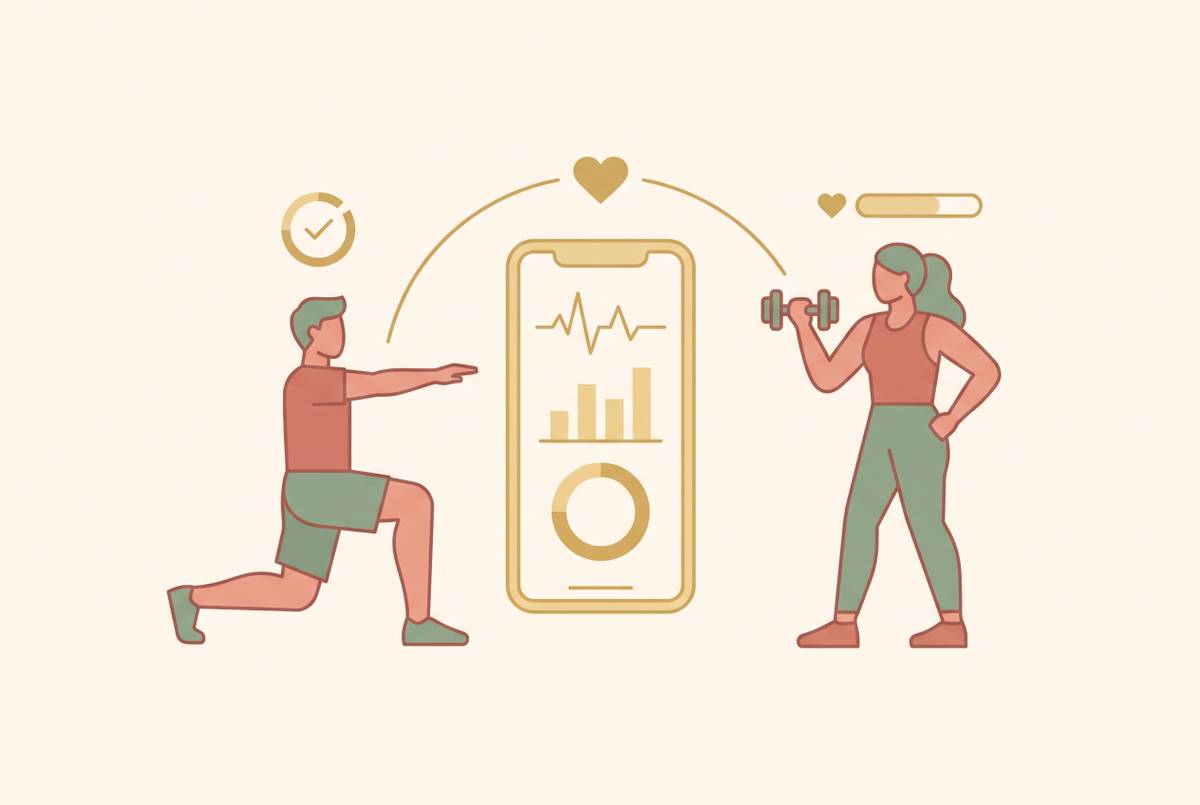
A handful of apps are built specifically around this window. Bridal Body centers on a wedding countdown with an AI coach tracking goals, macros, cycle data, water intake, and daily habits, plus weekly summaries and private progress photos that sync with Apple Health, plus a Bridal Week section that unlocks seven days out. Bridal Fitness by Anna D runs on a countdown calendar too, offering either a twelve-week full-body bootcamp or a four-week sculpt track, with the phase switch itself acting as a milestone. The Bridal Fitness Coach app connects to Apple Watch, Fitbit, and Withings for instant syncing, though at least one user review flagged pricing that one user described as steep per month, worth knowing before signing up. Bride Fit App leans into team support directly, with shared training plans, progress photos, and syncing across Garmin, Fitbit, MyFitnessPal, and Withings, which makes it one of the more naturally remote-friendly options on this list.
Outside the bridal-specific space, Some apps in this space adjust workout intensity based on daily stress and sleep data, which makes them a solid fit for anyone whose week just got hijacked by a vendor emergency. The app bends around a chaotic week instead of demanding perfect adherence to it.
AI fitness app adoption is growing at a 17 percent annual rate, and digital fitness adoption overall has grown more than 30 percent since 2021. The tools exist. The tracking exists. What's usually missing isn't another dashboard, it's a simple structure, shared goals, visible progress, a little bit of playfulness through wagers and photo-sharing, that turns solo tracking into something a whole relationship actually shows up for.
Making the celebration feel real when the people who matter most aren't in the room
A wearable can surface a new resting-heart-rate low in its data. An app can flag a full month of consistency without anyone lifting a finger. None of that decides, on its own, that the moment is worth celebrating. Someone still has to make that call, and that decision is the entire difference between data sitting quietly in an app and a milestone that actually gets marked.
Naming a moment out loud does something specific: it turns private effort into a shared story. It reminds the couple that people are paying attention, in a way that supports rather than pressures. That's a small distinction with a big effect.
A few things worth holding onto through all of this. Celebrate the showing up, not just the outcome, since a month of consistent workouts deserves the same noise as a fitting milestone. Simple and fast beats elaborate and late, every time, a voice note sent within the hour outperforms a video call scheduled two weeks out. Let the couple decide what actually feels meaningful to them, rather than supporters imposing their own idea of what counts. And shared habits hold up better than isolated ones: a bridal party running a collective step challenge isn't cheering from the sidelines, it's actively helping someone stay consistent.
The best system in any of this was never going to be the one tracking the most numbers. It's the one the couple, and the people around them, actually keep coming back to.