Friendly Fitness Wagers Between Engaged Couples
Couples who exercise together show stronger relationships and better results with a playful wager.
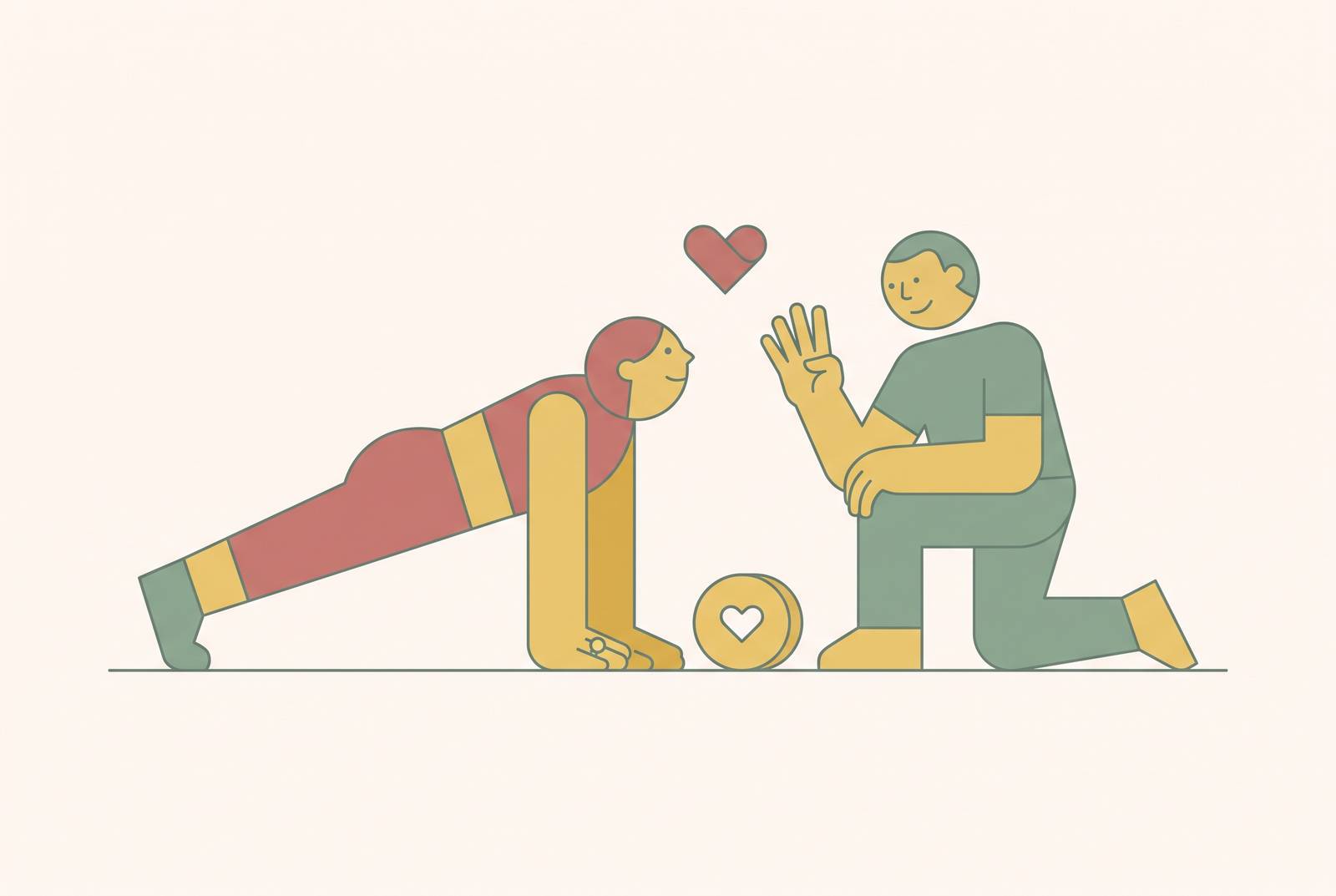
Engaged couples plan a wedding together. They also, increasingly, put money or chore duty on the line to get each other to the gym. That's the whole idea behind a friendly fitness wager: a small, low-stakes bet that turns "we should really work out more" into something that actually happens, week after week, without turning the relationship into a competition or the wedding into a weigh-in.
The engagement period comes with a built-in deadline, and deadlines are motivating right up until they're not. A wedding date gives couples a reason to get moving, but it can just as easily curdle into pressure, dress anxiety, and crash dieting. Fitness experts who work with pre-wedding clients generally recommend starting a real plan three to six months out, long enough to build an actual habit instead of a two-week panic. And the bridal fitness conversation heading into 2026 has shifted away from a number on a scale and toward something less punishing: feeling strong, feeling calm, walking down the aisle without dread. Working out together has become one of the more popular ways engaged couples bond while everything else about wedding planning turns into a spreadsheet. The habits built now, while cake tastings and seating charts eat every weekend, are the habits that quietly become the marriage's default setting. That's the real stake here. Not the wedding day. The Tuesday morning eighteen months from now when going for a run together is just what you do.
What research shows about couples who exercise together
Start with the mood data, because it's the most immediate. Research on couples who work out together points to benefits beyond fitness itself, with shared exercise linked to more positive emotion and higher relationship satisfaction than solo training. That's not a small effect to wave off. It suggests the workout is doing double duty: building fitness and functioning as a relationship touchpoint at the same time.
Then there's the contagion effect, which is almost comically strong. If one partner is physically active, research suggests the other becomes substantially more likely to become active too. That's not gentle influence, that's closer to peer pressure with better cardiovascular outcomes. A study tracking 227 couples between the ages of 23 and 84 found that happier couples shared more joint health behaviors than their less happy counterparts. Correlation, not causation, sure. Nobody's claiming a shared gym membership fixes a shaky relationship. But the pattern holds up often enough to notice.
Nutrition tracking shows something similar: couples who log food together are 36% more likely to hit their health goals than people tracking solo. But "together" doesn't mean identical. Partners don't need to be doing the same workout, the same reps, the same anything, for the accountability to transfer. One person can lift weights while the other runs, and as long as they stay visible to each other, mention it, check in, the connection still counts. Which sets up the whole case for a wager pretty cleanly: if shared accountability already moves the needle on its own, a playful stake just gives that accountability a shape and a deadline.
The psychology behind why a friendly stake changes behavior
Here's the mechanism, and it's older than any fitness app on the market. Daniel Kahneman and a research partner's work on loss aversion found that losses hurt roughly twice as much as equivalent gains feel good, a later 1992 paper by the same pair pegged the ratio closer to 2.25. Translation: losing a given amount stings more than finding the same amount delights. That asymmetry is the entire engine behind commitment devices. Frame a goal as something you stand to lose, and the brain treats it with more urgency than the same goal framed as something to gain.
The size of the stake barely matters. What matters is that something, anything, is on the line. Research on commitment contracts has found that when people put their own money at risk, behavior gains tend to outlast the incentive itself. Straight financial rewards, with nothing at risk, produced only minor, short-lived bumps. Risk beats reward, at least when it comes to sticking with something.
For couples, there's an added layer: the Köhler effect, a documented pattern where people perform better on a hard task as part of a team than they would solo. Research in the Journal of Sport and Exercise Psychology found that training alongside a more capable partner boosted the less experienced partner's persistence, compared to training alone. But some lab research suggests external rewards can dampen internal motivation over time. But that finding comes from controlled lab settings, and it's not clear it holds the same way in a real relationship. There, the reward isn't really the dinner or the chore, it's not wanting to leave your fiancé standing alone at the gym door.
Why outcome bets backfire and behavior bets work
Picture the wager gone wrong. Somebody puts $500 on losing 20 pounds in three months. Three months later, they've lost 18. Close, genuinely impressive, and also a total forfeit, because the bet was written around a number instead of an effort. That person walks away demoralized instead of proud, which is precisely backward from what a wager is supposed to do.
The error is structural: an outcome goal (a number on a scale) instead of a behavior goal (showing up, moving your body on a schedule). Outcome goals get hijacked by things nobody controls, sleep, hormones, an injury, a brutal work month. Behavior goals don't have that problem. "Exercise 30 minutes, five days a week" is specific, measurable, and entirely within your control. "Exercise more" or "lose weight before the wedding" is neither.
This distinction matters even more for engaged couples specifically, because wedding-adjacent outcome goals (a dress size, a number on a scale) carry baggage that a step count simply doesn't. Tie a wager to weight loss and you risk turning a fun bet into a source of shame, which defeats the entire point of the habit-building window. Behavior bets also protect the relationship in a smaller, quieter way: losing a behavior wager means cooking dinner or doing the dishes for a week. Losing an outcome wager means feeling like your body failed a test in front of the person you're marrying. One of those is forgettable by Friday. The other isn't. The size of the stake is almost beside the point, the structure is what decides whether the wager helps or hurts.
What to wager, stakes that keep things playful rather than punishing
The rule of thumb: a stake should feel good to win and barely register as a loss. If either partner dreads losing, the wager has already stopped working.
Non-monetary stakes tend to be the easiest sell, especially given how much money engagements already burn through. A few structures show up repeatedly:
Dinner duty. Whoever misses their weekly goal cooks, or picks up the check at the restaurant. Chore swap. The loser takes on whatever household task the other person hates most. Experience points. The winner picks the next date night or weekend plan, no debate allowed.
Financial stakes work for couples who are genuinely wired to respond to potential loss, and there's a way to do this without it feeling adversarial: route the money into a joint savings goal, a shared "treat fund," or a cause both partners actually support, as long as the terms get agreed on ahead of time, not argued over after the fact. Some couples try anti-charity stakes, where the loser's money goes to a cause they personally can't stand. It works as a motivator, but it also carries more emotional risk inside a relationship than it does between casual friends.
And plenty of couples do better without any losing side. A positive-only structure, "if we both hit our goal this week, we treat ourselves," keeps the whole thing collaborative instead of adversarial. Whatever the format, build in room to renegotiate. Wedding planning gets chaotic, work gets chaotic, and a wager that can't flex around a brutal week isn't a game anymore, it's one more obligation on a to-do list that's already too long. The actual win condition, always, is showing up together. Celebrate that part as much as the leaderboard.
Setting up a wager structure that both partners can sustain for months
An engagement typically runs anywhere from three months to a year, which is plenty of time to build a real habit, but only if the wager is built for the long haul instead of a two-week sprint. Start smaller than feels necessary: a two-to-four-week trial round first, where both partners get a feel for what's realistic before locking in anything longer.
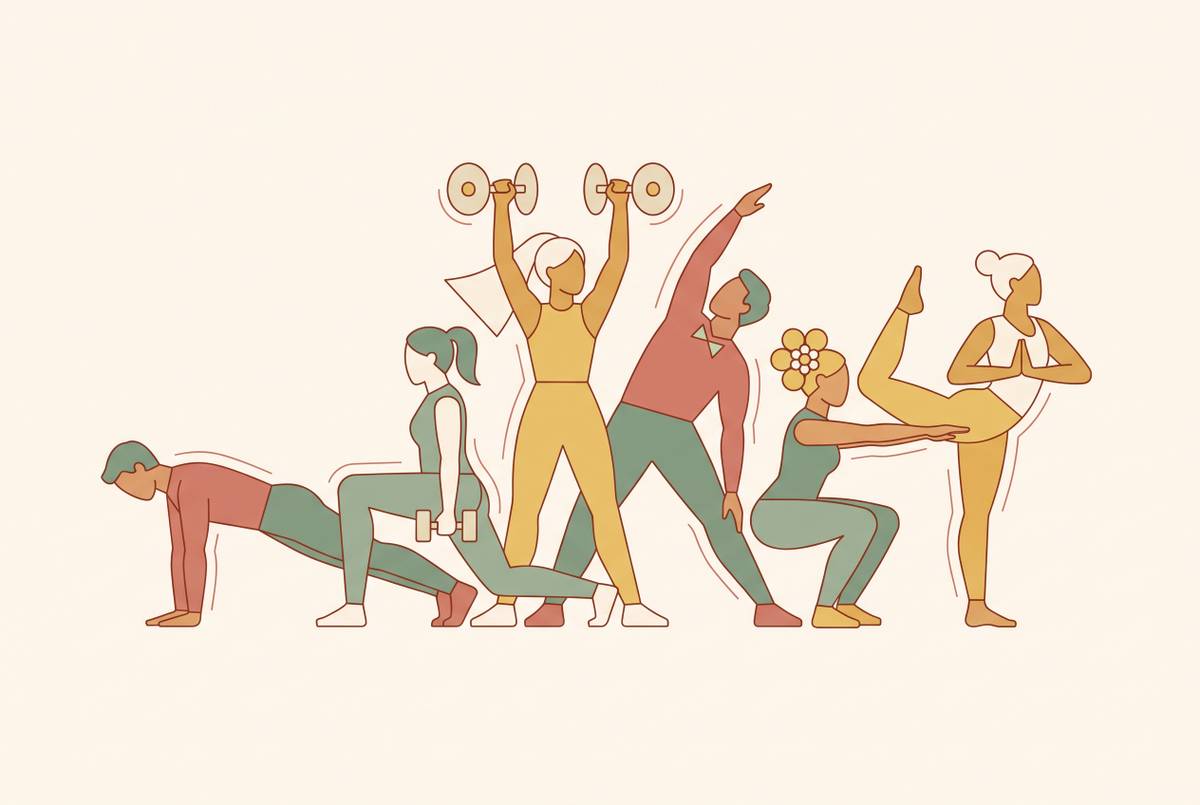
Weekly targets beat monthly ones almost every time. A missed week is easier to shake off and reset when the next scoring period starts in days. Fitness guidance generally points to a mix of strength, cardio, and flexibility as a reasonable baseline approach without demanding perfection from anyone.
Partners don't need matching goals either. One person wagers on 10,000 steps a day, the other on three strength sessions a week. Different targets, same shared thread. What keeps it alive over months is a short weekly check-in, five minutes, nothing formal, just a conversation covering what felt good, what felt like a slog, and any needed adjustment to the goal. Missing a week should trigger that conversation. The forfeit is the joke. The check-in is where the actual course-correcting happens. If the wager starts to feel like a chore with a penalty clause attached, it's built wrong, full stop.
Tools that make tracking a shared wager easy without turning it into a data project
The job here is visibility. Nobody needs a dashboard to know whether their fiancé went to the gym, they need a glance that confirms it happened. Some couples use a shared fitness accountability app like Sweatmates, which is built for partners tracking workouts together through photo check-ins, weekly goals, and friendly wagers, precisely because that kind of low-friction confirmation is the whole point.
For couples spread across different wearables and phone ecosystems, Stridekick syncs most major devices, Fitbit, Apple Watch, Garmin, so a step challenge doesn't collapse the moment one partner is on Android and the other's on iOS. Samsung Health's Together feature offers something similar for Galaxy Watch users, letting partners run shared challenges without needing matching hardware. On the lower-tech end, shared habit trackers like HabitShare or a joint Notion board let both people log a check-in and glance at each other's streak, which works well for anyone who likes a bit of gamified structure. StickK and Beeminder lean further into the financial-stakes model, with commitment contracts, manual reporting for StickK, and automated tracking through third-party integrations for Beeminder.
None of that requires an app at all, though. A whiteboard on the fridge with two columns and a stack of checkmarks does the identical job. Wearable tech has consistently ranked among the most prominent fitness trends heading into 2026, with smartwatches generating more data than most people know what to do with. For a couples wager specifically, almost none of that matters. Check only whether you both showed up this week. Everything else is noise dressed up as insight.
Where wagers help and get in the way
Wagers work best between partners starting from roughly similar fitness levels, or when the bet is built around behavior (showing up) rather than performance (running faster, lifting heavier). A big gap in ability can flip the whole thing sour fast. The Köhler effect gives the less experienced partner a real boost from training alongside someone stronger, but a very large gap in ability can flip that dynamic, turning motivation into discouragement instead.
Accountability has to feel like support, not surveillance. The moment one partner starts using the wager to score points, or to police the other's habits, it corrodes the relationship it was supposed to strengthen. A 2026 narrative review in Annual Reviews, synthesizing 39 systematic, meta-analytic, and scoping reviews across multiple health behaviors including physical activity, found that financial incentives on their own tend to produce modest, often short-lived change. The BE ACTIVE randomized controlled trial pointed to the same conclusion from a different angle: social connection plays a central role in sustaining behavior change.
For partners already wrestling with body image or wedding-related perfectionism, even a well-meaning wager can tip into something counterproductive. In those cases, a purely celebratory version, reward the showing up, skip the forfeit entirely, tends to serve better. And once a wager is no longer fun, the better move is to drop the bet while keeping the workout habit. The wager was never the point, just scaffolding rather than scripture. It's scaffolding, not scripture.
How the habit built now carries into marriage
The research keeps pointing at the same conclusion from different directions: close relationships are one of the strongest levers on behavior that exists. A partner who's active makes the other substantially more likely to become active too. The 227-couple study examined how couples share joint health behaviors across a wide age range, and that link only seems to compound the longer it runs.
Whatever gets built during engagement is the rough draft for what marriage looks like on a random Wednesday. The point was never to rack up wager wins, it was to build a rhythm that feels normal enough that nobody has to negotiate it anymore. A wager that quietly fades out after the wedding isn't a failure, either. If the couple is still lacing up shoes together six months into marriage, the bet already did its job and can retire with honors.
The Health & Fitness Association's 2025 survey found that 55% of Americans who set fitness goals for the year actually hit them. The engaged couples most likely to land in that group probably aren't the ones with the strictest spreadsheet, they're the ones who made moving together feel like a normal part of the relationship instead of a separate chore competing for calendar space. The real prize was never the free dinner or getting out of dish duty for a week. It's that working out together stopped being an event and just became a thing you do, the same way you already share a grocery list or a shared streaming watchlist. Shared habits hold up in a way solo resolutions rarely do, and showing up together deserves credit even on the weeks nobody's technically keeping score.