Fitting Workouts Into a Packed Wedding Planning Schedule
Exercise cuts wedding stress more than you'd think, even in short bursts.
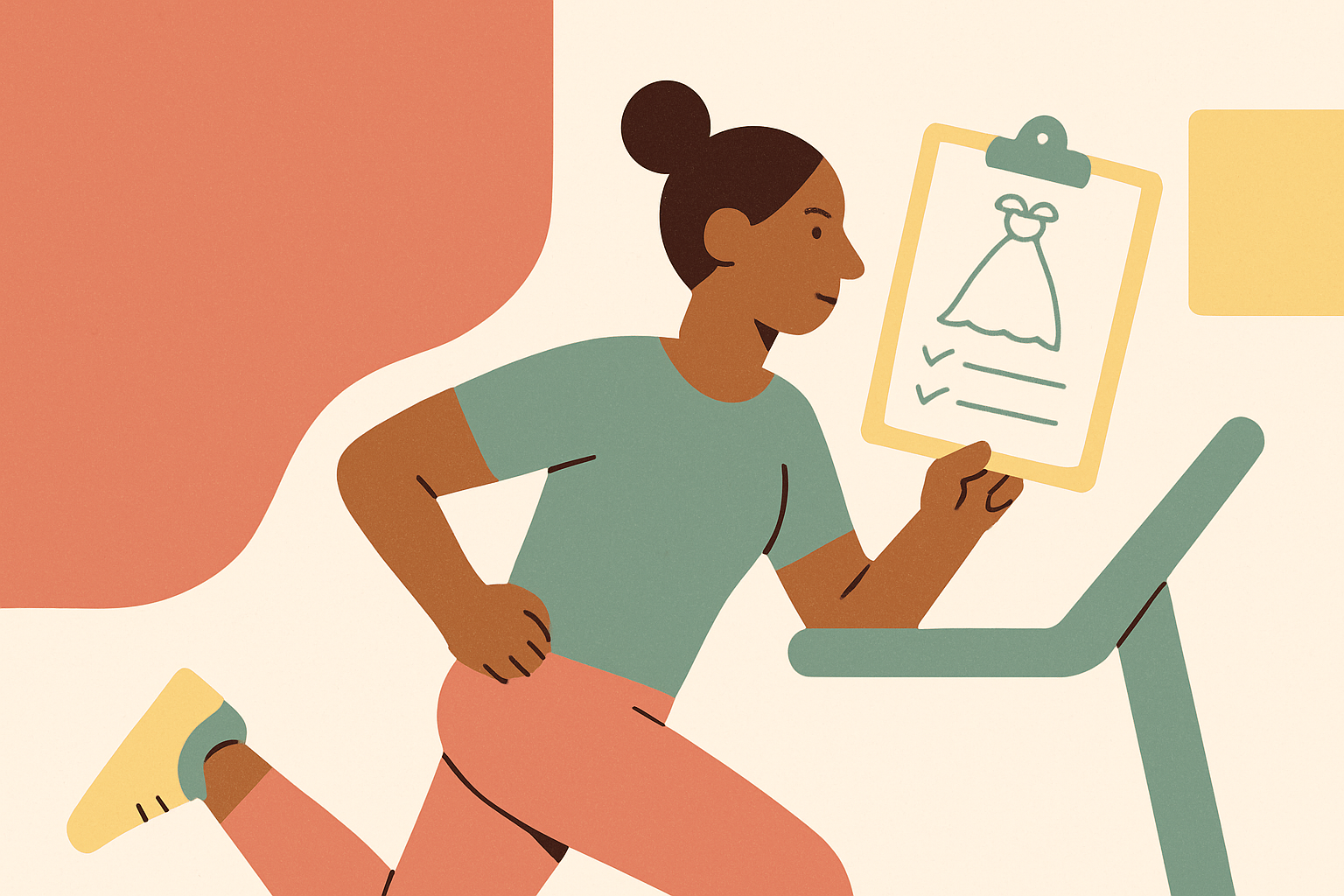
Wedding planning eats somewhere between 6 and 12 hours a week, depending on the engagement and how many vendors you're wrangling. The Knot's 2025 numbers put the average closer to 6 hours; older Minted data from around 2019 clocked it at 12 hours weekly, or 528 hours total across an engagement. Either way, that's a part-time job stacked on top of a full-time job, a relationship, and whatever scraps of a social life survive the process.
The average engagement now runs about 15 months, and 52% of couples start planning a full year out, per The Knot's 2025 data. That's a lot of runway, and also a lot of time for a checklist to grow legs and wander off on its own. Somewhere north of 150 individual decisions get made along the way, from napkin color to who gets a plus-one, and 96% of couples call the whole thing stressful. This isn't background noise you tune out over time, and it sits on your chest for over a year.
The workload isn't split evenly, either. In heterosexual couples, brides handle around 54% of the planning, grooms about 25%. That gap changes the whole "just work out together" conversation, since it lands differently depending on who's drowning in spreadsheets and who's mostly been asked to approve a seating chart.
Time and mental bandwidth are limited, full stop, so the fitness goal has to shrink to match reality. Forget the perfect training block; the actual win is just not letting movement disappear completely before the honeymoon.
What stress at this scale does to the body, and why that makes exercise more urgent
Cortisol connects almost everything unpleasant about pre-wedding stress. Your body releases it under sustained pressure and bad sleep, and it drives a lot of the bloating and skin flare-ups couples try to patch over in the final weeks with expensive facials and sudden juice cleanses. The skin issue traces back to a stress hormone, not the skin itself, which is why the facial rarely fixes it.
Here's the cruel part: the months couples need stress relief the most are the exact months they're most likely to drop their workout routine. Gym time gets cut first because it feels optional, right up until it turns out it wasn't.
That cost shows up on the wedding day itself. A 2024 survey of more than 3,000 Americans found 14% of couples felt too stressed to fully enjoy their wedding. That's not a day-of glitch; it's months of stress cashing the check on the one day it wasn't supposed to.
There's a brain-based case for exercise too, sitting right alongside the physical one. Research on regular physical activity points to measurable changes in how the brain processes stress and fear. It's not just burning calories; it's also quieting the part of your brain that's been on high alert since you booked the venue.
The real question isn't whether exercise helps, but how much you actually need, and the answer is less than you'd think.
How little exercise it takes to meaningfully manage cortisol during a stressful engagement
Thirty minutes of moderate exercise a day lowers cortisol, and a walk around the block does the job. You don't need a two-hour split routine with a foam-rolling cooldown to get there.
Consistency beats intensity, and by a wide margin. A clinical trial with 130 adults found that hitting the American Heart Association's target of 150 minutes of moderate-to-vigorous activity a week, sustained across a full year, produced real long-term drops in cortisol. Nothing dramatic happened in that trial. A boring year, sustained without heroics, is what got the results.
Yoga stands out from the pack here. A large meta-analysis covering 44 randomized controlled trials found yoga had the strongest cortisol-reduction effect of any exercise type studied. Twenty minutes on a bedroom floor gets it done, and no membership required.
HIIT and long, brutal cardio sessions work against you in the short term. They spike cortisol, and doing them too often without real recovery keeps it elevated instead of bringing it down. During an already stressful engagement, daily sprint intervals fight the exact goal you're chasing.
So skip the brutal gym session. Swap in something shorter and gentler, and it'll likely do more for your stress levels than the punishing version would have. Moderate and steady wins over occasional and savage, especially right now.
Why exercising together makes the habit easier to keep during a period that strains relationships
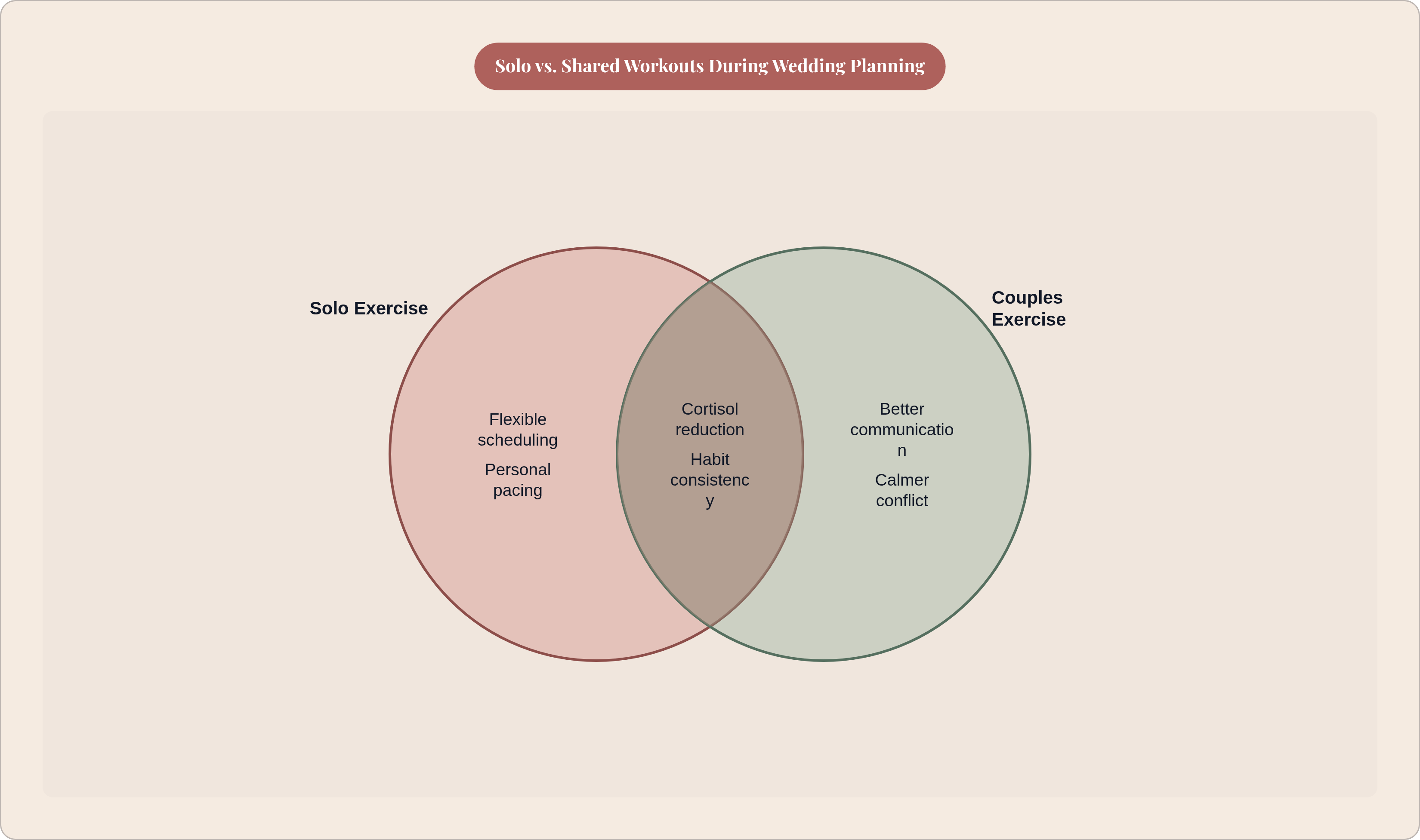
Doing this together is structurally more effective, not just nicer. A BYU study of nearly 1,700 young married couples found shared physical activity tracked with better communication, calmer conflict resolution, and lower marital stress, and the effect was stronger for joint workouts than solo ones. Walking was the most common activity reported, which should be a relief to anyone picturing a synchronized CrossFit routine in matching headbands.
A 2018 University of Aberdeen study found something similar from a different angle: partners who encouraged each other to stay active were far more likely to keep the habit going than people training alone. Encouragement carries most of that effect, well ahead of anything that looks like enforcement.
Couples who train together during the final crunch weeks report feeling more "in sync," a soft phrase that matters a lot when you're both exhausted and irritable about centerpieces. Bailing on yourself is easy, but bailing on someone who's already lacing up their shoes next to you takes a little more nerve.
Walking earns its own mention because it's almost embarrassingly practical: free, fits into odd pockets of time, no equipment needed, and it was the top joint activity in the BYU data. It also sets up the walking pad trend nicely, which comes up in a minute.
Shared intention is a fine starting point, but it still doesn't survive a calendar that's already full on its own, which brings up the real question underneath all of this: logistics.
Workout formats that fit inside 20–35 minutes without sacrificing the stress-relief benefit
Bridal fitness trainer Stephanie Thomas builds sessions that finish inside 35 minutes: usually 20 to 30 minutes of strength work, plus small bursts of movement scattered through the day. The goal is consistency, achievable without a twelve-week hypertrophy block nobody has time for anyway.
HIIT still has a place, oddly enough, given the cortisol warning above. Compressed 20-to-30-minute sessions deliver cardiovascular and metabolic benefits close to much longer workouts, which makes it a fair option on the weeks that go sideways. Just don't do it daily, and give it recovery days, because that's exactly where it stops helping and starts working against you.
Yoga and Pilates are the quiet workhorses here. Even short daily sessions engage the parasympathetic nervous system, the "rest and digest" counterweight to the stress response, and given yoga's standout cortisol numbers from earlier, these formats fit the final, most stressful month especially well.
Bodyweight strength work rounds it out. Push-ups, squats, lunges, no gym required, all under 30 minutes, done in the living room while a candle you bought for "ambiance" burns in the background and does nothing whatsoever for the ambiance.
Then there's the walking pad trend that took off in 2025. Set it to a 3% incline, answer vendor emails or scroll florist reviews while you walk, and daily movement shows up without a separate block of time carved out for it.
If a week turns genuinely ugly, 15-minute high-intensity bursts are the floor, not the ceiling. Even short sessions regulate cortisol, so on the weeks when nothing longer is realistic, fifteen minutes still counts as showing up.
And here's the part trainers keep saying that couples keep ignoring: roughly 80% of how a couple looks and feels before the wedding comes down to nutrition and hydration, only about 20% from the gym. That number alone should ease the pressure to chase a "perfect" training program and point some attention toward what you're actually eating together instead.
Using habit stacking to attach workouts to the planning routines couples already have
Habit stacking means bolting a new behavior onto a routine you already run, and it works. A 2025 study in the Journal of Applied Psychology found a notably higher success rate for habit-stacked routines versus standalone habits attempted cold.
For engaged couples, that might look like this. After the Sunday planning session, walk for 30 minutes before opening a single vendor email. After morning coffee, ten push-ups and ten squats before the day gets going. During venue research, the walking pad goes on.
The timeline actually works in your favor here. Habit formation takes roughly two months to settle in. Inside a 15-month engagement, that's nothing, as long as couples start now instead of waiting for a calmer month that never shows up.
Put the workout on the calendar with the same weight as a vendor call. A fixed entry, not a hopeful "if there's time" line that gets bumped every single week. Early morning tends to work best for a lot of couples, mostly because nothing else has claimed that slot yet.
Sleep deserves a mention too. If the only way to fit in a workout means sacrificing sleep at 11pm, it's worth asking whether the rest night is the better trade.
Separate workouts can still feel shared when schedules genuinely don't line up: a quick photo after a session, a simple weekly goal, a lighthearted shared goal around weekly workouts. This keeps it a joint effort without needing identical calendars.
What to do when planning intensity peaks and the routine breaks down anyway
The final month before the wedding is, across the board, the most stressful stretch of the whole process. Even one yoga class or one walk that week still delivers measurable stress relief, worth doing even when everything else has fallen apart around it.
Missing a week isn't quitting. Habit formation runs on a roughly two-month timeline, which means a habit you've already built comes back faster than a new one takes to form in the first place. Ten days off doesn't erase two months of consistency; it just means picking the thread back up where you dropped it.
Watch for the classic final-month trap: crash dieting or suddenly ramping up intensity to "catch up" before the big day. Both spike cortisol and undo the steady gains from the months before. The goal in the last stretch is maintenance, a steady hold rather than a heroic sprint to the finish line.
Couples who've treated this as a shared ritual, rather than a solo performance metric, have something concrete to come back to together. The stakes feel lower than starting from zero, which is a big part of why the shared-workout framing matters more than any specific exercise you pick.
A skipped workout is just data. It tells you something (too tired, day too packed), and it's not a referendum on your willpower or your character. What matters is the next small step, not the one you missed last Tuesday.
Some tools lighten the mental load of deciding what to do on a rough day. Apps that adjust workouts based on daily stress or sleep data can take the guesswork out of low-energy days, and shared tracking tools help couples stay consistent without adding much overhead to a wedding binder that's already three inches thick, Sweatmates, a fitness accountability app for couples built around shared workout tracking, photo check-ins, and partner nudges, is one option that works alongside whatever routine a couple already has.
The couple who manages three moderate workouts a week for six straight months shows up to their wedding in better shape, physically and relationally, than the couple who designed a flawless program and abandoned it by week three. Consistency carries the whole outcome, and it always does.