Avoiding Fitness Burnout in the Final Month Before the Wedding
Ease off hard training in the final month to let your body recover from wedding stress.

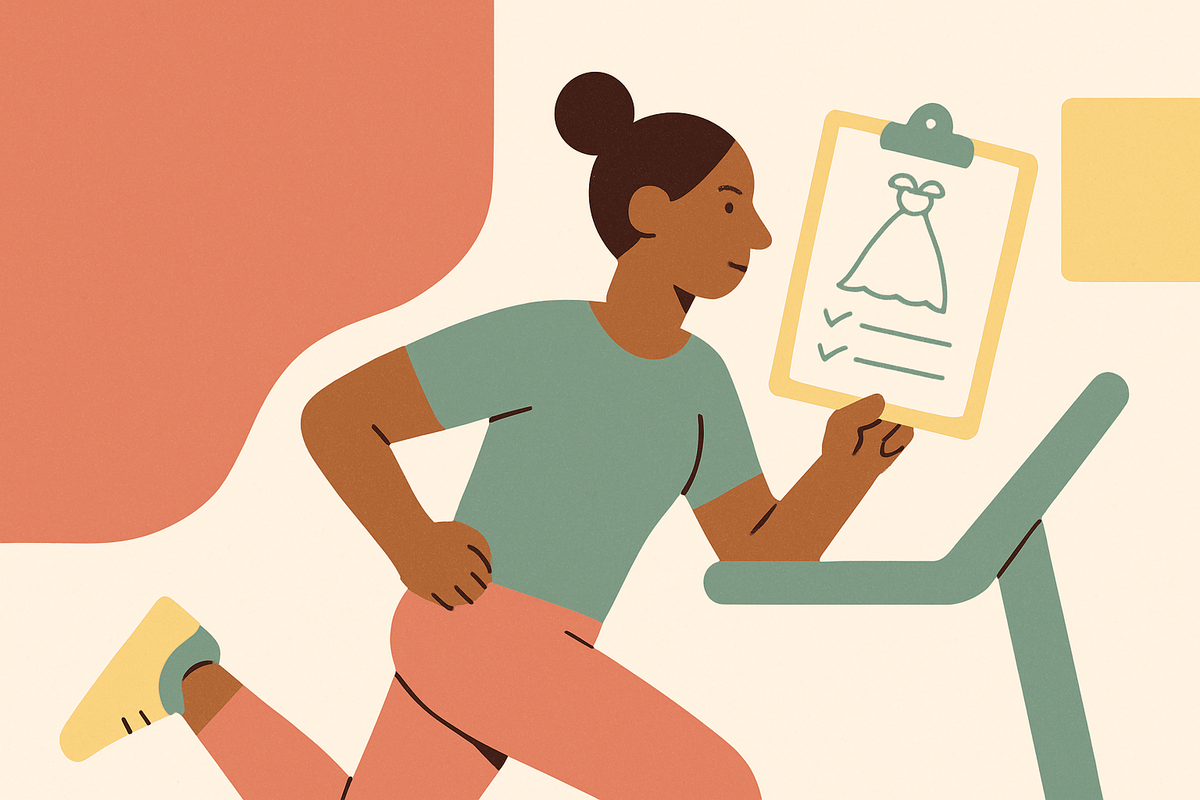
Weddings don't wreck people's fitness because couples train too little in the final month. They wreck it because couples train too much, at exactly the moment their bodies can least afford it. Roughly half of recently married couples name "making sure it was perfect" as their single biggest stressor, according to a 2025 Wedding Report survey, and most brides report feeling stressed before or during the big day itself. That stress is a physical reality. It's sitting in the bloodstream, and adding a harder workout on top of it is like pouring gasoline on a campfire because the campfire wasn't hot enough.
What happens in the body when training stress piles onto life stress
Overtraining happens when training load and life load add up to more than the body can recover from, according to NASM. Recovery stalls, then performance drops instead of climbing, which is the opposite of what anyone's chasing four weeks out.
Here's the mechanism. Chronic stress keeps cortisol elevated, and elevated cortisol changes how the body stores fat and gets in the way of muscle repair. The timing, in other words, could hardly be worse. Hard training works the same way in miniature: it tears the body down first, and the rest afterward turns that damage into strength. Skip the rest, and the tear-down just stacks up.
So picture what's already happening in the final month. Vendor calls, money stress, a sleep schedule that's fallen apart. All of that is already spiking cortisol before a single burpee gets added. Layer high-intensity training on top and the body isn't adapting, it's just absorbing more hits. Stress can also suppress the white blood cells that fight off infection, which means getting sick in the two weeks before the wedding becomes a real, physical possibility, not just bad luck. Escalating training in this window doesn't cancel out the stress. It adds to the pile.
How to recognize burnout and overtraining before they derail the final weeks
NASM defines overtraining syndrome (OTS) as a state where fatigue, dropping performance, and burnout show up together and persist despite rest. Burnout by itself tends to be mental, the sense of "I don't want to do this anymore." Overtraining is bigger: it drags in sleep, mood, and the body's actual physical output. The two feed each other, so once one shows up, expect the other to follow.
On the physical side, watch for soreness that hangs around for days instead of clearing up, a resting heart rate that's crept higher or takes longer to settle after a workout, and workouts that feel harder than they used to at the same weight or pace. Add in frequent colds, injuries that won't heal, appetite swings, or stomach trouble like reflux and bloating, and that's a pattern, not a coincidence.
Mentally, look for irritability, brain fog, or motivation that's quietly evaporated, where workouts start feeling like chores to dodge rather than things to look forward to. Trouble concentrating, trouble sleeping despite being exhausted, waking up tired anyway. All of it points the same direction.
Being tired after a workout is normal. Being tired all the time is the body sending a memo. NASM specifically lists a major life event as a risk factor for OTS, and it's hard to think of a bigger one than planning a wedding. None of this means stopping movement altogether. It means being honest enough to adjust before the body forces the issue.
Why scaling back training in the final month is the strategy, not a failure
Athletes have a word for exactly this situation: tapering. Cut the training volume, keep some intensity, and let the body catch up to itself before the event that actually matters. It's built on supercompensation, the idea that fitness dips during hard training and then, given real recovery, rises past where it started. The wedding is the event. Everything before it is the buildup.
Research on deload periods consistently shows that deliberate rest does not erase fitness gains when structured training resumes. Pulling back doesn't erase anything. Separately, a 2024 survey of competitive strength and physique athletes found their deload periods averaged 6.4 days, meaning even people who train for a living build deliberate rest into their prep on purpose, not as an afterthought.
For the final four weeks, that translates fairly directly. Weeks three and four out, keep moving but start easing off the volume. In the final seven days, shift toward light stuff, walking, stretching, easy yoga. On the wedding day itself, a short walk to settle nerves is fine, but anything intense risks a flushed face, wobbly legs, or a tweaked muscle at the exact wrong moment. Pulling back in the final month isn't giving up on the plan. It is the plan, same as it would be for anyone peaking for a competition.
What movement actually looks like in the final four weeks
The ACSM's 2026 Position Stand, its first major update on resistance training in 17 years and built off well over a hundred systematic reviews, makes one thing clear: the biggest jump in benefit comes from going from zero resistance training to any resistance training at all. Bands, bodyweight moves, a living-room routine, all of it counts and all of it works.
That matters here because the final month doesn't call for a gym membership or an hour-long session to protect the fitness already built. A few things carry real evidence behind them. Walking shows up in a 2024 BMJ meta-analysis alongside yoga and strength training as effective against depression, and it delivers steady anxiety relief regardless of gender, all while fitting into a day that's already packed. Yoga gets separate backing too: a 2026 systematic review and meta-analysis found it effective for stress, anxiety, and depression symptoms specifically, which lines up neatly with what wedding planning tends to produce. Pilates and basic stretching help with posture and joint tension without adding to the recovery bill.
Even short bursts count. Research on activity sessions under ten minutes shows measurable short-term benefits for stress and anxiety, so a five-minute walk between two vendor calls isn't nothing, it's doing real work. The broader idea is the same: stay in motion without carving out extra hours or extra fatigue.
What not to do: don't introduce a brand-new workout style, a high-impact class never tried before, or a sudden jump in volume. New movement plus existing stress is a fast route to soreness or injury at the worst possible time. A steady thirty-minute walk every day beats one brutal session followed by three days of hobbling around.
How sleep, nutrition, and hydration do more work than extra training in this window
Trainers often emphasize that nutrition and hydration do a larger share of the work than training alone in this final stretch. The biggest levers in this final stretch aren't sitting in the gym.
Sleep is the body's main recovery tool. Adequate sleep supports muscle repair, keeps cortisol in check, and props up both immune function and mood. Skimping on it is both a symptom of overtraining and a cause of more stress hormone chaos, so it works in both directions at once. Hard training creates the stimulus, but it's the sleep afterward that lets the body actually build back stronger. Cut the sleep and every workout before it loses some of its point.
On food, a high-protein, mostly whole-food diet helps maintain muscle while training volume drops. Crash dieting while still training is one of the most common mistakes in this window, and one of the most damaging, since it speeds up burnout, drains energy, and can trigger real nutrient shortfalls. The final month is not the moment to start cutting calories hard.
Hydration deserves its own mention. Enough fluid intake cuts down fatigue, helps the skin look and feel better, and keeps puffiness in check, so aiming for eight to ten cups of water a day in the lead-up matters, especially with stress already driving inflammation. Gentle, steady movement helps regulate stress hormones in a way that punishing workouts in an already depleted state just don't.
Where a partner fits into the final month's fitness picture
The final month is exactly when solo fitness plans quietly fall apart. Motivation runs low, schedules turn to chaos, and there's always something more urgent than a workout demanding attention. Having someone else in the mix changes that math.
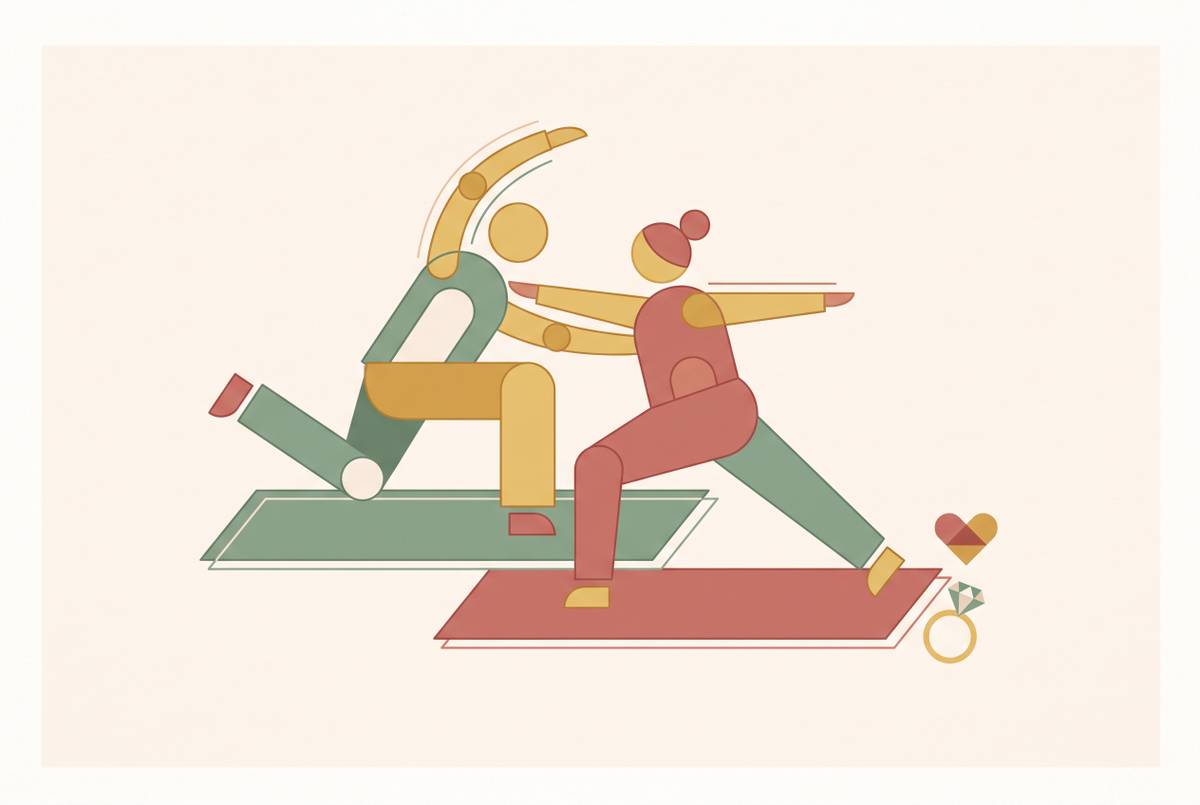
A partner going through the same stress, on the same adjusted plan, has skin in the same game. The goal isn't pushing each other to train harder, it's making sure both people actually show up. Wedding fitness marketing tends to aim almost entirely at brides, but grooms get the same benefit from the energy and stress relief that steady movement provides.
Support in practice looks small. A shared evening walk instead of a solo gym trip. A quick "did you stretch today?" instead of tracking reps or mileage. Celebrating the walk that happened rather than measuring how far it went. A little playful competition, like a small bet over who logs more walks in a week, keeps it light instead of turning into pressure. Partners can also give each other permission to back off, so pulling back doesn't feel like losing, it feels like following the plan. Some newer fitness apps adjust workout intensity based on daily stress and sleep data, which fits the moment well: couples calibrating together instead of forcing a rigid plan onto a week that clearly isn't rigid. Either way, couples treating the run-up as something shared rather than a solo project tends to make the whole stretch more manageable.
What arriving at the wedding well actually means, and how to protect it in the final days
Success in this final month was measured by other factors than gym numbers. It's whether both people walk down the aisle feeling clear-headed, physically comfortable, and actually present for what's happening. That outcome gets protected far more by the choices made in the final week than by any workout six weeks prior.
The final week comes down to a short list. Keep movement light: walks, stretching, easy yoga, enough to manage nerves and keep the body loose without building soreness. Treat sleep as untouchable, since late-night planning sessions in these last days undo everything else on this list. Keep drinking water consistently, since it's still doing quiet work on skin, energy, and digestion right up to the day itself. On the wedding day, a short walk or a few minutes of stretching handles the jitters just fine, nothing that risks a flushed face or tired legs during the ceremony.
Whatever consistent effort happened over the past few months already did the heavy lifting. The final days are about guarding that, not adding to it. If a goal got missed somewhere along the way, that's worth a moment of honest reflection about what was actually sustainable, not a last-minute push that just manufactures the burnout the whole month was built to avoid. Two people showing up to their wedding having backed each other through a genuinely stressful stretch says more about the relationship than any number a fitness tracker ever logged.
Sources
- Overtraining & Burnout: How Much Exercise Is Too Much?
- Signs of Overtraining: 13 Tip-Offs and What to Do
- Feeling Mentally Burned Out by Your Fitness Routine? Here’s How to Recharge
- Overtraining: How Trainers Spot It, Prevent It, and Program Around It
- goodhabitsforlife.com
- Stress induced proinflammatory adaptations: Plausible mechanisms for the link between stress and cardiovascular disease
- calm.com
- pmc.ncbi.nlm.nih.gov