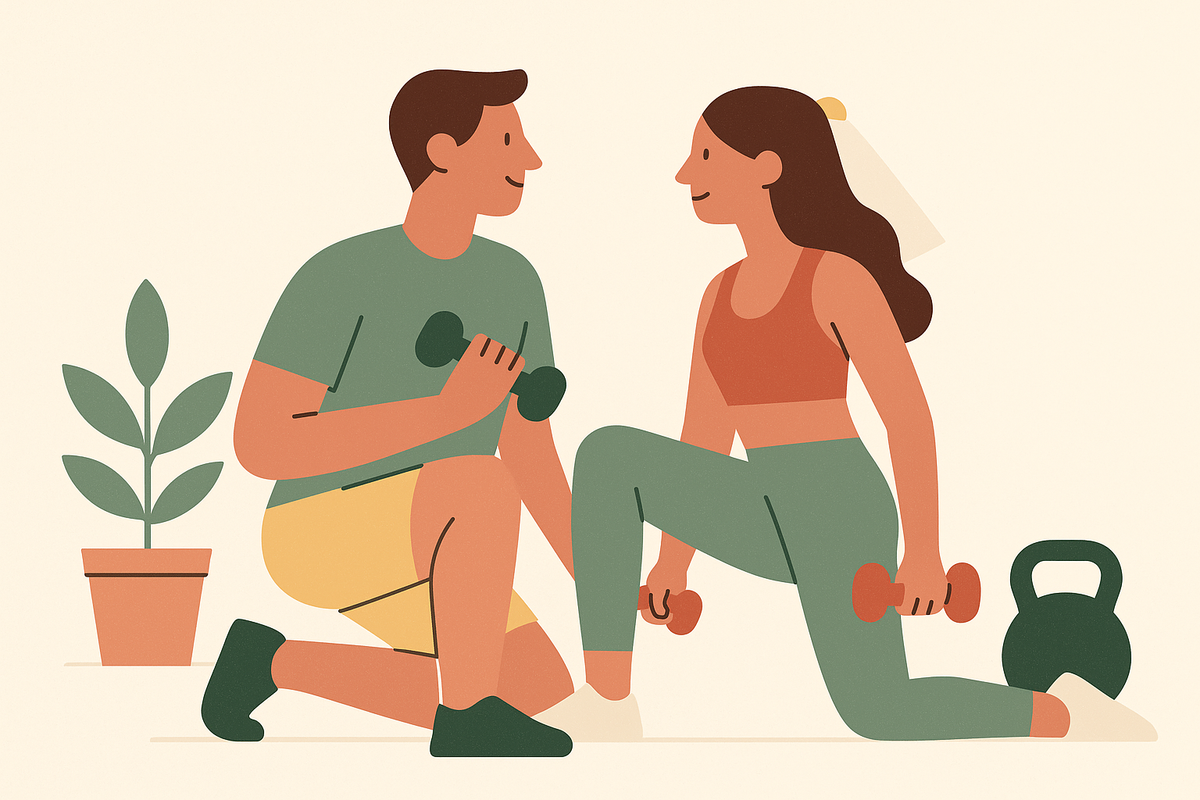
Couple Workouts at Home Before the Wedding
Couples who work out together before the wedding reduce stress and stay accountable.
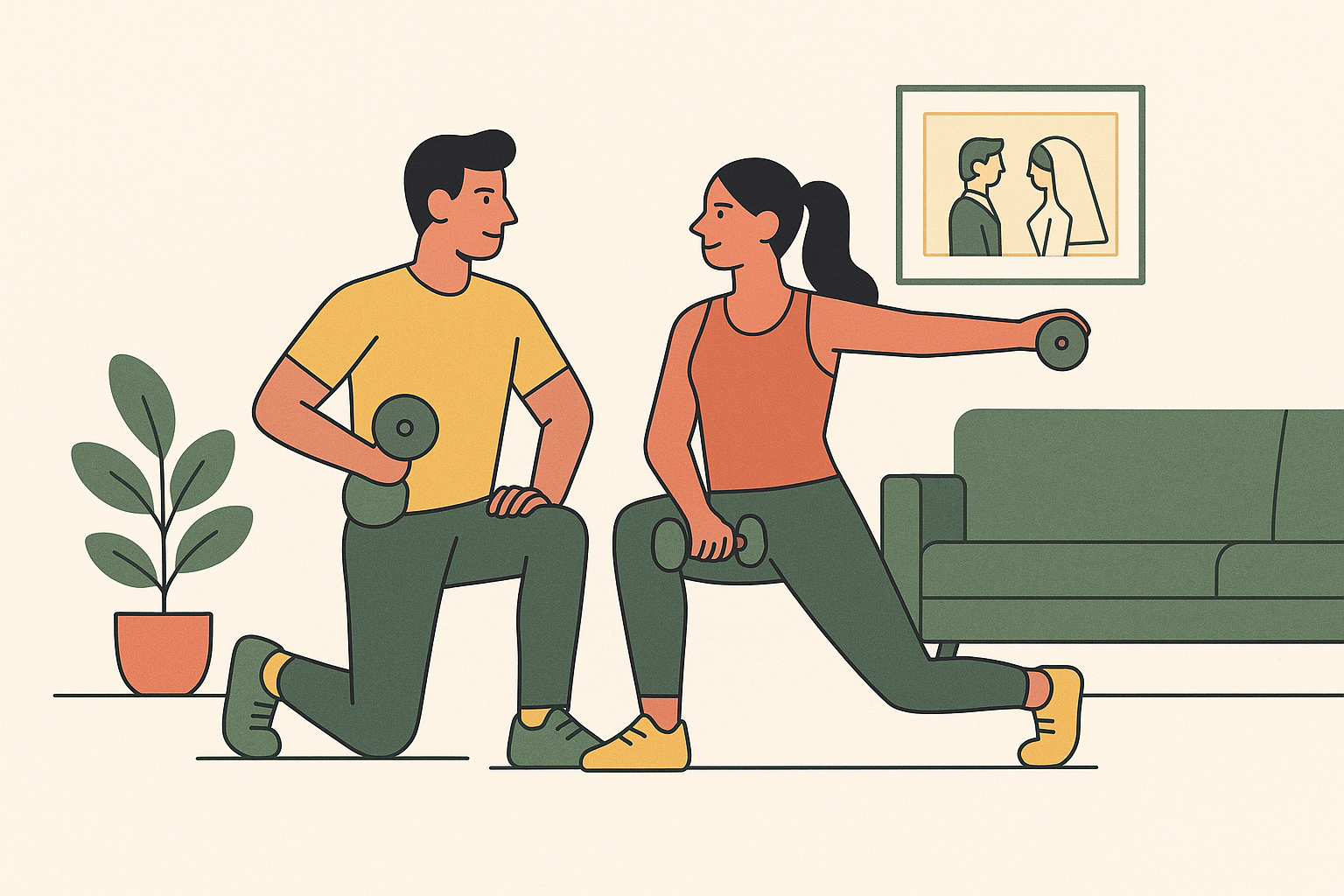
Couples who work out together before the wedding are handling two things at once: getting in shape for the big day, and building a low-pressure ritual that survives the most chaotic planning season of their lives. Most engaged couples report real stress symptoms during planning: anxiety, bad sleep, mood swings that show up for no reason. The usual fix is splitting fitness into two solo projects, which just adds another line item to a calendar that's already on fire. A better move sits there the whole time: use the shared motivation the engagement already gives you, instead of ignoring it.
What the research actually says about couples who exercise together
A 2026 study out of BYU, published in Family Relations, found couples who worked out together reported better communication, stronger conflict resolution, and lower marital stress than couples who didn't. They also listened better and felt more heard overall. The study's authors did note that the edge joint exercise had over solo exercise wasn't statistically significant, so some of that gap might just be noise. Even the researchers won't oversell it, so I won't either.
A separate study in the Journal of Health Psychology found couples who train together report higher satisfaction and feel more supported. There's a mechanism behind that number, and it's kind of wild once you notice it: two people grinding through a hard set start to sync their movement and breathing without either one trying to. Add the mood lift that exercise gives you anyway, and your brain files that lift under "us" instead of just "workout" when your partner's right there sweating next to you. During wedding planning specifically, that's a meaningful thing. It's one of the only sources of good mood that doesn't come with a seating chart attached.
Why having your partner as your accountability partner is different from any other kind
Kansas State University found people paired up during workouts exercised for meaningfully longer stretches than people going it alone. A separate year-long study comparing adults who joined a fitness program with a spouse versus without one found the paired group showed up more often and quit far less.
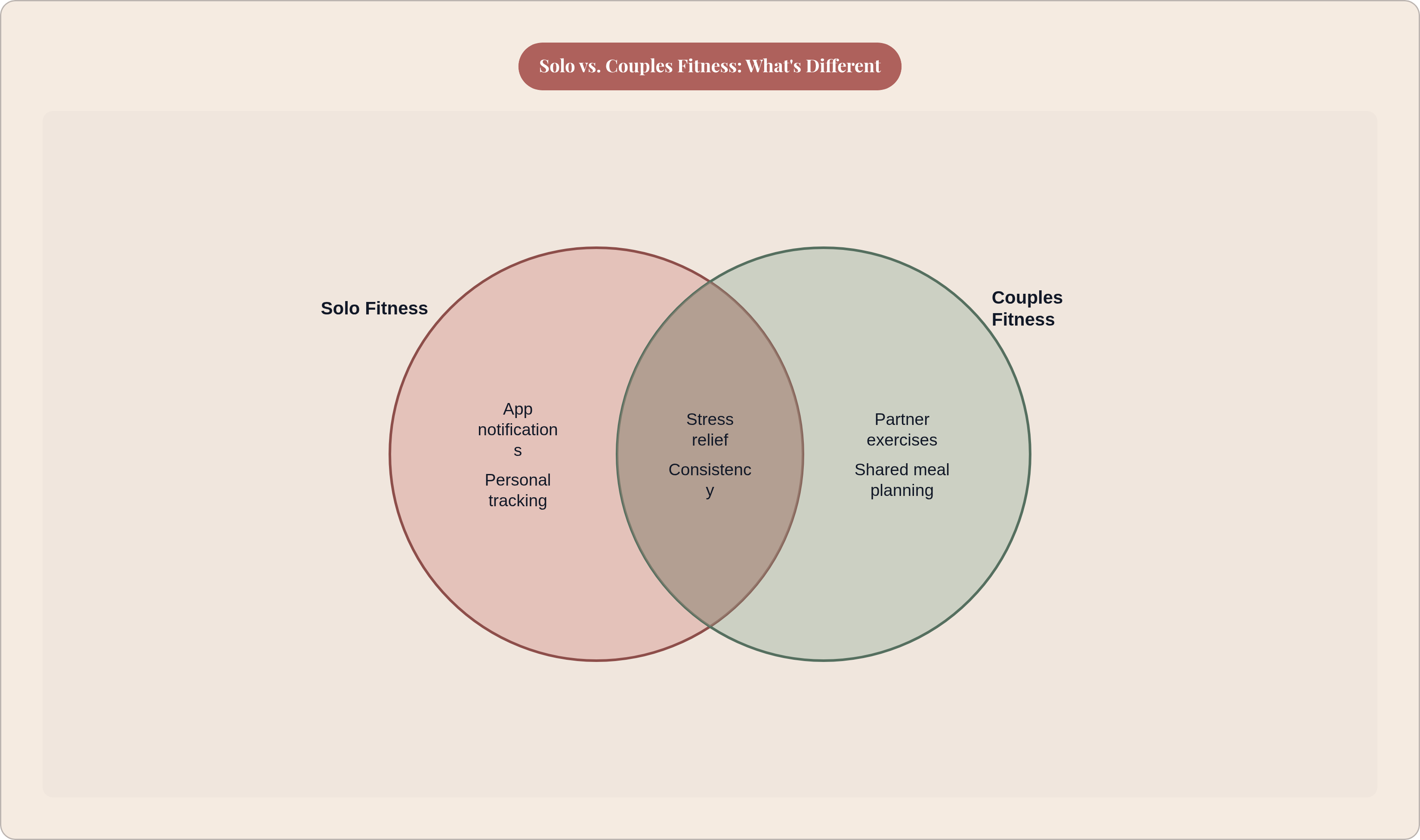
Makes sense when you think about it, since a fiancé notices, by name, the exact day you stop showing up. An app notification doesn't know your name, and a New Year's resolution has never once texted you to ask where you were.
The British Journal of Health Psychology found something else worth chewing on: emotional support, meaning encouragement, empathy, actually celebrating a small win, mattered more for sticking with exercise than practical support like scheduling reminders. Your partner is built for exactly that job, because the relationship already carries real stakes and the investment already runs both directions. A bet over who holds a plank longer, a reward for a solid week, a sweaty selfie fired off mid-afternoon; that does what a paid accountability coach does, minus the invoice.
How far out to start and what each phase should feel like
Trainers mostly land in the same place: three to six months out is the floor for real results, twelve months is the sweet spot for change that doesn't feel forced. Start too close to the date and you end up with punishing schedules and skipped meals, which adds stress instead of relieving it. That defeats the entire point.
Twelve to six months out is about building the habit and the rhythm, where consistency is the whole goal and intensity can wait its turn.
Six to three months out is when you start pushing harder, and it's also when nutrition earns a seat at the table, as a partner to the workouts rather than a replacement for them.
Three to one month out, you hold your progress and start layering in flexibility and stress work like yoga. This also happens to be the window where planning chaos peaks, so the job shifts from expanding the routine to defending it.
The final month is for easing off, resting more, moving light, and protecting sleep and mood above everything else on the list.
None of this is only about the body. Each phase asks something different of you, and working through that shift together builds the same kind of flexibility a marriage tends to demand later. Worth noting too: the old "shredding for the wedding" talk is fading, replaced by language closer to wellness and energy for the day itself. Small shift, but it takes the shame out of a plan that doesn't go perfectly, and it usually doesn't.
What a realistic at-home couple's program actually contains
Three types of movement cover almost everything, and none of them require a gym membership.
Strength training tones muscle and helps metabolism; bodyweight moves or one pair of dumbbells gets it done. Cardio builds stamina and burns calories, and it doesn't need to feel like punishment. Race each other up a hill, sync a workout to a shared playlist, throw on a dance-cardio video during a rough planning week. Yoga and stretching handle the stress side directly, and doing it together turns a solo wind-down into a shared one. Flexibility also pays off literally on the wedding day, given how much standing and dancing is involved.
Here's a myth worth burying: you don't need four-plus gym days to see anything, since research points to real physiological benefit from just two strength sessions a week. Beginners can start with ten-minute full-body sessions; nobody needs to open with an hour to make it count. Once fitness builds, alternating cardio and strength across four or five days gets full-body results without leaving the house once.
Working out at home kills a real barrier too, which is the commute and the gym floor full of strangers watching you fumble a new move. Apps that add light structure or shared, visible goals help, as long as they stay a tool and don't turn into one more dashboard somebody has to babysit.
Partner exercises that only work with two people in the room
These need two bodies in the room, which is the whole difference between a couple's workout and two solo routines that happen to share a living room.
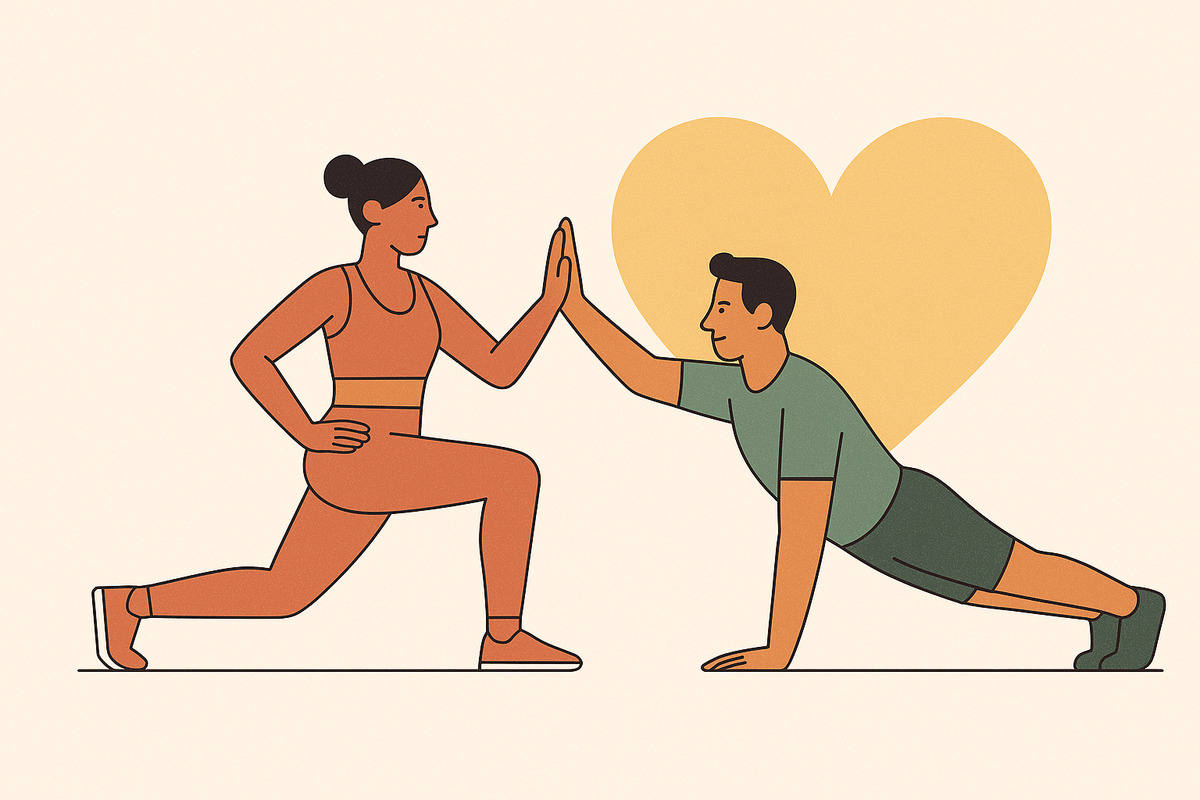
Partner plank high-fives. Both people hold a high plank, alternating high-fives across the middle. Core stability, shoulder control, and it forces constant communication just to stay upright.
Back-to-back squats. Link arms facing away from each other, squat down together, hold, rotate. Trust and matched timing, or you both end up on the floor laughing.
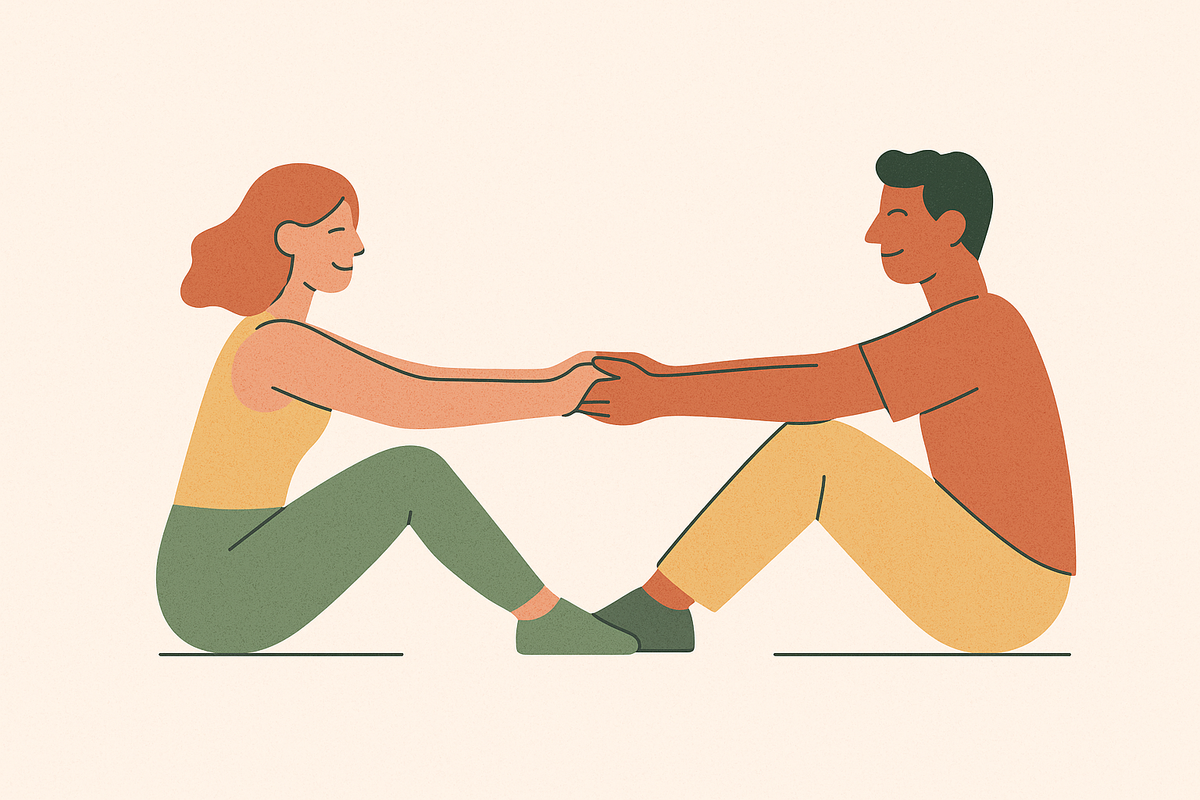
Partner sit-up high-fives. Feet interlaced, sit up together, high-five at the top. Toss in a quick "nice job" on each rep and crunches turn into an actual conversation.
Medicine ball crunch pass. Crunch together, toss the ball at the top, and a boring core move suddenly needs timing and reflexes.
Partner push-up high-fives. Standard push-ups, high-five at the top of each rep. Face to face, it stops feeling like exercise and starts feeling like an interaction.
Wheelbarrow push-ups. One partner holds the other's ankles while they push up. Real trust required, real laughter guaranteed, and laughter turns out to be its own stress reliever.
Partner pistol squats. Face each other, hold hands for balance, squat on one leg. One of the hardest solo moves in fitness gets doable for a total beginner the second someone's there to hold onto.
A full fifteen-minute circuit hitting upper body, lower body, cardio, and core needs zero equipment. Living room, backyard, hotel room between venue tours, it doesn't matter. The playfulness carries most of the value here, alongside the physical work itself. Shared laughter during hard physical effort keeps showing up in the research on relationship satisfaction, and it's not hard to see why.
What to keep at home so the routine never requires leaving
You don't need much. A yoga mat, a set of resistance bands, one pair of medium dumbbells covers most of an effective home program, and all three fit in a closet without complaint. A jump rope and a medicine ball round it out if you want more variety, and neither costs much or eats real space.
Under-desk treadmills (walking pads, if you've heard the other name) have gotten popular lately for couples who want light movement without carving out a full workout block. Handy on the days when planning eats your whole schedule and a real session isn't happening. Smart dumbbells with app tracking are a growing category too, nice if real-time feedback appeals to you, but they're a nice-to-have, not a requirement for any of this to work.
Some of the best movement doesn't even look like a workout: plank contests during a TV episode, squats while dinner's on the stove, a dance break in the middle of cleaning the kitchen. What matters is moving together regularly, not whether the session has a name or a start time on the calendar. Working out at home also kills the competitive gym energy entirely; you're only measuring yourself against last week's version of you, nobody else's.
How nutrition fits in without becoming another source of pressure
Trainers widely point to nutrition and hydration as the bigger driver of visible pre-wedding change, with exercise contributing a real but smaller share. The exact split shifts depending on who you ask, but the general shape holds up across the board.
For couples, nutrition works best as a shared project: cooking together, syncing meals, picking one approach instead of running two competing ones. Same partnership logic as the workouts, just moved into the kitchen. Change that actually sticks happens slowly, which is exactly why starting early matters. It buys you room for gradual adjustments instead of a crash diet three weeks before the ceremony.
Hydration might be the easiest win in the entire plan. It affects skin, energy, and how well you recover from workouts, and it costs nothing to build as a shared habit. Refill each other's water bottles, and that's really all it takes.
One thing to avoid completely: nutrition plans that put one partner on a different track than the other, or that attach guilt to a slip-up day. Both quietly undercut the entire reason you're doing this together in the first place. Couples eating roughly the same way tend to stick with it longer than couples running two separate plans side by side, and that's not a close call.
Keeping the routine alive when planning chaos peaks
The weeks packed with venue walk-throughs, vendor calls, and family negotiations are exactly when solo fitness plans collapse, and exactly when the stress relief from exercise matters most. Rough timing, but there it is.
Lower the bar instead of gritting through it at full intensity. A ten-minute session counts. A walk around the block counts. A fifteen-minute yoga video on the bedroom floor counts. Showing up in any form earns credit, full stop. Missing a day should get a two-minute conversation, not a guilt spiral; the goal is picking it back up tomorrow, not punishing yourself today for being human.
Shared, visible goals hold up better than two separate tracking apps running in parallel, mostly because one partner's good week can drag the other one through a bad stretch. A shared photo log, a quick weekly check-in, a small reward for a consistent run, these keep the tone supportive instead of turning the whole thing into a performance review nobody asked for.
Here's the part that outlasts the wedding day itself: couples who build this kind of shared habit during engagement don't just show up to the ceremony in better shape. They get more practice showing up for each other on the days it's inconvenient, which is most days, and that skill doesn't expire when the music stops.