Partner Exercises Requiring No Equipment for Wedding Prep
Bodyweight partner workouts fit wedding prep into a packed schedule while delivering real results.
Wedding prep eats your calendar alive. Venue walk-throughs, family drama about seating charts, budget spreadsheets, dress fittings, cake tastings. Something has to get cut, and for most couples, that something is the workout.
Here's a fix worth trying: skip the gym membership and the fancy equipment, and just train with your partner using your own bodyweight. It sounds almost too simple to work, but consistency tends to matter more than any specific setup.
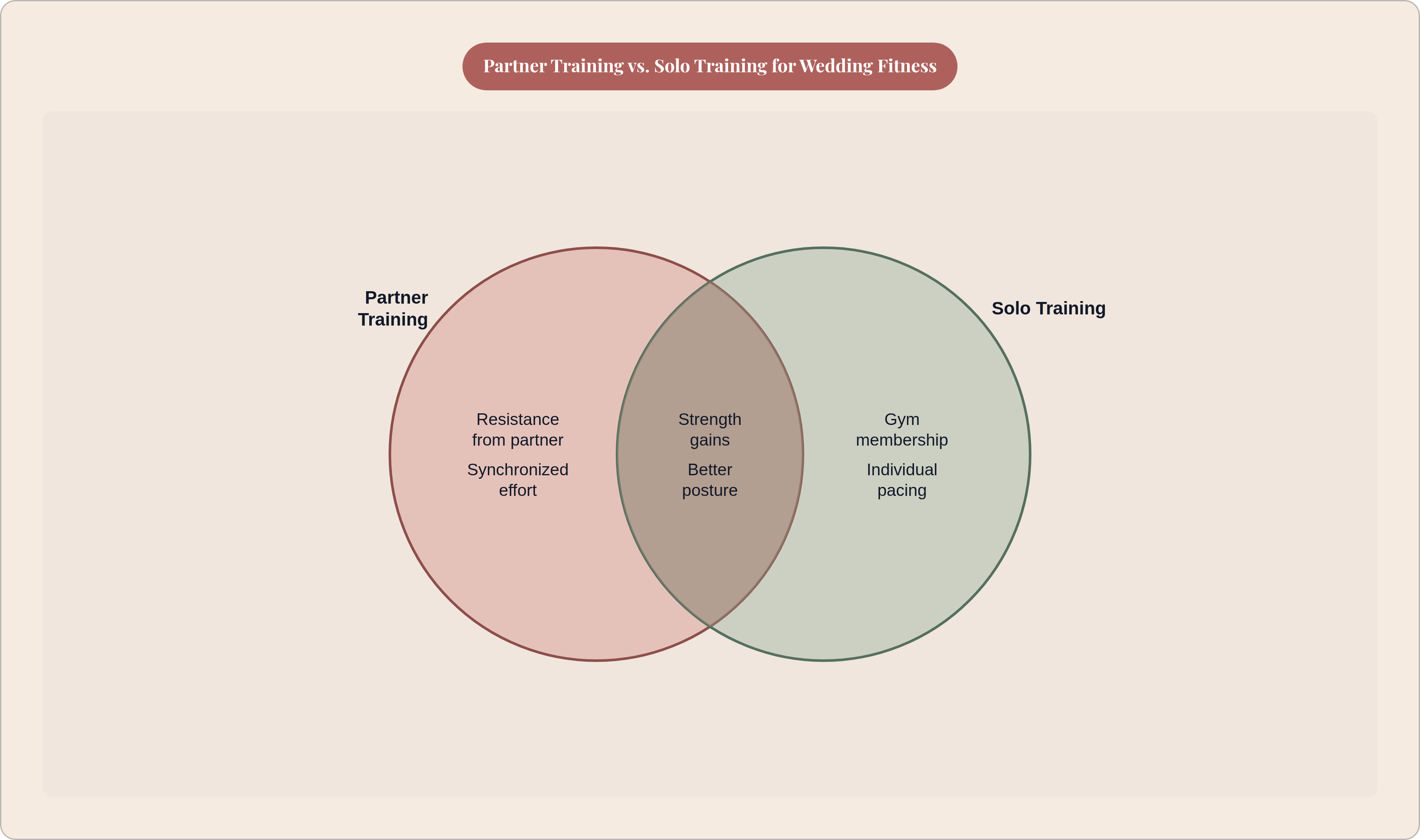
What "wedding-ready" actually means physically, and how long it realistically takes
"Wedding body" gets thrown around like it means something specific, but it doesn't, so let's define it.
What's actually achievable in a few months: better posture (the kind a camera catches), more visible definition in the arms and shoulders, the stamina to survive an eight-hour day of standing, hugging relatives, and dancing badly, and a baseline sense of feeling good in your skin. That's a modest, realistic goal with a much shorter runway than a full-body overhaul.
A common recommendation is to start 3 to 6 months out. The sweet spot is 6 to 9 months, which gives you room for a building phase, a toning phase, and a maintenance phase before the final fittings lock everything in place. There's an old gym line that goes, "in 8 weeks, you'll hear it," meaning other people start noticing before you do. Eight weeks of consistent effort is a fair anchor for when change becomes visible.
This isn't a bride-only project, either. Grooms get the same payoff: better posture, more energy, more presence in photos. Fitness content that only talks to one half of the couple is leaving results on the table. A survey of unmarried university students found that both men and women, when picturing their wedding day appearance, preferred exercise over dieting as the strategy. Training together lines up with what people already gravitate toward.
One more expectation-setter: trainers commonly put the split at roughly 80% nutrition and hydration, 20% training, when it comes to that "glow" everyone's chasing. The workouts in this piece build strength, stamina, and posture, and they work best alongside drinking water and eating real food.
How to structure the weeks so both partners actually keep going
A good move list only matters if you come back to it. Structure is the difference between a routine and a folder of exercises you tried once in March.
The CDC's baseline: 150 minutes of moderate activity a week, plus two strength sessions. Treat that as the floor, not some Olympic target, since five 30-minute sessions gets you there without much drama.
Two to three strength sessions weekly is plenty. Trainers report couples proud of results from even one session a week, so perfection isn't the bar, showing up is. A review pulling from 16 studies found that just 30 to 60 minutes of strength training weekly cut risks tied to diabetes, heart disease, several cancers, and all-cause mortality. Chasing volume isn't necessary to get the health benefit; you need to not skip it entirely.
Recovery is part of the program, not an afterthought. Research from the National Strength and Conditioning Association found that overtraining without proper recovery can cut muscle protein synthesis by up to 40%. More sessions crammed into fewer days doesn't mean more progress; sometimes it means less.
A shape that works for most couples:
- 2 to 3 bodyweight partner strength sessions
- 2 to 3 flexibility or yoga sessions (your back will thank you after a full day in formal wear)
- At least one full rest day
- Optional daily walks together to round out that 150-minute number without adding "sessions" to the calendar
Consistency wins over intensity, full stop. Couples training together twice a week for six months will outperform couples who go five days a week for three weeks and then quietly stop answering each other's "wanna work out?" texts. A sticky note on the fridge with this week's plan tends to outlast an app with seventeen metrics nobody checks after week two.
Lower-body partner moves that build strength without a single piece of gear
Lower body work is the unsung hero of wedding day survival. Standing for hours, dancing, walking across gravel in heels or dress shoes, all of it draws on glutes, quads, and hamstrings. Every move below uses your partner as resistance, balance, or pacing, never as a spectator.
Back-to-Back Squat. Stand back-to-back, link arms, lean into each other with even pressure, and lower into a squat together. Hits glutes, quads, hamstrings, and if one of you checks out mid-set, the other feels it instantly. It's basically a built-in lie detector for effort.
Partner Pistol Squat. Face each other, offset so your right shoulders line up, join right hands, and both drop into a single-leg squat at the same time. Having a partner's hand to hold turns an intimidating move into something a beginner can actually attempt, no wall or pole required. Bonus: it trains the balance you'll need for uneven ground at that outdoor venue you insisted on.
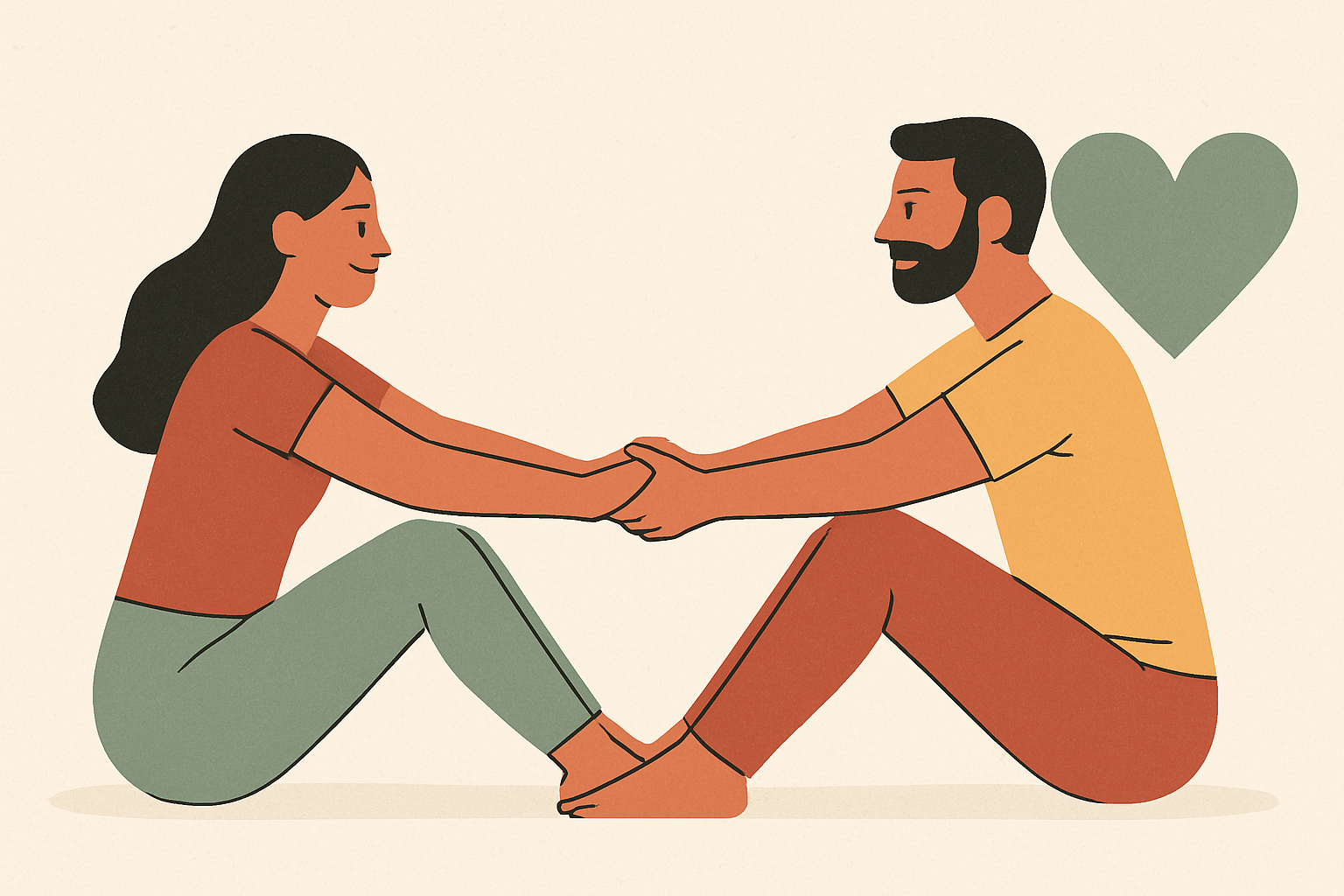
Glute Bridge Press. Lie on your backs, facing opposite directions, and press the soles of your feet together. Each of you drives your hips up into a bridge, using the other's foot pressure as resistance, in a move that's low-impact, floor-based, and a solid choice for a recovery day or a cooldown.
Mirror Lunge. One partner leads through a sequence of lunges, squats, or jumping jacks, and the other mirrors in real time. It's a little playful, a little competitive, and the leader controls the tempo, which means the follower works harder than they planned to, and nobody needs to read an instruction manual to figure out what's next.
Bodyweight lower-body work often challenges balance and range of motion more than a barbell version would, because your body has to stabilize itself with no rack, no bench, nothing to lean on. That translates directly into the kind of movement quality you'll actually use on the day, weaving through a crowded reception with a plate of appetizers in one hand.
Upper-body and core partner moves that target posture and the muscles most visible in wedding attire
Ask any engaged couple what they're self-conscious about and you'll hear the same three things: arms in a sleeveless dress or short-sleeve shirt, posture in photos, and whatever's happening under a form-fitting bodice or suit. Partner variations of standard moves add coordination and trust on top of the base exercise, which makes them harder without adding an ounce of weight.
Partner Push-Up High-Five. Both of you hold a high plank facing each other. After each push-up, reach one arm across for a high-five with your partner's opposite hand. That reach isn't just for fun, it destabilizes your base and forces the core to scramble and compensate.
Wheelbarrow Push-Up. Partner 2 holds a high plank while Partner 1 stands behind, lifting Partner 2's ankles. The incline shifts serious load onto the chest and shoulders, and Partner 1 has to brace their own legs and core just to stay steady. Save this one for a few weeks in, once standard push-ups feel easy.
Plank High-Five. Facing planks, alternating hand taps across the middle, hitting the whole core, shoulders, and triceps. Slow the tap cadence down, or add a push-up between taps, and it gets brutal fast.
Partner Sit-Up High-Five. Lie on your backs, feet interlaced, sit up together and meet in the middle for a high-five before lowering with control. Interlacing feet means you're each other's anchor, no bench required, no one holding the other's ankles down like a middle school gym class.
Stacked Plank. Partner 1 holds a plank on the ground, Partner 2 balances on top in a plank facing the opposite way. Works core, delts, triceps, lower back, glutes, and legs, for both people, at once, and it's the most trust-dependent move in the whole lineup, and honestly a decent gauge of how far you've come as a training pair.
Partner Bicycle Crunch. Lie on your backs, soles of feet pressed together, alternate kicking one leg out at a time against the light resistance of your partner's foot. The contact naturally locks your pace together, so whoever's slower sets the tempo for both of you.
Planks and sit-ups that emphasize shoulder retraction and spinal extension help fix the slouch that shows up in every wedding photo where someone's checking their phone right before the shutter clicks.
Full-body and cardio partner moves that build stamina and keep sessions from feeling like a chore
Stamina gets ignored as a wedding fitness goal, and it shouldn't. Ceremonies, photos, cocktail hour, the reception, that's eight-plus hours of continuous movement and forced smiling. Research has found that couples who did something physically challenging together felt notably closer and more satisfied with the relationship right afterward. Cardio intervals count, and turning up the intensity seems to turn up that effect too.
Burpee Jump-Over. Partner 1 lies facedown on the floor. Partner 2 does a burpee, but instead of jumping straight up, jumps laterally over Partner 1. Chest and arms on the way down, explosive legs and core on the jump, heart rate climbing the whole time. Switch after a set, since the person on the ground gets a breather while the jumper works flat out, which functions like a built-in interval timer with no beeping app required.
Plank Jump-Over. Partner 1 holds a forearm plank. Partner 2 jumps laterally over them, lands soft, and goes again immediately. The plank holder gets a long isometric grind, the jumper gets plyometric leg work and a cardio spike, different jobs, same clock, so switch and repeat.
Squat Jump High-Five. Both partners drop into a low squat, jump at the same moment, and high-five at the peak. Landing that high-five means matching height and timing, which syncs your effort without either of you saying a word about it, and it hits glutes, quads, calves, and the cardiovascular system all at once.
The jumping-over-each-other, high-fiving-mid-air stuff earns its place in the routine. People tend to push harder and enjoy it more when they're training with someone else instead of alone, and enjoyment is what keeps a routine alive past week three. These moves also work as a natural closer: heart rate up, some endorphins, and a shared moment that makes tomorrow's session something you want to do, instead of a line item you're dreading.
Putting it into a first week both partners will actually complete
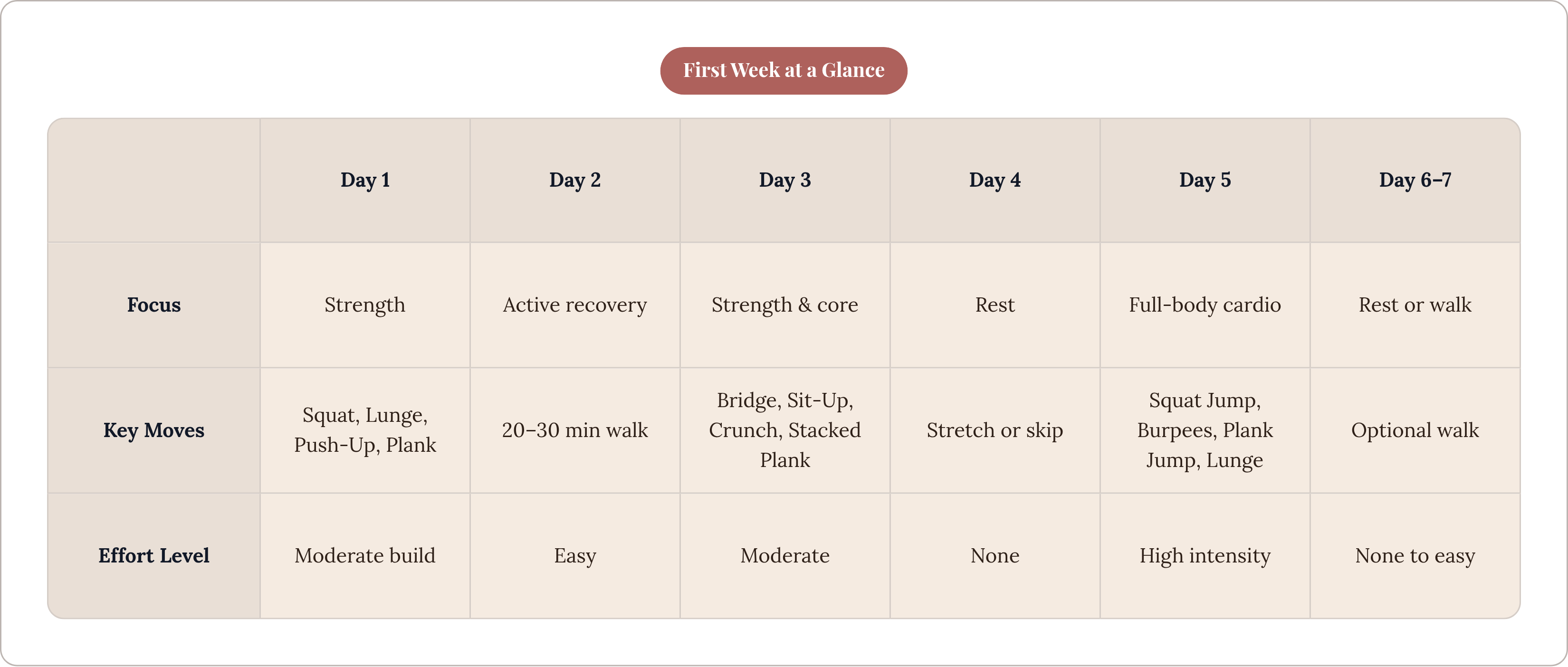
Week one is where most routines die, so the goal isn't a personal record; it's proving to both of you that this actually fits into your life without a fight.
Day 1 (strength): Back-to-Back Squat, Mirror Lunge, Partner Push-Up High-Five, Plank High-Five. Two to three sets each, rest when you need it.
Day 2: Walk together, 20 to 30 minutes. Counts toward your weekly movement total, keeps the habit alive, and nobody's sore tomorrow.
Day 3 (strength and core): Glute Bridge Press, Partner Sit-Up High-Five, Partner Bicycle Crunch, and a shot at the Stacked Plank. If energy's low, cut it short, since showing up matters more than finishing the list.
Day 4: Rest, or stretch together on the living room floor while you argue about seating charts.
Day 5 (full-body): Squat Jump High-Five, Burpee Jump-Over, Plank Jump-Over, finish with a Mirror Lunge round for fun.
Day 6: Optional walk, or nothing at all. Rest counts as training too, whether your calendar wants to admit it or not.
Day 7: Rest, and nothing more.
That's it: no equipment, no gym fee, no excuse about a piece of gear left at the office. Just two people, a living room floor, and forty minutes carved out of a calendar that's otherwise trying to eat you alive.