Step Count Competitions Between Partners During Engagement
Couples who compete on steps stay more active and connected than those exercising solo.
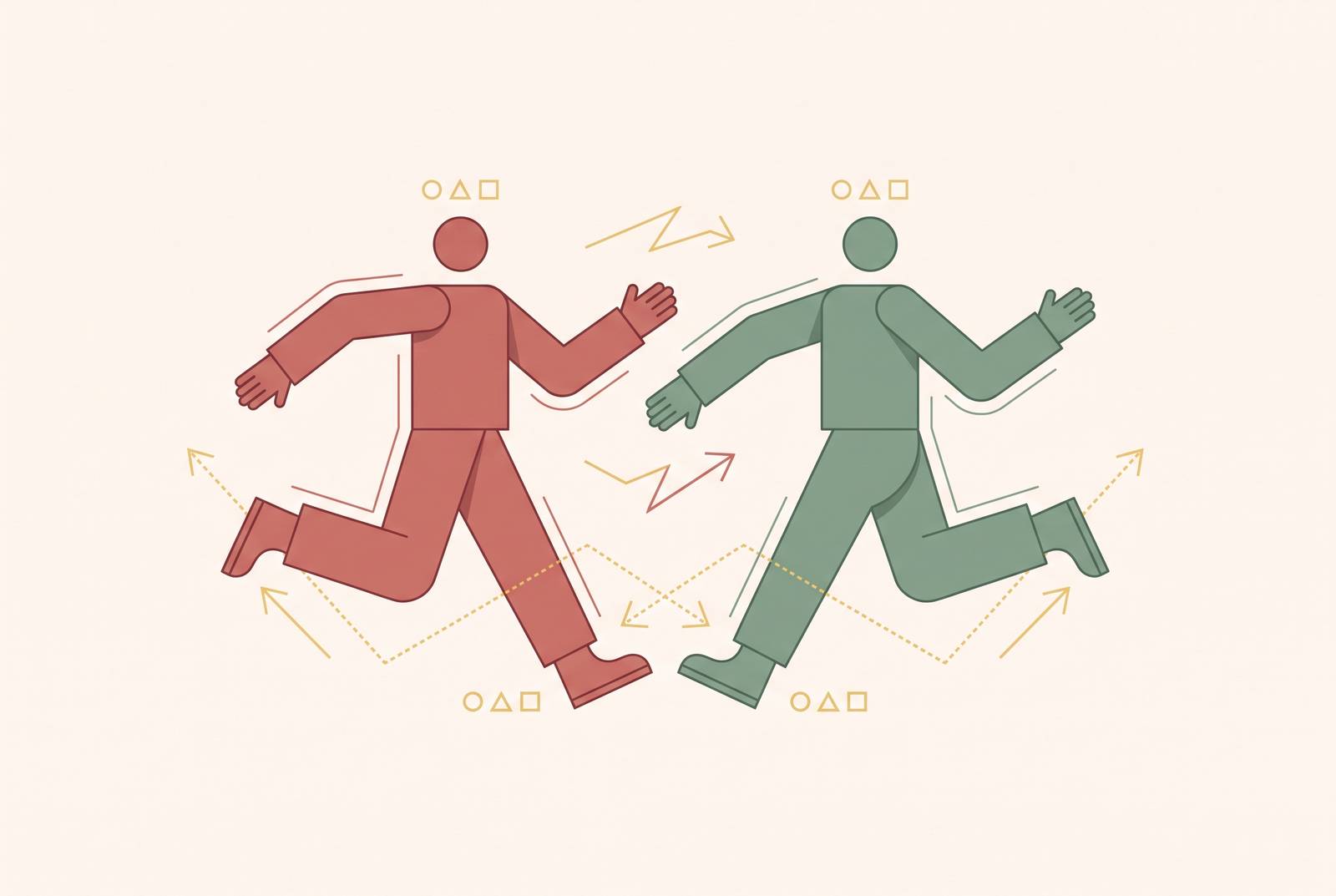
Engaged couples spend most of their planning season managing other people's expectations. Step count competitions flip that script: a simple, low-cost way to build shared movement into a calendar that's already stuffed with venue calls and seating charts. The trend for 2025 and 2026 has shifted away from the old "shredding for the wedding" mentality toward something closer to wellness for its own sake, and a friendly step rivalry fits that shift better than any bootcamp ever did.
What the research says about couples who move together
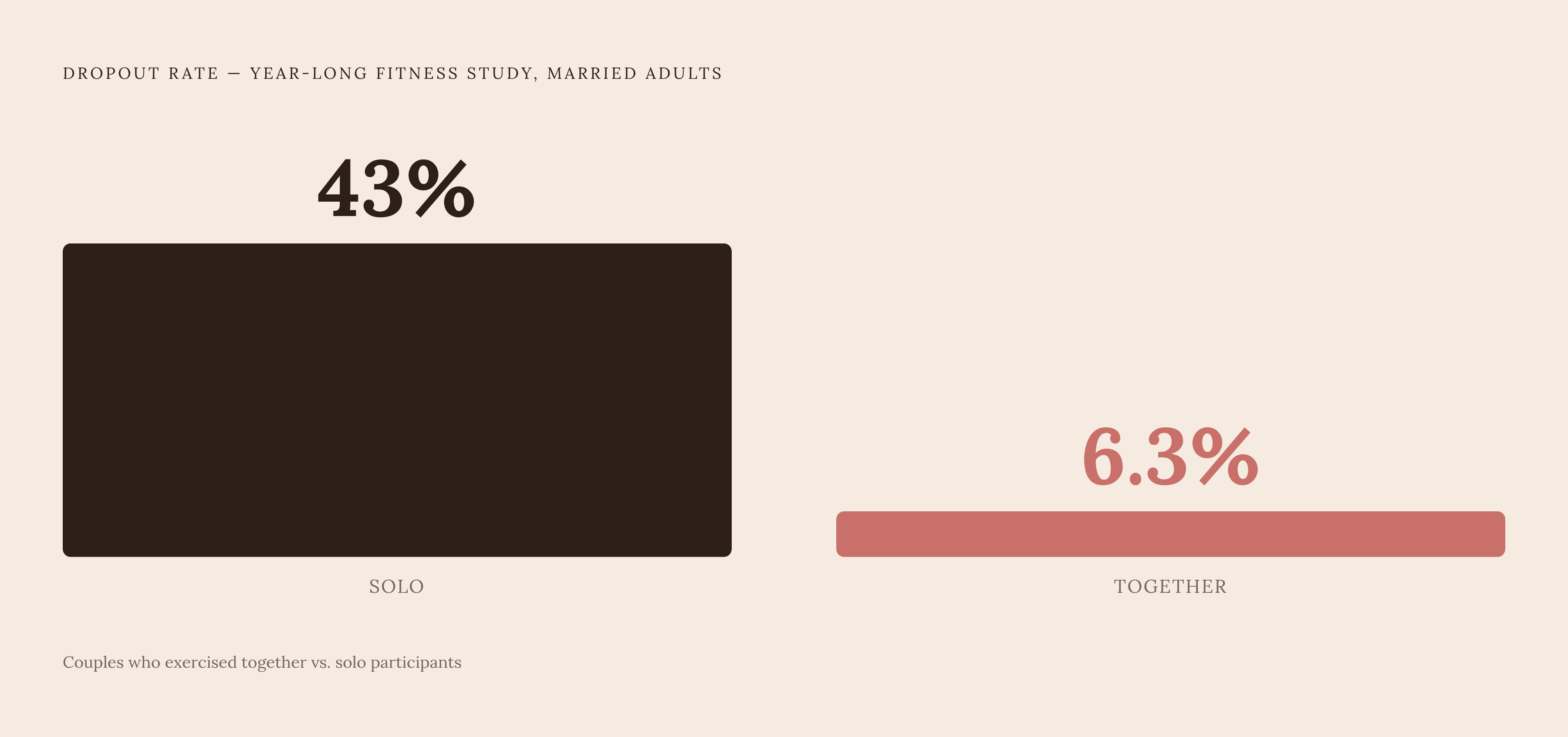
Start with dropout rates, because they tell the story fastest. Wallace, Raglin, and Jastremski tracked married adults in a fitness program for a year and found that only 6.3% of couples who exercised together quit, compared to 43% of people who joined solo, a gap wide enough to mark a habit rather than a New Year's resolution. That's not a small gap. Couples who exercised together saw a 6.3% dropout rate, compared to 43% for people who joined solo, marking a habit rather than a New Year's resolution.
Day-to-day mood data backs it up. A study published in the Journal of Social and Personal Relationships followed 95 adults in relationships over two weeks and found that on days couples exercised together, they reported higher relationship satisfaction. Not just fitter. Happier, and happier with each other.
A 2025 study in the American Journal of Family Therapy looked at 499 couples and found that shared activity, doing things together on purpose, correlated with better couple quality. And Kansas State University research found something almost comedic in its scale: a partner's presence alone can push workout time and intensity up by as much as 200%. Apparently nothing motivates a person to finish one more lap like a fiancé watching.
What step goal to aim for during a competition
The 10,000-step number gets treated like a medical fact. The 10,000-step number gets treated like a medical fact, but it isn't one. It came from a marketing campaign decades ago, not a lab. A meta-analysis in The Lancet Public Health, covering more than 160,000 adults, found that health benefits climb steeply up to around 7,000 steps a day, then flatten out. Past that point, more steps are still fine, just not doing much extra work.
Age matters too. Mortality risk levels off around 8,000 to 10,000 steps for people under 60, and 6,000 to 8,000 for people older than that. If one partner is a decade or more ahead of the other, the competition shouldn't punish someone for being over 60 and, frankly, correct.
The Obesity Society found that people who successfully maintained weight loss long-term averaged 12,000 steps a day, while overweight adults in the same research averaged 6,500. The Obesity Society found that people who successfully maintained weight loss long-term averaged 12,000 steps a day, while overweight adults in the same research averaged 6,500. That's a data point on weight-loss maintenance, not a verdict on anyone's body. If appearance is part of someone's engagement-season motivation (and let's be honest, for plenty of people it quietly is), that number is useful context.
When step competitions help and when they backfire
Step counts have a fairness problem baked in from the start. A nurse walking hospital floors for eight hours is going to crush a software engineer chained to a desk, and no amount of "effort" changes that math. Comparing raw totals between two people with different jobs isn't a competition, it's a mismatch dressed up as one.
Research on step-count competition systems has found that people without strong existing motivation don't necessarily benefit from seeing competitive rankings. The setups that tended to work better involved closely matched rivals and smaller group sizes. Nobody was getting inspired by watching someone with three times their step count run away with first place.
Losing consistently carries a real cost, too. A longitudinal randomized controlled trial found that people who perceived their own activity as inadequate (through deflated step counts) ate less healthily, felt worse, and saw drops in self-esteem and mental health. A persistent imbalance in daily step counts between partners can feed a similar dynamic. And a 2025 survey of wearable tracker users found 27% reported stress, guilt, or obsessive monitoring tied directly to their tracker. Engagement season already has enough guilt circulating. It doesn't need a scoreboard adding to the pile.
Designing a fair competition when two partners don't start equal
Handicapping fixes most of this. Give the less active or busier partner a multiplier (their minutes count at 1.5x, say) and adjust until either person can plausibly win in a given week. It's the same logic golf uses. Nobody thinks handicaps are cheating there.
A few metrics sidestep the raw-steps trap entirely:
- Minutes moved instead of steps counted
- Sessions completed per week, scored simply as win or lose
- Consecutive streak days, tracking who goes longer without a miss
- Personal-best days, tracking who beats their own prior record more often in a week
Another option skips competition. In a combined-total format, both partners' steps get added into one shared weekly number. Instead of racing each other, they're racing the goal together, which turns the whole thing from rivalry into teamwork while keeping the structure that makes goals motivating. And for couples at very different fitness levels, the personal-best approach solves the mismatch cleanly: each partner just tries to beat their own yesterday. Nobody has to out-walk anybody. They just have to out-walk themselves.
Challenge formats that work during an engagement, from low-commitment to creative
Start small. A 7-day walk-and-talk challenge, 20 minutes together daily, no phones, is short enough to actually finish and easy enough that fitness level doesn't matter. It builds the habit before anyone adds mileage or gimmicks.
From there, a 30-day version deepens the ritual: one 20-minute walk daily, and each partner brings a question to ask the other. No scoring, no leaderboard, just protected time that's hard to get otherwise during a season dominated by vendor emails.
The virtual destination challenge adds a story to the numbers. Pick somewhere meaningful (the city where the couple met, the honeymoon destination) and track combined steps toward it on a map. Walking from New York to Chicago, for instance, adds up to roughly 2 million combined steps, or about six weeks at 15,000 combined steps a day. Suddenly a step count isn't just a number on a screen, it's a mile marker on the way to somewhere that matters.
The sunset or sunrise streak ties movement to a specific window: walk during golden hour daily for two weeks, and photograph the same spot every time. It builds a habit and produces something tangible at the end, a little visual timeline of the streak, which beats a spreadsheet of step totals for sentimental value.
Apps that support couple step competitions in 2026
Steps Club builds its whole structure around private clubs for close friends, family, or partners. The app leans on personal step goals and an activity feed built around reactions rather than competitive standings. Its Live Walking Sessions feature lets couples walk together across distance and actually see each other moving in real time, which is as close as software gets to holding hands over a phone screen. It's available on iOS and Android as of July 2026. For couples who want the accountability of moving together without the pressure of a scoreboard staring back at them, this is the natural fit: connection first, competition a distant second.
StepUp takes the opposite approach and leans into it. It supports private groups ranging from a handful of people up to 15,000, with daily, weekly, and monthly leaderboards for those who genuinely want the head-to-head format. Its Mystery Mode hides today's step count until tomorrow, showing only ranks in the meantime, a clever way to cut down on the obsessive mid-afternoon phone-checking. It syncs with Fitbit, Garmin, Samsung Health, Oura, WHOOP, Withings, Mi Band, and Amazfit, making it a strong pick for couples with similar fitness levels who actually want the scoreboard pressure.
Stridekick fills a specific gap: cross-device challenges. Couples split across ecosystems, one on an Apple Watch, the other on a Garmin, need a platform that doesn't care what's strapped to whose wrist. That's what it's built for.
The hardware most engaged couples already own or can easily get
Most of what's needed for a step competition is probably already sitting on a nightstand. Phones count steps natively now; nobody needs to buy anything to start. Wearables just sharpen the picture. Fitbit, Garmin, Samsung Health, Oura, WHOOP, Withings, Mi Band, and Amazfit all sync with at least one of the apps above. Couples with mismatched devices, one an Apple loyalist, one a Garmin diehard, still have a way to compete without either partner switching hardware just to keep score.