Wedding Fitness Milestones Worth Celebrating as a Couple
Shared fitness before the wedding strengthens both bodies and relationships.
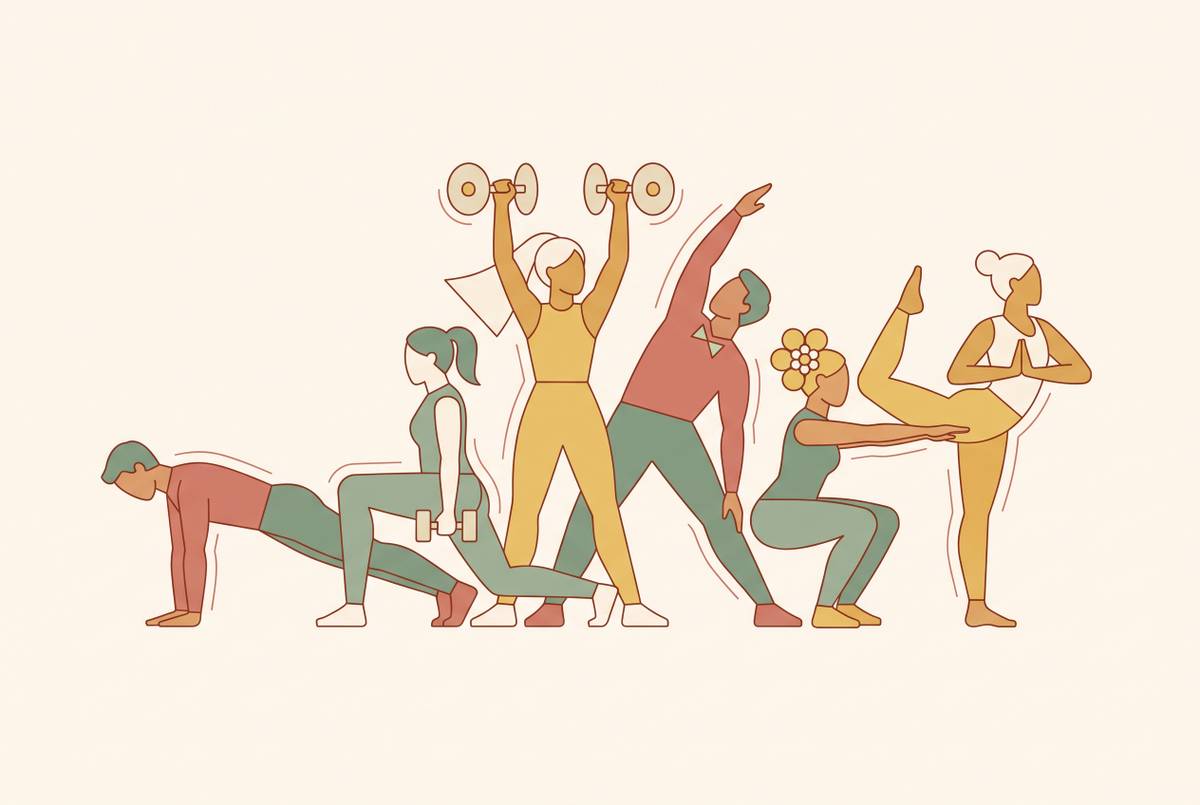
Wedding fitness culture has quietly changed its whole premise. The goal used to be a single number on a scale by a single date. Now it's a year-long shared project that two people build together, one small win at a time. That shift matters because the milestones along the way, not just the finish line, are what actually make the process worth doing.
Research on couples who move through that journey together
94% of couples who work out together report improved relationship satisfaction, compared to 67% who train separately. That's a substantial gap. It's the difference between "this helped us" and "this happened near us."
Why the gap? A study out of BYU, published in Family Relations and covered by phys.org, tracked nearly 1,700 young married couples and found that shared physical activity lined up with better communication, calmer conflict resolution, and lower marital stress. Solo exercise still showed benefits, just weaker ones. The theory holds up mechanically: matching pace on a run, spotting each other on a lift, breathing through the same set of burpees, all of that builds a kind of physical shorthand. That shorthand doesn't stay on the gym floor. It carries into how two people talk to each other twenty minutes later when one of them is annoyed about something unrelated to fitness.
Separate research on novel shared challenges backs this up further: couples who take on something genuinely new together (not just repeat a routine they already know) see a real bump in relationship quality and attraction. Wedding prep is basically a factory for novel shared challenges. Neither partner has done this exact stretch of life before, which makes it fertile ground for exactly the kind of bonding the research describes.
How a 12-month timeline produces distinct milestones
Most experts recommend starting six to nine months before the wedding at minimum, with plenty of couples kicking off a full year out. That runway is more than "more time to work out." It's enough time for the process to naturally split into phases, each with a different job to do.
The earliest phase covers months twelve through nine, focused on building habits and finding movement that doesn't feel like punishment. Months eight through five are where most of the visible body composition change happens, driven by consistency and compound lifts. Months four through two shift into what's often called the Toning and Silhouette Phase, once the dress or suit is picked and the goals get more specific to how that garment sits. The final eight weeks flip the whole approach: lower intensity, more Pilates, more Zone 2 cardio, less "go hard," more "don't burn out."
Each of those transitions is a milestone whether or not anyone marks it that way. The workouts feel different, the goals feel different, and the whole emotional tone of training shifts. It's telling that TikTok wedding communities, under tags like #2026bride and #bridalworkout, are already treating these shifts as public check-in moments. The instinct to celebrate progress didn't need to be invented. It just needed permission.
The first milestone: deciding to start together and making it official
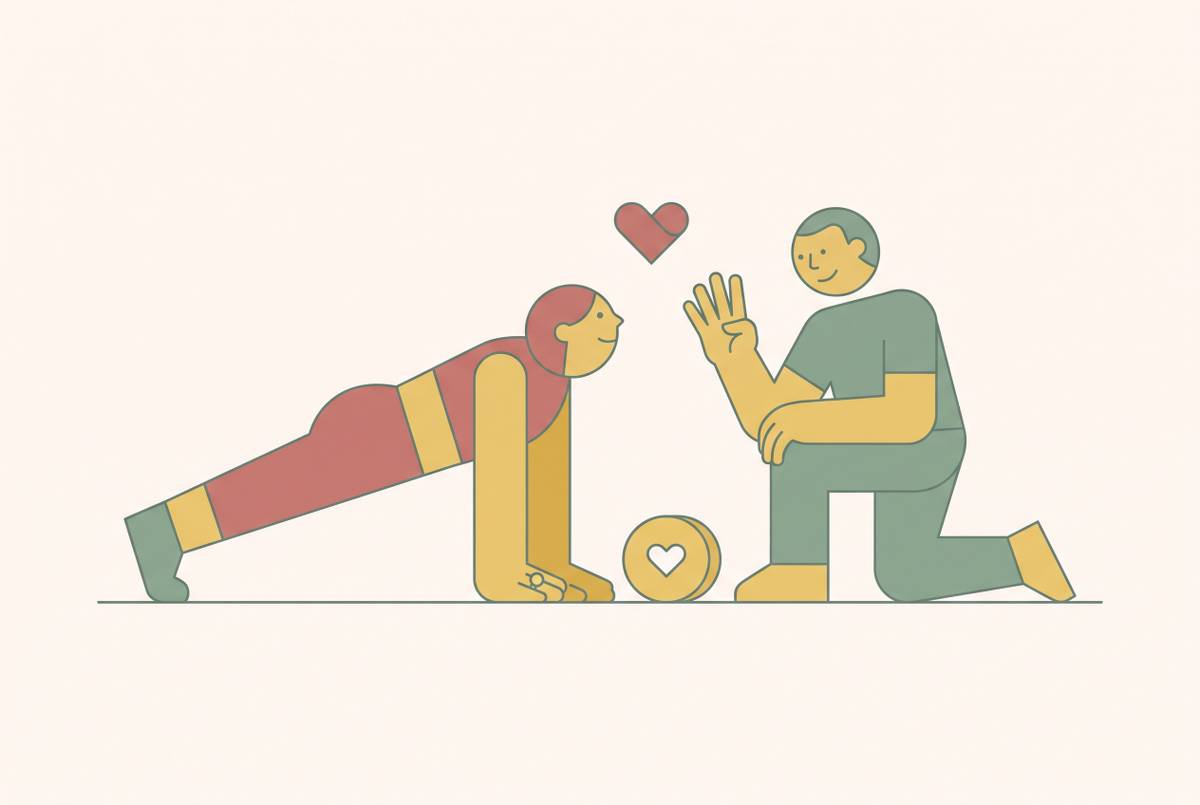
Booking the first class. Downloading a shared app. Agreeing on three mornings a week before the coffee's even finished brewing. None of that sounds like a milestone, and that's why it gets skipped.
But committing to a shared routine is a relationship decision before it's a fitness one. Two people are agreeing to show up for each other on a schedule, which is a bigger ask than it sounds like at 6 a.m. Marking it doesn't need to be complicated: a shared workout journal, a joint account on a fitness app, a "week one" photo that never leaves either phone.
Showing up deserves credit even before there's anything to measure. Week one has no results to point to. It has two people who decided to start, which counts for more than it gets credit for.
Consistency milestones: celebrating the streak before the result appears
The most common dropout point in pre-wedding fitness sits in the gap between starting and seeing anything change in the mirror. That gap is where motivation goes to die, so closing it psychologically affects whether couples stick with the routine at all, more than any single workout does.
A few consistency markers to flag out loud:
- The first full month of hitting every planned session, no missed weeks.
- The first time both partners finish the same workout on the same day, even if they're in different rooms or different gyms.
- A two-week progress photo, which fitness tracking sources recommend as a simple visual record of how far things have come.
Friendly wagers help here. So do small non-food rewards, like a spa afternoon or a new workout top, since food-based prizes tend to undercut the whole point. A shared photo between partners, even a bad one taken in a gym mirror, tends to motivate more than another chart or spreadsheet ever will. Charts don't laugh at your outfit. Partners do, and somehow that's more encouraging.
Performance milestones: the first time a concrete goal is hit
Performance milestones are the easiest ones to celebrate because there's no ambiguity. A distance is either run or it isn't. A plank either holds for sixty seconds or it collapses at forty-five.
Specifically:
- The first 5K finished together, even at a walk-run pace that would make a marathoner wince.
- The first strength session where both partners hit the exact weight they were aiming for.
- A Pilates or barre class completed without modifying every single move.
- A plank held for a new personal best, which sounds minor until it connects to posture.
Posture gets its own mention because it appears in every photo from the day, whether anyone's thinking about it or not. Good posture changes how a ballgown falls and how a suit sits across the shoulders, and it's one of the few fitness outcomes that translates directly into how the wedding album looks decades later. Smartwatches and phone apps are widely recommended for tracking these goals, so there's no excuse for these wins going unrecorded.
The first fitting: a milestone that connects fitness work to the wedding itself
The first dress or suit fitting is the clearest checkpoint in the entire process. It's usually recommended that couples reach their target shape by this point, roughly two to three months out, so alterations don't need a second round (and a second invoice).
It's typically a solo appointment. One partner stands on a small platform while a stranger with pins circles them slowly. But the milestone it produces reflects the efforts of both partners. Months of shared meal planning, shared early mornings, shared complaining about burpees, all of that becomes visible in a single fitted garment. Treat the fitting less like a test to pass and more like evidence that the work already happened.
The final weeks: shifting the celebration from effort to readiness
The final eight weeks are about managing stress hormones, because elevated stress hormones can take a visible toll on the body right when neither partner wants that. They're about managing stress hormones, because keeping cortisol in check supports the kind of rest and recovery both partners need at this stage. Pilates, mobility work, and steady walking replace anything resembling a personal record attempt.
The last week goes even gentler: yoga or light cardio only, alongside magnesium and vitamin B6 to support sleep. The milestone in this stretch is arriving at the wedding rested instead of wrecked. It's arriving at the wedding rested instead of wrecked.
A few things to mark here:
- The last genuinely hard workout before the taper begins, acknowledged out loud as the end of the build.
- A shared wellness ritual, like a couples massage or a slow morning walk that isn't secretly a training session in disguise.
- The wedding morning itself, where a short burst of movement, a light walk, a few stretches, channels nervous energy somewhere useful instead of into pacing a hotel room.
Celebrating in ways that feel like the relationship, not the gym
Non-food rewards keep coming up for a reason: a spa day or new workout gear acknowledges effort without undoing it. Couple's Challenges, a trend picking up heading into 2026, treat fitness itself as the bonding activity: weekend hikes, a shared class, a new sport neither partner is any good at yet. Sometimes the best way to celebrate a milestone is to keep moving, just in a different direction.
Celebrations should fit how the couple actually lives, not some idealized version pulled from a social media feed. Different schedules don't have to mean disconnected progress. A shared photo, a phone call after a solo run, a quick note in a joint journal, these cost nothing and take under a minute. Given how much the economy already shapes wedding decisions this cycle, a milestone doesn't require a receipt.
Friendly competition adds a layer of fun that keeps the whole thing from feeling like a performance review. Betting on who hits their plank goal first turns a fitness target into a running joke, and running jokes tend to survive stress a lot better than spreadsheets do.
When one partner is ahead, behind, or disengaged
Partners rarely move at the same speed. Different fitness histories, different schedules, different starting points, all of it adds friction to the idea of a perfectly synced journey.
The research on couples and exercise is useful here again: shared activity showed the strongest relational benefits, but solo exercise still carried real positive associations. Training separately while staying emotionally connected is a legitimate pattern.
A couple of ways to bridge the gap when schedules don't line up:
- Set individual weekly goals, then celebrate both results together at the end of the week regardless of who did what.
- Use one shared app or journal so both partners can see progress even when they never train side by side, which is the core problem Sweatmates, a fitness accountability app for couples built around shared workout tracking, photo check-ins, and team streaks, was designed to solve.
If one partner is noticeably less engaged, resist turning fitness into a referendum on commitment to the relationship. The research points toward encouragement, not pressure, and pressure tends to backfire in exactly the way anyone would expect if they thought about it for five seconds.
Carrying the habits past the wedding day
The value of this whole arc doesn't expire when the reception ends. The same BYU study found that shared exercise lines up with better communication, lower stress, and stronger conflict resolution among married couples, not just engaged ones planning a single event.
The skills built during engagement, agreeing on a shared goal, showing up on the hard mornings, recovering after a missed week without spiraling about it, marking small wins instead of waiting for a big one, are relationship skills, not wedding skills. They're relationship skills that happened to get their start training for a wedding. The dress gets worn once. The habit of showing up for each other doesn't have an expiration date.