The Weekly Workout Structure Engaged Couples Should Follow Before the Wedding
Couples who exercise together build stronger communication before the wedding day.
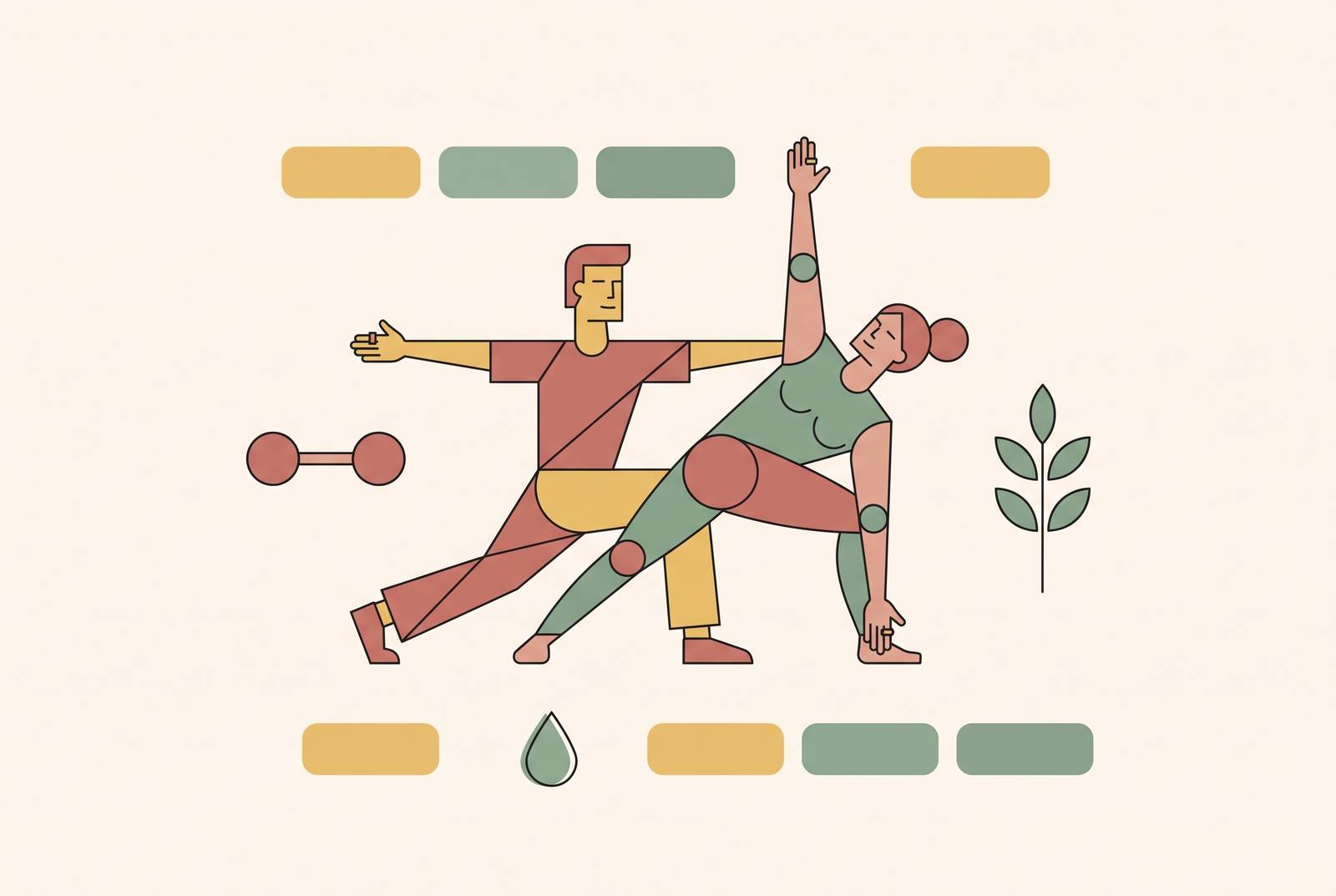
The best weekly workout structure for engaged couples is a shared routine both partners can keep. Start with a few repeatable sessions, add activity as the habit settles, and ease off during wedding week. Keep individual goals flexible and check-ins visible so the routine builds strength and connection while limiting wedding stress.
Why the months before a wedding are the right time to build a lasting joint fitness habit
Research published in Family Relations in August 2026 found that exercising together had stronger associations with communication, conflict resolution, and lower conflict than exercising individually, although the differences were not statistically significant. Only about a third of the young married couples in the United States sample exercised together. Exercise can be time spent pursuing something together, rather than another appointment that keeps partners apart.
Getting engaged gives that shared effort a clear start and time to become a habit. The University of South Australia’s systematic review found that habits may start to form within two months, but can take much longer. Starting early therefore leaves space for repetition and reduces the need for a last-minute scramble. A shared calendar is one way to turn intention into structure, while apps like Sweatmates track individual progress within a shared weekly rhythm.
Why most pre-wedding fitness plans fail couples before they reach the altar
Many pre-wedding fitness plans overemphasize intensity for two individuals and neglect consistency for a couple. Two people may have the same wedding date but different fitness levels, goals, or working hours. Giving them identical workouts ignores those differences, while asking them to do too much too soon makes exhaustion more likely. A plan can look impressively committed on paper and still be badly designed for Tuesday.
Keeping each other on track can also feel like pressure if every missed session feels like letting a partner down. The strongest objection to a joint plan is reasonable, because wedding planning already contains enough shared obligations. Adding exercise helps only if its structure makes it manageable rather than turning it into another deadline with trainers on. A few sessions, a way to see progress, and a little play help partners focus on showing up and ease the pressure to police each other.
Sweatmates uses shared check-ins and weekly recaps to make each partner’s effort visible without prescribing identical workouts, which fits that more supportive approach. That distinction matters because the routine needs room to change as the wedding approaches. The fix is a structure that scales with the time remaining, rather than one ambitious schedule held together by guilt.
How the right weekly structure changes depending on how far out the wedding is
At 12 months out, the job is to build a foundation. A few repeatable shared sessions give both partners a chance to develop strength and learn what fits around work and wedding planning. The useful question is not how much exercise can fit into an unusually quiet week. It is how much can survive an ordinary one. After a missed day, adjust the schedule rather than treating the whole plan as broken and restarting from zero.
From 9 to 6 months out, the emphasis shifts toward establishing and solidifying the routine. As consistency develops, the plan can grow toward five sessions a week at the six-to-five-month mark, with muscle toning and overall wellness as the aims. Couples who begin later can build toward that frequency gradually. After a month or so of consistent workouts, adding an extra day or two can also create room for cross-training. A group class, kayaking, or mountain biking works different muscles and gives both partners a change from their usual session.
At 8 to 12 weeks out, sustain the routine. A low-impact mix of incline walking, bodyweight strength exercises, and mobility work provides a manageable structure without introducing an extreme new plan. Type A Training recommends alternating two strength workouts, A and B, on non-consecutive days, with steady cardio on the remaining active days. That cardio can be brisk walking, cycling, swimming, or a class taken together. Short sessions kept up over several weeks do more for the routine than a tough schedule dropped after a few days.
For couples with only four to six weeks remaining, expectations need to shrink before the calendar does. There is time to begin a repeatable routine. The short runway is not a reason to cram months of training into a few weeks. The plan still needs to be something both partners can recover from and return to.
Shorter, conservative workouts reduce the risk of soreness or injury on the day itself. Type A Training recommends short, easy sessions, nothing new, sleep, water, and breaking in shoes. Light yoga or easy cardio can serve as stress relief. The fitness routine has done its job if it leaves both partners rested.
How to handle different fitness levels without splitting the shared habit apart
Partners with different fitness levels need to work at their own levels within the same plan. The more experienced partner can guide, spot, and encourage without setting the pace for both people. Sharing the session does not require matching every exercise or every effort. Nobody needs a performance review from the person they are marrying.
For a beginner, low-impact exercise gives the routine a gentler starting point. Incline walking gives beginners cardiovascular work with less impact than running, and they can start with two or three incline sessions a week before working up to three or four. Different tracks can also preserve a shared calendar. The Sculpt Society’s Bridal Program has beginner and intermediate-advanced tracks, so partners can work at different intensities and still follow the same timetable.
Each partner can likewise set their own goal for the week and let the other see their progress, which Sweatmates supports. That flexibility matters when one partner is building a habit and the other is already comfortable with more frequent training. It also allows separate sessions when schedules diverge, without making the shared goal disappear. Once the structure accommodates both people, the next challenge is keeping them engaged long enough for it to feel normal.
Why a photo check-in keeps both partners showing up through the hardest window of habit formation
The first two to three months need extra care because the urge to keep going can fade before the routine becomes a habit. The habit-formation research puts the median near two months, while also showing that the process can take considerably longer. A couple needs a way to see that ordinary, repeated effort is adding up through that gap.
ACE’s 2025 habit-formation guidance says that tracking through an app, calendar, or checklist gives people proof of their success and helps them keep going. A 2025 Les Mills/Iowa State study of exercise beginners also found substantially higher attendance in the group combining preparation habits, instigation habits, and goal setting than in groups with no interventions or goal-setting alone. The useful distinction is between having a goal and having a structure that supports acting on it. Declaring an intention is easy. Returning to it during a busy planning week needs more support.
SweatCam supplies a simple version of that structure. Partners set workout goals for the week, log each session with a photo, and see each other’s check-ins right away. The photo confirms presence without requiring a detailed account of the workout. It also builds a visual record over time, making changes in definition or posture easier to notice than they may be in a daily mirror check. A photo from week one beside week eight provides a comparison that memory alone cannot.
The wager adds a small consequence to missing a weekly goal, such as buying dinner or doing a chore. Its purpose is to keep the commitment visible and playful. The familiar objection that SweatCam “literally just logs pictures” is fair. It does not track workout type, duration, or other detailed metrics, so it is not a substitute for detailed training records. For this plan, however, the check-in answers the immediate question of whether each partner showed up, without asking either to complete an administrative workout after the physical one.
What the weekly rhythm should actually look like in practice
In the core training window, the week should have shared anchors, flexible solo activity, and rest. On Monday, partners can do full-body strength together, then do solo steps or light cardio on Tuesday and log it through a SweatCam check-in. On Wednesday, they do full-body strength together again, while Thursday has room for solo steps or mobility and another check-in. Friday can be a third full-body strength session or a shared class or walk.
Saturday has room for a longer walk, hike, dance class, or something else both partners enjoy doing. Sunday is for rest. During a lower-frequency phase, the anchored sessions can carry the routine without filling every other day. As the habit settles, the optional spaces give it room to grow without rebuilding the calendar.
Type A Training counts dance, spin, or a class with a partner as cardio, which makes enjoyment a useful selection criterion. The activity both partners will actually do has a practical advantage over the theoretically perfect one they keep avoiding. Type A Training also recommends working on posture each week with rows, band pull-aparts, and practicing standing tall. That work affects how both partners carry themselves in photos, whether or not their bodies change in other ways. It should be part of the routine they already have so it stays within the same plan.
The weekly goal should reflect the week ahead, including meetings and cake tastings. Four sessions may be a more honest target than six when both partners have full-time jobs and venue walkthroughs. If a goal is missed, the next step is a brief conversation about what got in the way and what changes next week. The forfeit can keep that conversation light, but shame has no useful role in it. Four living-room sessions are more valuable to this habit than a perfect gym membership used twice.
How the habit built before the wedding pays off long after it
What lasts is knowing how to work toward a shared health goal even when partners put in different amounts of effort or their schedules fail to line up. That skill is built through the unremarkable parts of the plan, including adjusting a busy week, accepting different fitness levels, and noticing that a partner showed up. Together, they make fitness something the relationship can hold rather than something each person has to protect from the relationship.
The engagement period provides a useful starting structure, but the weekly goal and photo check-in do not expire at the ceremony. Partners who sometimes exercise separately while logging for each other already have a way to stay connected when training together is impractical. Sweatmates can carry that same structure forward, just as a shared calendar or simple checklist can continue beyond wedding planning.
A photo from the week before the wedding beside the first one taken months earlier can make that consistency visible. Yet the more important record is the pattern behind the pictures, namely two people finding ways to keep a shared commitment through changing weeks. Keep the parts that help both partners show up, and let the routine continue as something done together, even when together does not mean in the same room.
Sources
- ACE - Certified™: March 2025 - The Science of Habit Formation: A Guide for Health and Exercise Professionals
- Bridal Program - Wedding Workout Plan
- Sweatmates: Couples Fitness - Apps on Google Play
- Sweatmates: Partner Fitness - App Store - Apple
- Highlights From Occasional to Steady: Habit Formation Insights From a Com-