How Sharing Exercise Progress in One App Keeps Engaged Couples Emotionally Connected Before the Wedding
Shared workout photos keep engaged couples connected when planning pulls them apart.
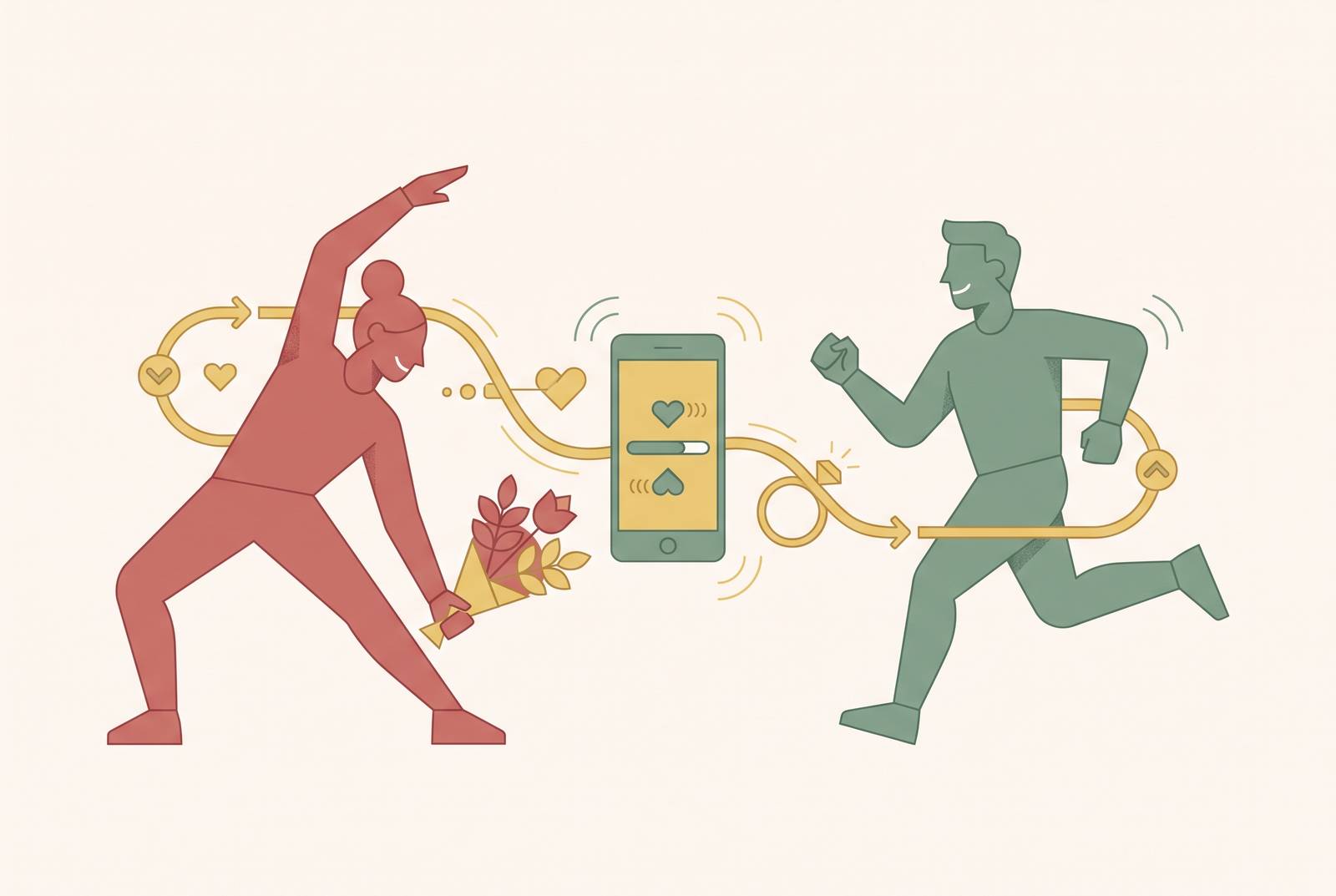
For engaged couples, the best couples workout app is one that makes showing up for each other easy. Sweatmates is one option for partners exercising from different locations, with photo check-ins and weekly goals that make separate workouts visible to each other. Sharing progress in one app can keep couples emotionally connected before the wedding because it turns exercise into a small, repeatable act of connection.
Why the pre-wedding period creates a specific emotional vulnerability between partners
Wedding planning means choosing a venue, drawing up guest lists, clashing over the budget, and dealing with family pressure all at once. Meanwhile, work and chores do not politely step aside because someone has booked a florist. Couples need to feel like a team, yet the planning can consume the small daily moments that usually make them feel close. Conversation becomes efficient and loses its affection. Two people can know exactly where the seating plan stands without knowing how the other is feeling.
The security of engagement can make that drift harder to notice. Once a relationship feels permanent, partners can begin taking for granted the attention that created intimacy in the first place. This is the “assumption of permanence”, and wedding planning gives it plenty of cover. Putting off time together always seems reasonable when there is another choice to make.
Small conflicts can deepen the gap when they remain unresolved and end in withdrawal. Partners remain physically together and logistically coordinated while becoming increasingly transactional. Ordinary planning strain is still a long way from a relationship emergency, and settling conflicts is beyond what a fitness app can do. It means the missing ingredient may be smaller than a grand gesture. Couples need a repeatable way to show that they are still paying attention to each other.
How shared physical activity reconnects partners at a neurological and behavioral level
Exercise is well suited to that task because it changes more than the contents of a calendar. Physical activity releases endorphins, which elevate mood and reduce stress. Hossain et al. (2024) describe these hormones as also promoting feelings of closeness and intimacy. The workout is not merely another obligation if it also creates better conditions for connection.
Moving together adds a nonverbal layer. Running side by side, matching breath in yoga, or coordinating a partner exercise asks each person to attend to the other without another planning conversation. This synchronization is a form of attunement. Shared goals can also give couples a sense of unity and mutual achievement. For once, the joint achievement does not require agreement on who gets invited.
Support helps sustain the behavior as well as improve the experience. Huang et al. (2025) identify social support in exercise settings as a factor that increases adherence. When encouragement comes from a romantic partner, it can also feel like being noticed by someone who matters. However, the benefits of moving in sync are not identical to the benefits of sharing a workout afterward. Couples need to preserve support and attention when exercising together is not possible.
What app can partners use from different locations without adding another fitness plan?
During wedding planning, couples often want to exercise together but struggle to make it work. Finding times that work for both people, choosing the same workouts, and keeping detailed logs can turn a good intention into one more thing to plan together. A single shared app offers a simpler arrangement. Each partner exercises when they can, and the check-in makes that effort visible to the other. The important shared space is the place where they reconnect.
Sweatmates lets partners post workout photos and receive a notification when the other works out. Couples can use it to stay close from different places without having to work out at the same time. Its weekly workout goals give them something to work toward together, and the photos show what each person has done. This gives partners shared accountability while leaving each free to follow their own training program. Seeing that a partner has worked out gives the other a chance to offer support without assessing how well they did.
The distinction matters when couples ask for an app that syncs fitness goals. Agreeing on a weekly commitment is different from needing every workout or metric to match. A shared app earns its place during engagement when it cuts down on how much couples have to plan. Sharing the workout shows that both partners are still making time for themselves and each other. Simplicity is not a compromise here, but the reason the routine has a chance of surviving.
What a SweatCam photo check-in does that a log or a streak counter cannot
A workout log records an event, while a streak counter records a sequence. A photo adds the person. It communicates effort, presence, and personality in a format that a completed box cannot reproduce. When the viewer is a romantic partner rather than a trainer, that personal detail helps them recognize the person who completed the session.
A SweatCam check-in is a quick photo after a workout that a partner can see. Its emotional value comes from turning a solitary activity into something shared, even when the partners are apart. The image gives the other person a chance to notice and respond warmly. That response is part of the mechanism. A photo cannot manufacture attentiveness, but it can give attentiveness an easy place to land.
In an app such as Sweatmates, photo check-ins and weekly recaps put personal moments next to the record of consistency. The history can therefore show more than a tally of completed sessions. It can remind both partners of the individual efforts that made up their shared routine. Partners can share this way even when they have no time free together for a workout.
How the pre-wedding timeline maps onto habit formation, and where couples most often fall apart
The engagement period offers enough time to establish a routine, but starting is not the same as sustaining it. The excitement at the start can get couples through the first workouts before planning puts them under more pressure. The middle stretch is when the routine is most at risk because it no longer feels new, while other things still demand their time. A routine that depended on feeling motivated now has to survive feeling busy. A shared check-in becomes more useful during this busy stretch.
Research published on arXiv in 2025 indicates that attending the gym at least twice a week is important for maintaining consistent habits. Repeated participation gives the routine a foothold, whereas a demanding plan may be harder to keep returning to. This does not mean every shared check-in must document a gym visit.
A beginner may start to give up just as the first weeks of serious planning pressure arrive, so seeing their partner work out may help them keep going. An experienced exerciser already has the habit, but stress can gradually displace it. When both partners can see the routine, they have a chance to notice it slipping. The check-in matters most when self-motivation is least dependable, provided that being noticed feels supportive.
How couples at different fitness starting points can use the same app without friction
Different fitness levels do not prevent a shared routine because the shared part need not be the workout itself. One partner can complete a demanding session while the other takes a walk or stretches. Both can check in without pretending they want the same things or are starting from the same place. The connection rests on participation. Nobody needs to audition for the role of fit-enough fiancé.
For the beginner, that separation removes the pressure to keep pace or explain a lighter session. For the experienced partner, the consistency log makes a different kind of progress visible. It shows the cumulative history of both people returning to the routine over weeks. The experienced partner can value that pattern without becoming the other person’s trainer.
A simple weekly goal of two sessions, with a walk or a stretch counting, gives both partners room to participate. That is more sustainable than a shared program whose demands suit only one person. The best plan for this period is the one both can keep returning to. This is also why the check-in should not become a disguised performance review. Different workouts can still support the same commitment to making time for movement and acknowledging each other.
How stress peaks in the final weeks before the wedding and why low-intensity movement protects the relationship
As planning pressure peaks, managing stress helps couples keep exercising without pushing for additional fitness gains. A hard training program need not remain the standard against which every session is judged. Mobility and low-intensity movement let them keep going without having to give it their all. The wedding countdown is not an invitation to turn the gym into another demanding relative.
A walk, a gentle stretch session, or restorative yoga can still end with a meaningful photo check-in. The format does not require a strenuous workout to make the person visible. Lower intensity changes the physical demand, but it does not erase the act of showing up. The partner still gets a personal sign from the other amid a day full of things to do.
Couples who have kept checking in through the middle months have an advantage at this point. They already know the rhythm, so they do not have to invent a connection ritual under maximum pressure. They can continue it at lower intensity rather than abandon it because the original workout plan no longer fits. The app is a manageable way to keep mutual attention alive through stress when almost everything else is asking for more, with a photo serving as a check-in regardless of whether everything is fine.
Why the habit built before the wedding becomes the couple's default shared routine after it
A routine practiced through a six-to-twelve-month engagement has a life beyond the countdown. Keeping at it can become part of how a couple sees itself and last beyond a short-term project that ends on the wedding day. The useful inheritance is not a perfect training record. More than a perfect training record, they take with them a way to stay involved in each other’s efforts even when their schedules differ.
The OHSU Exercising Together clinical trial was designed to test whether partnered exercise improves relationship quality as well as physical health in couples coping with cancer. That is a very different context from engagement, and the trial’s design is not evidence that a shared fitness app produces the same benefits. Its relevance is narrower. It treats relationship quality as a meaningful part of partnered exercise. That distinction also explains why a couple might value their routine beyond its fitness results.
After the wedding, a missed session can prompt reflection. The history log puts that gap inside a longer pattern, showing how a missed day fits within months of consistent participation. Couples do not need to build a new way of connecting from scratch if the existing one still fits their lives. What began as a workout check-in can last because its real purpose is not to count exercise, but to keep noticing each other.
Sources
- EXERCISING TOGETHER for Couples Coping With Cancer
- Sweatmates: Couples Fitness - Apps on Google Play
- Sweatmates: Partner Fitness - App Store - Apple
- Editorial: Moving the mind, thinking the body: new insights on the mind-body connection from the neuroscience of movement, sports, arts, yoga, and meditation
- Reinforcing implementation intentions with imagery increases physical activity habit strength and behaviour - PMC