Scaling Partner Workouts so Every Session Challenges Both of You Equally
Matching weights to each partner's strength keeps both engaged instead of one dropping out.
For engaged couples getting in shape before their wedding, a useful workout plan is two to three fixed joint sessions each week, with shared exercises but individual weights and rep targets. A shared warm-up, alternating working sets and shared cool-down let both partners train seriously without turning the wedding countdown into a fitness contest.
Why partner workouts fall apart when both people follow the same prescription
One partner ends a set feeling they could do plenty more. The other is struggling to finish at all. Both used the same weight and rep target, so technically they did the same workout. Matching dumbbells are not a compatibility test.
Mismatched prescription can occur with matched motivation. Taking a workout designed for one person and duplicating it gives two people the same instructions without accounting for different capacities. Finding a training partner at exactly the same level is hard and unnecessary, especially when the partner is also the person you plan to marry. But leaving the mismatch unresolved puts the shared habit at risk, because the less experienced partner is the one most likely to drop out.
How separating structure from prescription solves the mismatch
The session structure belongs to the pair. The prescription belongs to each person. Structure includes the exercises, their order and the alternating format, while prescription includes weight, reps, tempo and range of motion. Separating them is standard programming applied to two people.
For example, a beginner can perform a squat with a lighter load and lower intensity while an intermediate partner uses a heavier load and higher intensity. Both get an effective stimulus from the same movement because the demand fits their current level. Weight is only one adjustment available. Reps, tempo or range of motion can also bring an exercise into an appropriate training zone without changing its place in the session.
That distinction preserves the sense of training together.
Why the "you go, I go" alternating format is the structural backbone for mixed-level pairs
One partner completes a set while the other rests, then they switch. Each chooses their own weight and reps, so neither has to copy the other’s effort.
The rest period adjusts naturally to the working set. If a heavier load or slower tempo makes one person’s set take longer, the other receives a slightly longer rest. There is no need to redesign the session around every difference. Waiting has a job now, rather than becoming an awkward pause while one partner catches up.
The same principle works for couples who run together. During hill repeats, the faster partner can loop back to the slower partner before the next repeat begins, preserving the shared format without requiring the same pace. This solves coordination within a session. Keeping it useful over the following weeks also requires each partner to have a separate progression track.
How each partner progresses independently within a shared session
Different rates of improvement are part of the design. Beginners often get stronger quickly in the early months because of neural adaptation, so they can often increase weight every session or every week during that time. An intermediate partner generally progresses more slowly, adding weight every one to two weeks or increasing reps before load.
The practical approach is separate logs for working weights and rep targets, reviewed independently. A beginner’s next step should be based on the work they have done, without having to match what their partner lifted. Likewise, the intermediate partner need not wait for the beginner to catch up before progressing.
Different goals can also fit the same session. Compound lifts in alternating sets can accommodate a muscle-building focus with heavier loads and longer rest, or a fat-loss focus with moderate loads and shorter rest that keeps heart rate elevated. Even when partners take turns, they still need to plan their rest. Keeping track of those choices lets each partner see how they have improved and gives both something to praise beyond who lifted more.
The psychological mechanism that makes a slightly stronger partner raise both people's effort
The Köhler effect explains why a less capable partner may work harder with someone slightly stronger than they would alone. The person wants to contribute to maintaining the pair’s output. Partnered exercise studies have measured meaningful increases in time to exhaustion under this dynamic. The motivational boost depends on the challenge feeling reachable.
A less experienced partner still needs to believe their contribution counts. When the ability gap feels unattainable, the lift in effort can diminish or disappear, and that person may disengage.
Individual prescriptions help keep that gap manageable by removing the demand to match absolute output. The beginner can do a set that is hard for them while the stronger partner gets a full workout too. Familiar company can also make effort feel less taxing and leave better memories of a hard session. The benefits are not identical for both people, but the format gives each a reason to stay engaged.
Why early frequency matters more than programming precision for beginners
A 2026 study in Frontiers in Sports and Active Living found that higher early workout frequency among beginners was strongly associated with lower dropout risk. A one-standard-deviation increase in early frequency corresponded to a 26% reduction in the hazard of quitting at the beginning of follow-up. The association leaves individual outcomes uncertain. The same study estimated considerably lower one-year adherence probabilities for beginners than for intermediate and advanced exercisers.
For a couple with a beginner, this makes attendance an early priority. In weeks one through eight, a repeatable shared appointment deserves more attention than fine-tuning every programming detail. The beginner may need help that the experienced partner already knows how to give themselves. Being enthusiastic about exercise does not automatically mean knowing how to make it routine.
Anchor sessions to an existing regular morning or standing evening, reducing the repeated decision about when to train. New exercisers may also benefit from more frequent check-ins than their partners need. Saying why their needs differ helps make it clear that the extra support has a purpose. A calendar creates the appointment, but a feedback loop helps sustain it.
How photo check-ins function as a lightweight accountability loop between sessions
A photo check-in is first a social signal. It shows that each person is taking part and reminds both of their shared goal between workouts, even without a long talk about progress. The Hawthorne Effect describes the broader mechanism by which knowing an activity is visible can change behavior.
SweatCam-style check-ins fit this role when schedules do not align. A partner who posts a solo workout photo is still taking part in the shared habit, despite training separately that day. For busy couples, that distinction allows independence without treating every separate session as a break in the plan.
Progress photos have a second, different purpose. Comparing them over weeks can reveal changes in definition, posture and body composition that daily self-observation misses, especially while scale weight fluctuates. For that comparison, the recommended setup is the same location, lighting and time of day, with form-fitting clothing. Otherwise, changes in how the photos are taken make them harder to compare.
Photo check-ins are not right for everyone. Anyone with a history of disordered eating or body image concerns should begin with other signs of progress, including strength gains, how clothes fit or energy levels, and introduce photos only when ready.
What the shared warm-up and cool-down do that the working sets cannot
Working sets deliberately separate the partners’ demands. The warm-up and cool-down provide a shared opening and closing, making the session feel joint. A beginner and an experienced exerciser can share movement preparation, then finish with stretching or a walk without either sacrificing the quality of their working sets. Connection gets its own place in the plan.
The joint warm-up also prepares both people for their respective loads and helps protect the less experienced partner from skipping preparation. The cool-down gives partners time to talk without making the rests between sets longer. This is where the social side belongs. Repeating the same opening and closing ritual also provides a habit anchor, reinforcing the consistent attendance that beginners need.
The one failure mode that breaks well-designed partner sessions anyway
A 90-second rest can become a five-minute conversation surprisingly easily. The exercises and loads may be well chosen, but that change alters the session’s training density. Being together is not the same as holding each other accountable. A partner is not a supervisor, and good company can quietly turn a workout into a meeting with occasional squats.
Alternating sets provide a boundary because rest follows the other person’s work. The practical defense is to treat that rest as part of the session. The resting partner can watch, count or prepare the next set. The shared cool-down leaves room to talk without competing with the training.
Couples should protect a recurring slot rather than a streak, keeping the same day and time available even when travel interrupts attendance. A streak fails the moment a session is missed. A standing appointment remains available on return, so one disrupted week does not have to become a collapsed routine.
How can an engaged couple put together a workout plan before the wedding?
To put this into practice, aim for two to three joint sessions each week as fixed appointments. A simple weekly pattern is two shared sessions, with a third shared session if the schedule allows and individual sessions on other days for goals that do not fit the joint format. Keep the slot available when one partner travels.
Start each session together with dynamic mobility, light cardio and movement preparation. The purpose here is readiness and a shared ritual. Then move into four to six compound exercises built around squat, hinge, press and row movements. Alternate sets throughout, with each partner’s weight and rep target decided before the working sets begin.
For a concrete example, alternating goblet squats can use one kettlebell for several reps each over four rounds when that load suits both prescriptions. Alternating deadlifts can use one bar with the load adjusted between sets, never mid-set. For cardio, partners can take turns doing shuttle runs, with each choosing how far or how fast to go.
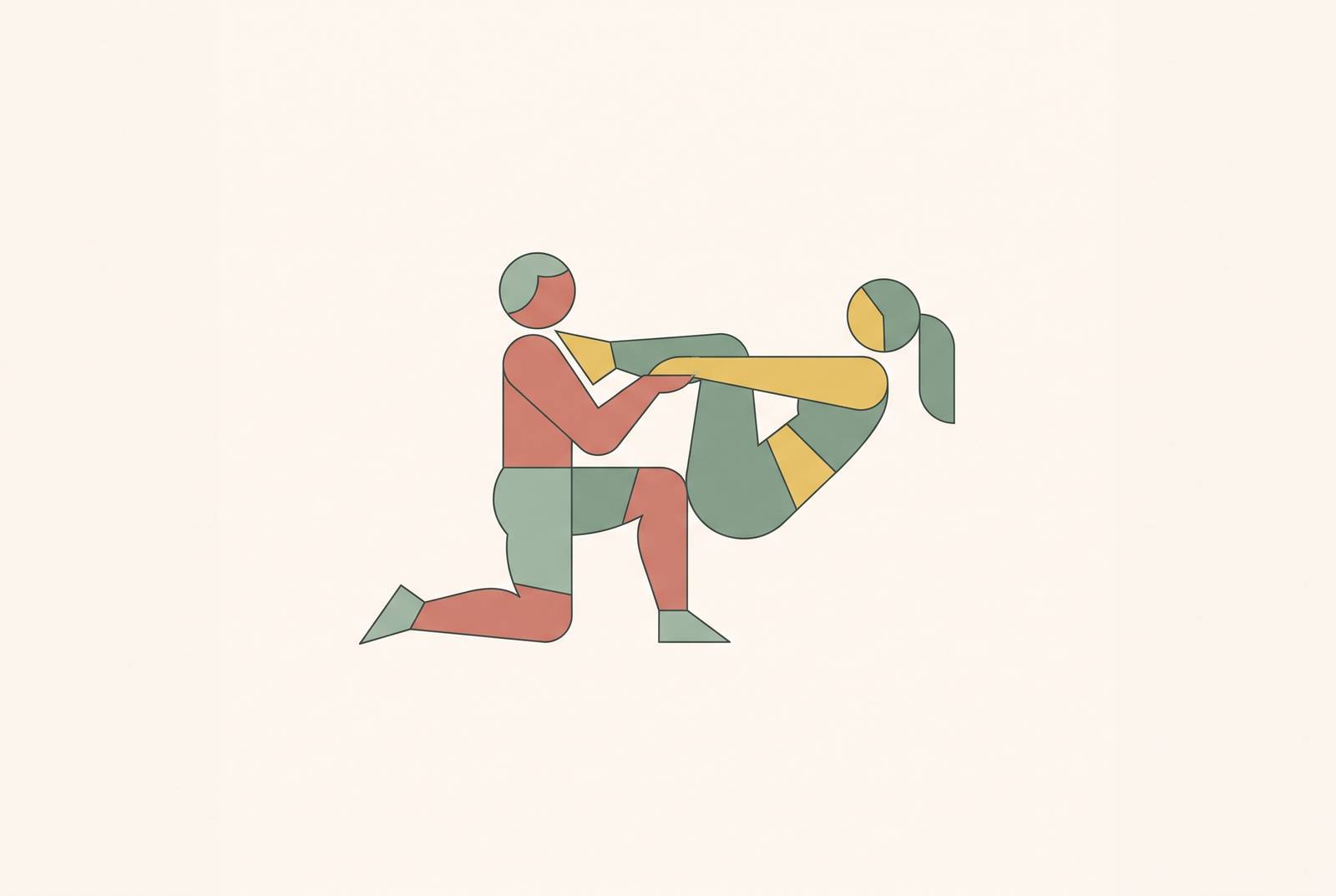
Variety can come from interactive exercises such as medicine ball chest passes, push-up high-fives or back-to-back wall sits. These add connection without needing separate load settings. Finish with a protected five-minute cool-down that includes partner-assisted stretching, a short walk or a debrief.
Where photos are appropriate, close with a shared photo check-in and use an individual check-in on solo days to keep participation visible. Each partner should keep their own record of working weights and the reps they completed. A brief monthly review can then compare progress on both progression tracks to show whether each is moving forward.