How to Find a Wedding Preparation Workout App Built for Both Partners
Couples can track workouts separately while staying accountable together.

Finding a wedding preparation workout app built for both partners means separating workout plans from shared accountability. For couples with different goals, schedules, or locations, Sweatmates is an option for weekly goals and partner-visible photo check-ins, while individual training apps can supply the workouts.
Why most wedding fitness apps leave one partner behind
A couple searches together and finds “his app” and “her app,” but little that treats exercise as something they want to keep doing together. One person gets a plan for their body and wedding date. The other gets a separate journey, complete with a separate dashboard. It seems even the workouts need a seating plan.
The market is split between workout programs for one partner and accountability tools that leave the workouts to other apps. The first can answer what someone should do in the gym without addressing how two people stay involved. The second can connect their efforts without telling either person how to train. Neither role is wrong, but mistaking one for the other leaves a gap.
That gap reflects a basic assumption in most fitness software that users are individuals. Planning a wedding already gives two people different things to do at different times. A fitness plan can add another divide when it recognizes only individual progress. What is missing is a shared habit that allows for different bodies, fitness levels, and goals.
What a six-to-twelve month wedding fitness timeline actually demands from both partners
A six-to-twelve month runway changes the task from a short burst of effort into a test of repeatability. For couples starting a year out, the opening phase is about establishing habits and finding activities both people actually enjoy. It is not about converting someone who dislikes the gym into a devoted gym person. An app needs to support that early adjustment before it has much performance data worth celebrating.
As the plan develops, strength work can take a larger role, including squats, deadlifts, and overhead presses. Later, reaching target shape by the first dress or suit fitting allows a shift toward maintenance rather than further changes that could mean extra alterations. These phases ask different things of the workout plan. The shared requirement is that both partners keep returning through the transitions.
The most vulnerable phase is habit-building, especially when wedding planning becomes chaotic. Apps like Sweatmates focus on shared workout tracking and weekly check-ins over individual performance metrics, so they help build that habit without asking people to keep fine-tuning their training. Stress management and rest also belong inside the plan. A routine that needs unlimited energy is a poor match for an engagement that already has plenty of demands.
Accountability should start in the first weeks, before the couple needs it to get back on track. The first useful goal is a pattern both people can sustain. Once that pattern is in place, the workouts can change with the training phase while both people keep the shared habit.
Why accountability between partners cuts dropout in ways solo tracking cannot
A private workout log records a commitment, but a partner-visible check-in brings another person into it. The distinction is between a number someone can quietly ignore and an effort someone else recognizes. During the early months, that human connection is the part a solo dashboard cannot provide.
A 2025 habit-formation study suggests that the communal aspect of group lessons likely provides social support and accountability, which are critical in the early stages of habit formation. That evidence is limited to group lessons, leaving any particular couples app's ability to prevent dropout unproven. Still, it gives a reason to distinguish social accountability from private tracking.
Sweatmates embeds check-ins and visible progress in the couple's dynamic rather than leaving each person with an isolated record. A partner can see the effort even when the workout itself happened separately. A leaderboard has an audience that may include someone other than the person sharing the commitment, and an automated reminder can ask someone to exercise, with the couple supplying the relationship.
The quality of accountability matters as much as its presence. Scheduled check-ins give a shared commitment a regular place in the week. For a couple, the point is to make continuing something both people remain involved in.
How photo check-ins create the kind of accountability that holds during a busy engagement
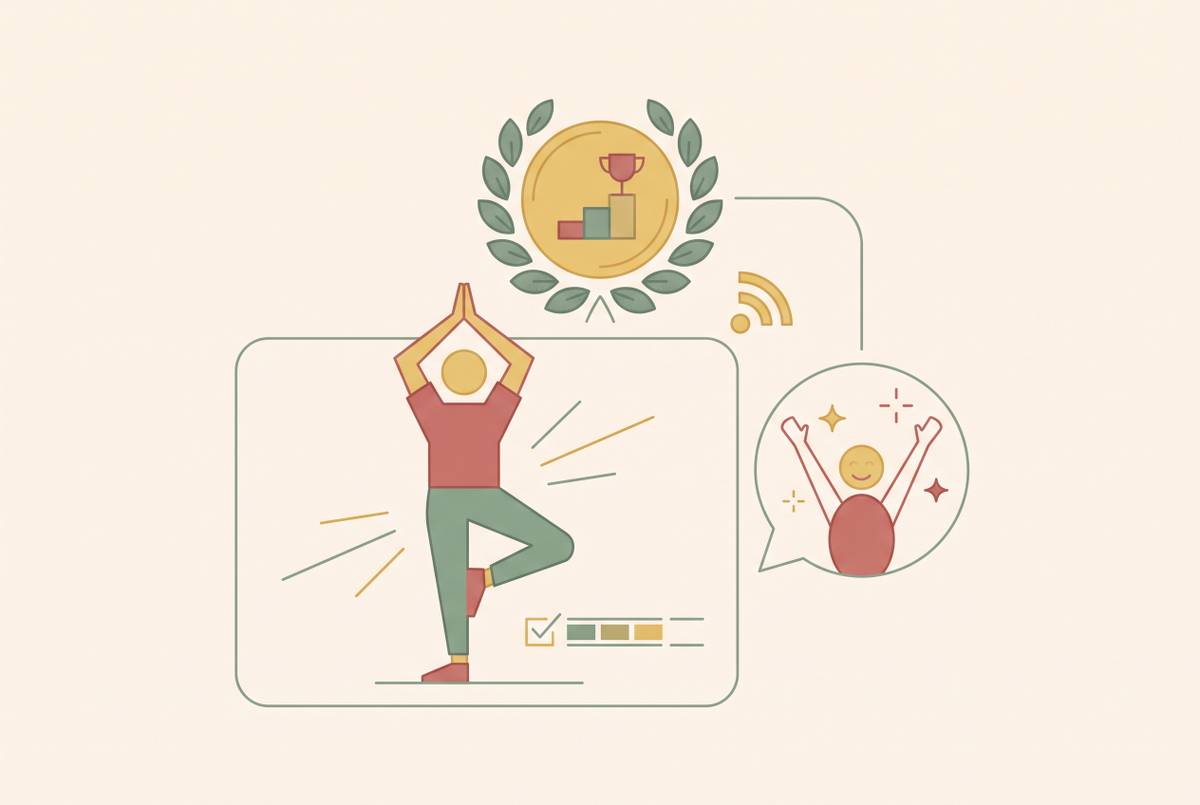
A photo check-in makes one basic question visible, which is whether each partner showed up. Each person sets a weekly workout goal and takes a quick photo with SweatCam when they exercise. Their partner sees it immediately. The flow does not require charts, performance stats, or a synced wearable, so the check-in stays separate from the work of analyzing a session.
That separation matters when the workouts differ. A beginner's twenty-minute walk and a seasoned lifter's heavy squat session can count equally as evidence of keeping a personal commitment. Neither person needs to translate their effort into the other's preferred metric.
Optional wagers add light stakes to that commitment. Someone who misses a weekly goal may have to buy dinner, while someone who meets it owes nothing. Dinner is a nudge.
The obvious objection is fair, though. A photo check-in is an honor system with a camera. Its purpose is to make showing up visible to someone who cares. There is also a practical drawback, since SweatCam's back-camera requirement can feel awkward in a public gym when other members appear in the background. That friction matters when choosing a check-in method both partners will actually use.
The asymmetry problem: when one partner is a gym regular and the other is not
Different fitness histories become a problem when an app treats togetherness as a requirement to do identical work. The experienced partner may want a demanding strength session. The beginner may need something more approachable and may not enjoy the same activities. A common plan can then become a compromise that fits neither person particularly well.
A practical model is to share warm-ups and slow-paced cardio, then split into individual strength work or mobility. The beginner does not have to keep up with a training history they do not have. The regular lifter does not have to abandon suitable training to count as supportive.
Each person's plan also needs room to change. Wedding Fit has a home and a gym version of every session, with swaps for when someone travels, has an injury or has limited kit. A couples setup needs that flexibility for two people.
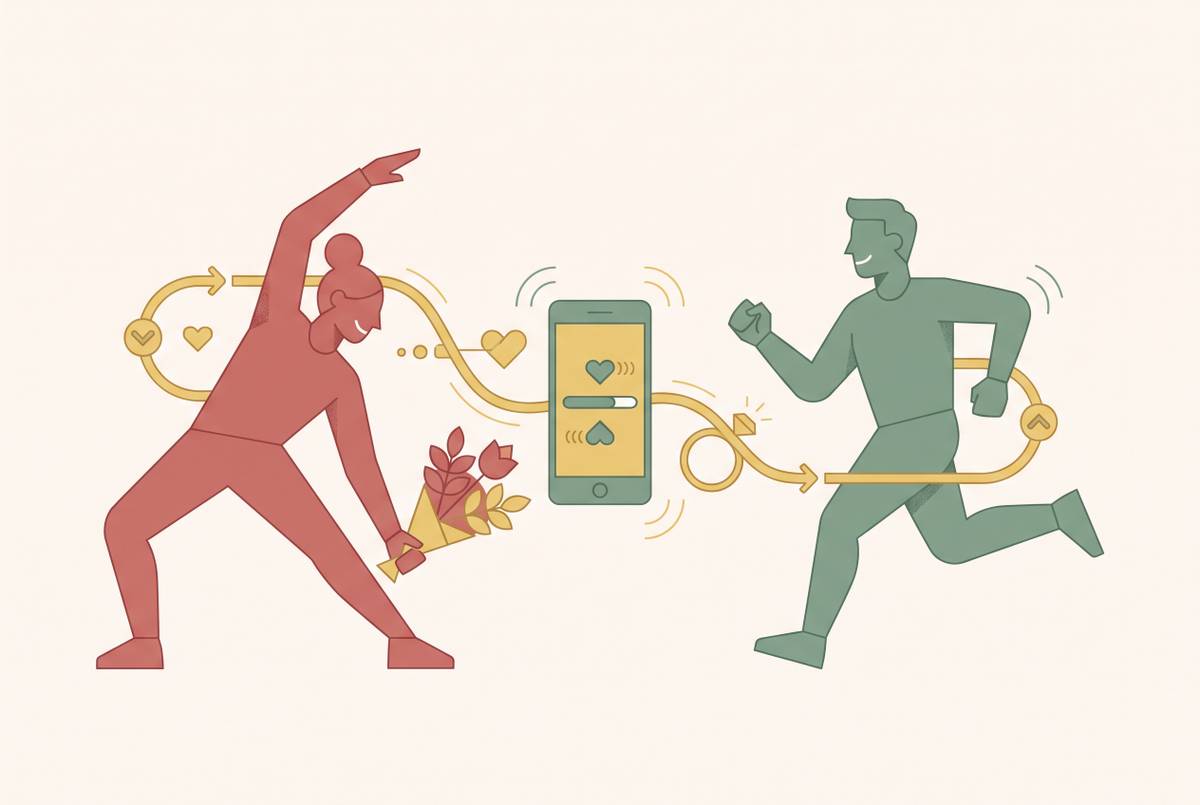
Schedules create a second kind of mismatch. Partners may exercise at different times during the week or from different locations, so shared accountability cannot depend on synchronized sessions. Photo check-ins let each person show how they are doing against their own goal and see the effort their partner puts in.
What is the best couples workout app for your shared habits and individual plans?
Partner Fitness Review helps couples keep a shared habit through SweatCam photo check-ins, weekly goals that partners can see, and optional wagers. Its role is accountability rather than workout instruction, with no performance stats or metrics. That makes it a fit for partners who already have suitable workouts or want to choose their content separately.
For the same shared-accountability need, Sweatmates is a relevant option because its weekly goals and partner-visible workout photos do not require matching training plans. This is the category to consider when the main problem is staying connected, including when partners exercise from different locations. The training-focused options have the job of resolving questions about what either person should do during a session.
Wedding Fit is explicitly a groom's program, with a personalized plan built around the groom's wedding date, body, and schedule. Its countdown dashboard shows weeks left, the training phase, and upcoming sessions. Home and gym versions of every session give that plan room to fit changing circumstances. Its FAQ acknowledges that a partner could use it. A couple could use it for the groom's workouts and use another tool to keep each other accountable.
Bride Fit by Fabrizio Fit Corp offers structured training, nutrition management, body measurement tracking, progress photos, and direct messaging with the Bride Fit team. Its wearable integrations include the Apple Health App, Garmin, Fitbit, MyFitnessPal, and Withings. It is available on iPhone, iPad, and Apple Watch. Those features fit someone who wants coaching and a detailed record of their training, but the app is built for one partner.
Bridal Body Fitness® from Stephanie Thomas Fitness lets people fit home or gym workouts into their schedule with little equipment. It also has nutrition coaching when needed, new recipes for each training phase, unlimited help through direct messages, and bonus vacation and core workouts. Its position is as a companion for the bride's wedding journey. Wedding Ready, delivered via Playbook, instead offers a six-week toning program blending strength training and Pilates for all levels, with a focus on lean muscle, core strength, and balance. It is also not partner-specific.
Training-focused products supply structure for an individual's sessions. A shared accountability tool connects the two people's follow-through. For many couples, separate workout content paired with that shared layer covers more of the need than expecting one product to do everything.
What to look for when evaluating any app against a couple's actual situation
Start with whether the app makes each person's effort visible in a way that feels supportive. Can a partner see a check-in, or does progress remain inside a private dashboard? Partner-visible photos address that need more directly than a streak counter or an automated push notification. The important distinction is who sees the commitment and what that visibility means to both people.
Then ask whether the app tolerates different workouts, durations, and intensities. Each person should be able to follow a plan that fits their fitness level without being judged against how long the other has trained. The app should also let them work out at different times and still keep their shared routine. If connection disappears whenever the couple cannot train together, the app is solving only part of the problem.
Next, consider how much work the system asks for during peak planning months. A weekly goal and a photo set a lower logging burden than a daily macro log and a synced wearable. One partner may need to track their training in more detail, but both people should be able to keep the shared habit without doing that extra work. For workout content, stress- and recovery-responsive AI features can complement partner accountability.
Finally, look at what happens when someone misses a goal. The useful response is reflection, and optional wagers should remain light enough to support it. An app that makes one partner feel watched or guilty is working against the relationship it is supposed to support. The test is whether both people want to return, including after an imperfect week.
The right setup is one both partners can keep using through six to twelve months as the demands on them change. It gives each person room to train differently while keeping the commitment shared. That routine is more likely to carry into married life than a plan held together only by a deadline.