Why Engaged Couples Are Replacing Solo Fitness Trackers With Shared Accountability Apps Before the Wedding
Partner accountability transforms wedding fitness from solo tracking into a daily connection ritual.
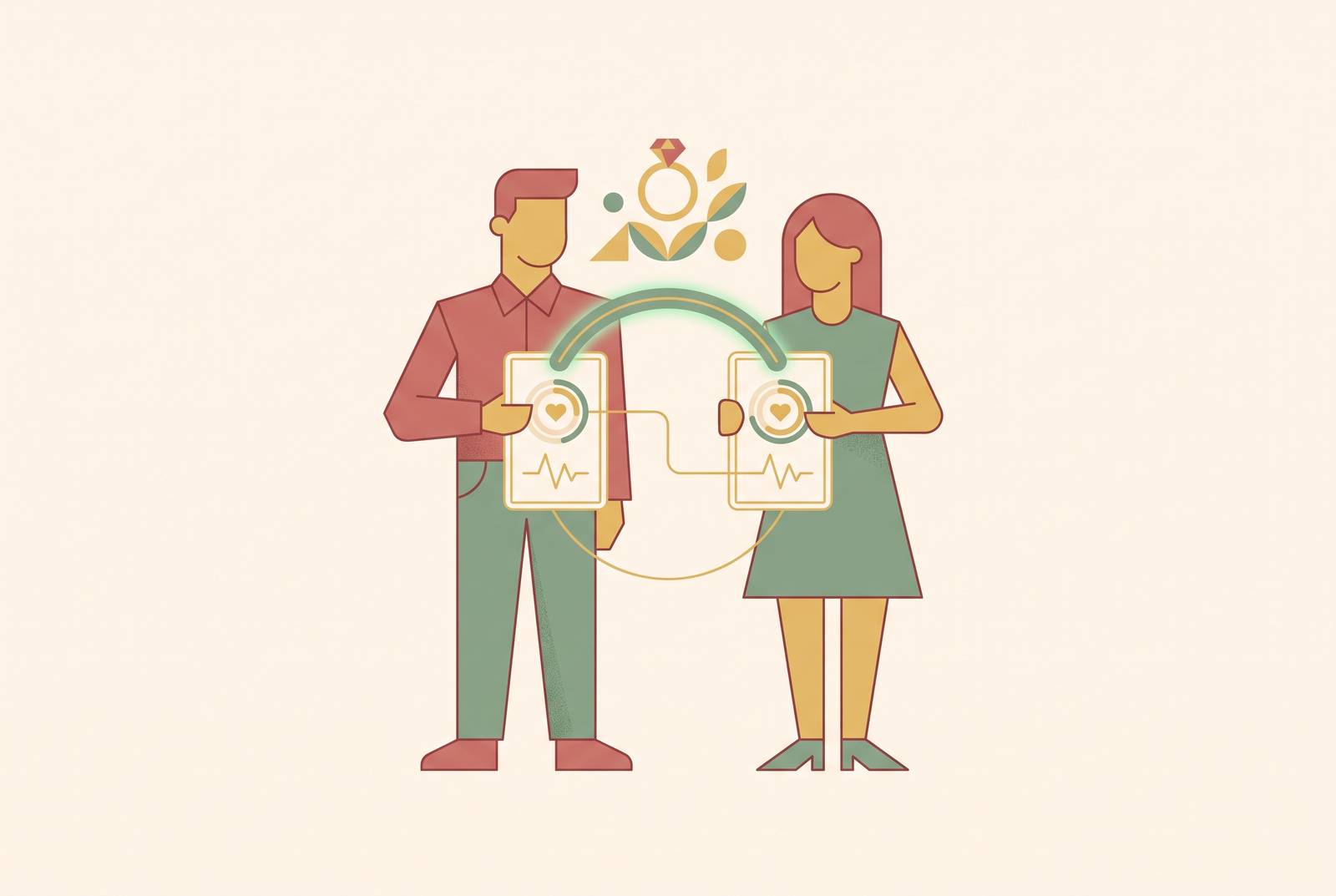
Engaged couples are replacing solo fitness trackers with shared accountability apps, and the reason is simple: a step count never texts back. The shift is toward tools that put both partners in the same system, treating pre-wedding fitness as a bonding habit rather than a private chore. The result is consistency that lasts longer than any 12-week bridal bootcamp.
Why engaged couples are leaving solo fitness trackers behind before their weddings
The engagement period runs around 15 months on average. That is a long runway for building a habit, far longer than most fitness apps are designed for. Couples have figured this out, and they are using the window differently now.
Wedding fitness preparation has become a standard part of getting ready. It sits alongside venue tours and tasting menus as a line item on the pre-wedding checklist. But the direction of that preparation has shifted. Rather than each partner managing a private tracker, couples are moving toward tools that put both people in the same system.
You see it in the way couples talk about their workouts now. The quiet morning gym session becomes something the other person knows about before lunch. The shift is not about tracking more data. It is about making fitness part of the relationship's daily texture during a period when both partners are already building shared habits.
Why solo fitness trackers fail before weddings for the same reason they fail everywhere else
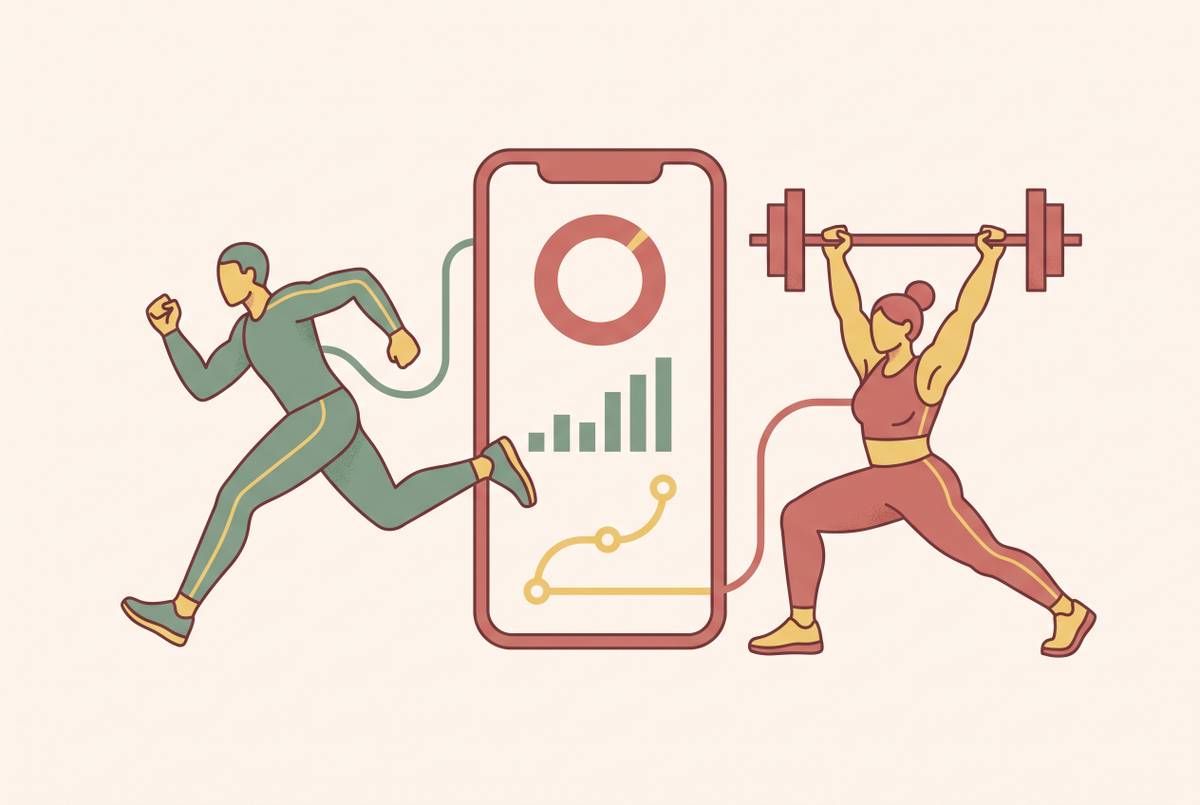
Solo trackers optimize for measurement. Steps, calories, heart rate zones. They collect data well. But measurement does not create accountability to another person, and accountability is what most people actually need to keep showing up.
The pre-wedding context makes this flaw worse. Appearance pressure runs high. Time gets compressed by planning demands. Motivation swings unevenly across the engagement. A tracker that just counts your steps offers nothing when you are exhausted from a week of vendor emails and the last thing you want is the gym.
Flamme's couples workout app comparison states plainly that partner accountability measurably improves exercise adherence. Training with a partner beats training alone for consistency, even when partners never share a single workout. The best solo tracker cannot replicate the effect of someone who will notice if you disappear. That is the structural gap that shared accountability tools fill.
Habit science adds another problem. A new health habit takes at least two to five months to become automatic, far longer than the 21-day figure you often hear. Solo trackers offer no support through that difficult early window. They assume you already have the motivation to open the app and care about the numbers.
Some people prefer privacy in their fitness, and that is a legitimate preference. External accountability can feel controlling if it is not wanted. The shift here is about supportive visibility between two people who already trust each other. It is not surveillance, and it is not public performance.
How a shared photo check-in turns "I should work out" into something a partner actually sees
The photo-as-proof format solves what a checkbox cannot. It makes the workout real and visible to another person the moment it happens. The workflow is deliberately simple: set a weekly goal for how many days to work out, log with a photo, and see each other's progress. No workout type tracking, no duration logging, no performance metrics required.
Sweatmates demonstrates how this mechanic works in practice. Partners log workouts with a photo, creating an instant moment of visibility and connection rather than a silent checkbox. The photo does two things at once. It eliminates the self-reporting gap, because you cannot just check a box. And it creates a micro-moment of connection. One partner posts a gym photo mid-morning. The other sees it at work. The habit becomes part of the relationship's daily texture. It's not even about fitness at this point it's just another way we stay connected." That is the mechanic working in a real relationship.
The home-screen widget surfaces the partner's latest SweatCam photo as a persistent ambient cue. The workout stays visible between sessions, not buried in an app. You glance at your phone and see your partner in workout clothes, and suddenly your own plan for the day feels more concrete.
The light-stakes layer reinforces this. If a partner misses their weekly goal, they owe a simple agreed wager. Dinner, a chore, something small. Hit the goal and you are safe. Accountability without humiliation.
Lock-In Mode takes it a step further. Once a week, a partner who has already worked out can lock the other's distracting apps until they work out too. It is a playful escalation that keeps the stakes social rather than punitive. Think of it as the digital equivalent of your partner dragging you out of bed for a run, except they can do it from the office.
Why the connection itself — not the workout data — is what makes the consistency stick
Shared accountability apps work not because they are better fitness tools but because they are relationship tools that happen to build fitness habits. That is the core insight, and it reframes the whole category. Sweatmates user reviews on both the App Store and Google Play consistently describe the app's value in relational terms. Consistency was the hardest part, but the app makes it fun. Users look forward to seeing their partner's photo. The comments under photos function as a form of daily contact.
Behavior change happens across all the hours of a week, not just the one hour of a shared gym session. A photo check-in fires a moment of connection throughout the week. It is not confined to workout time. That is the difference between a fitness app and a relationship tool.
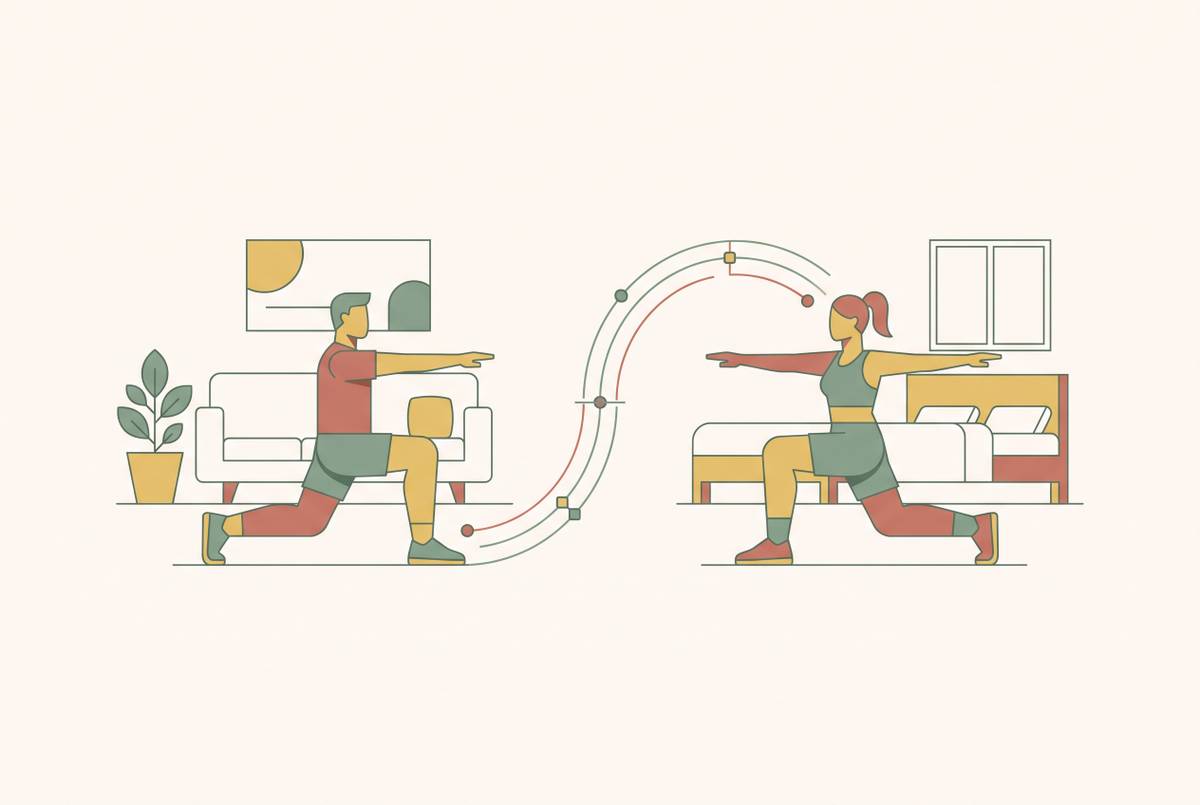
This matters for engaged couples because partners often train at different times, at different gyms, or in different disciplines. One runs at dawn. The other does strength training after work. The photo bridges that separation without requiring synchronized schedules.
Flamme's couples workout comparison makes the same point from a different angle. For couples where the goal is movement as couple time rather than performance, a shared visible habit often outperforms feature-rich fitness apps on adherence. The engagement period front-loads relationship investment. Couples are already actively building shared habits and rituals, from choosing a first dance song to deciding how to handle holidays. Fitness accountability fits into that existing pattern.
What the current landscape of wedding-adjacent fitness apps actually offers couples
The wedding fitness app landscape has fragmented into distinct categories. Understanding what each one is actually built to do matters more than downloading whichever app has the best screenshots. Sweatmates is built for exactly two people. The entire design is SweatCam photo check-ins, weekly goals, and light stakes. It launched as a Health & Fitness app on December 21, 2025, and is highly rated on both the App Store and Google Play. It works best for couples who want fitness to strengthen their daily connection and are not primarily focused on structured programming. The subscription is available through the App Store listing.
WedCut takes a different approach. Built by developer Paul Lemon, it is a group nutrition accountability app for the whole wedding party. It runs on iPhone, iPod touch, Mac, and Apple Vision Pro, with a free trial period that requires no card, followed by a monthly subscription or a one-time group sponsor payment covering through a set period after the wedding. Each member logs against private targets. Weight numbers are never shared with the group unless the user chooses. Progress shows as percentages. The app blocks under-age sign-ups, surfaces a safety check-in for rapid weight loss, and links to recognized support services in the UK, Ireland, US, Canada, Australia, and New Zealand. It has no streaks and no shame design, with soft restart cards, a Go Quiet toggle, and plateau coaching that names the stall without shaming.
Hoola offers personalized bridal workout programming with unlimited on-demand short classes covering strength, cardio, flexibility, and mindfulness. It has a seven-day free trial, then $29.99 per month. It works for individual brides or grooms who want structured, adaptive programming tied to their wedding date. It does not have a couples accountability layer.
Bridal Fitness by Anna D. provides wedding-specific coaching with two program options: a 12-week full-body bootcamp or a four-week "last-minute sculpt." Pricing is $14.99 per month, or one-off plans at various price points after a seven-day free trial, on iOS and Android. It includes private bride-only forums with weekly challenges for community accountability.
Bride Fit, developed by Fabrizio Fit Corp, offers expert coaching with community on iOS. It is free to download and includes structured training plans, workout scheduling, nutrition tracking as prescribed by the Bride Fit Team, body measurements, progress photos, real-time support messaging, and push notification reminders. It syncs with Apple Health, Garmin, Fitbit, MyFitnessPal, and Withings. It is rated 5.0 from 4 ratings, with version 8.18.7 current as of September 2026.
Each app serves a different situation. The couple-focused option treats fitness as a shared practice. The group nutrition option brings the whole wedding party into the effort. The coaching options serve individuals who want expert programming tied to a wedding date.
The real trade-offs couples should think through before choosing a shared accountability tool
Shared accountability tools work best when couples configure them honestly around their actual differences in experience, motivation, and relationship with their bodies. The trade-offs are real, and each has a workaround. Photo check-ins and body image pressure deserve careful attention. Wedding prep amplifies appearance pressure. A photo-based accountability mechanic sits differently for someone already navigating body image concerns. The distinction worth drawing is that Sweatmates' photo mechanic is workout evidence rather than appearance documentation. You photograph the gym or the run, not your body. WedCut's explicit eating disorder support links and privacy-first design offer another model for how apps can acknowledge this sensitivity. Couples should discuss this before starting, not after the first photo lands wrong.
Asymmetric fitness levels can be a problem. Apps built for exactly two people can mask divergent effort levels if one partner is a seasoned exerciser and the other a beginner. The weekly-goal system treats both equally, which can feel unfair or discouraging to the less experienced partner. The solution is upfront goal-setting. Each partner sets their own weekly goal independently rather than mirroring each other's. For couples with very different preferred activities, running versus strength versus yoga, look for tools that build a separate plan for each person rather than requiring a shared program.
The stakes mechanic interacts with relationship dynamics. Light wagers keep accountability social and low-pressure for most couples. But if one partner already carries more domestic load, "owe a chore" lands differently. Agree on the wager and the comeback rule before anyone needs it. The group cheers the next check-in rather than holding a trial. Shame makes people hide, and hiding kills accountability. Missing a goal should prompt reflection, not punishment. This is especially important during the high-stress weeks of wedding planning when skipping a workout is often the rational choice.
Privacy in public gyms is a genuine concern. Some gyms have policies about photography. Some people simply do not want a camera out mid-workout. Couples should agree on where and how the photo gets taken, and respect that the answer might change depending on the day.
How to start a shared fitness habit during engagement that will actually last past the wedding
The couples most likely to build a lasting habit before the wedding are the ones who design for consistency from day one, not for performance. The framework is straightforward once you accept that showing up beats optimizing. Start with a goal both partners can honestly hit in the first week. Not the goal you aspire to, but the one you can actually reach given current schedules. A completed week is the foundation, not the ceiling. You can raise the bar later. You cannot raise a bar that was never set.
Set individual weekly goals rather than a shared target. Sweatmates' model of each partner choosing their own number of workout days respects different starting points while keeping both people in the same visible system. If one partner works out four days a week and the other manages two, both can succeed without either feeling dragged down or left behind.
Use the engagement window strategically. The front half is for building the habit. The back half, as wedding logistics intensify, is for protecting it. The goal shifts from growth to maintenance, and that is enough. A 20-minute walk during the week of the seating chart is a win.
Treat the photo as the habit, not the workout. Posting a SweatCam image of a 20-minute walk counts. The point is showing up and being seen, not performing. The photo is the commitment device. The workout is almost secondary.
Agree on the comeback protocol before anyone needs it. What happens when one partner has a bad week is the most important design decision a couple makes. Decide it when both are calm and motivated, not mid-miss. The answer is almost always: post a photo tomorrow, no speech required.
Couples who start within the first month of engagement embed habits earlier and more durably than those who wait for a "right time." There is no right time. There is only the window you have, and it is already open.
The fitness habit built before the wedding is the one most likely to continue after it. Shared habits are easier to maintain than isolated resolutions. A routine established during the high-motivation window of engagement carries forward into marriage, long after the dress fits and the photos are framed. The wedding is the occasion. The connection is what makes the consistency stick.