How Brides and Grooms Use Diet and Exercise Accountability With Their Partner to Stay on Track for the Wedding
Partners who train together stay committed longer than those working out alone.

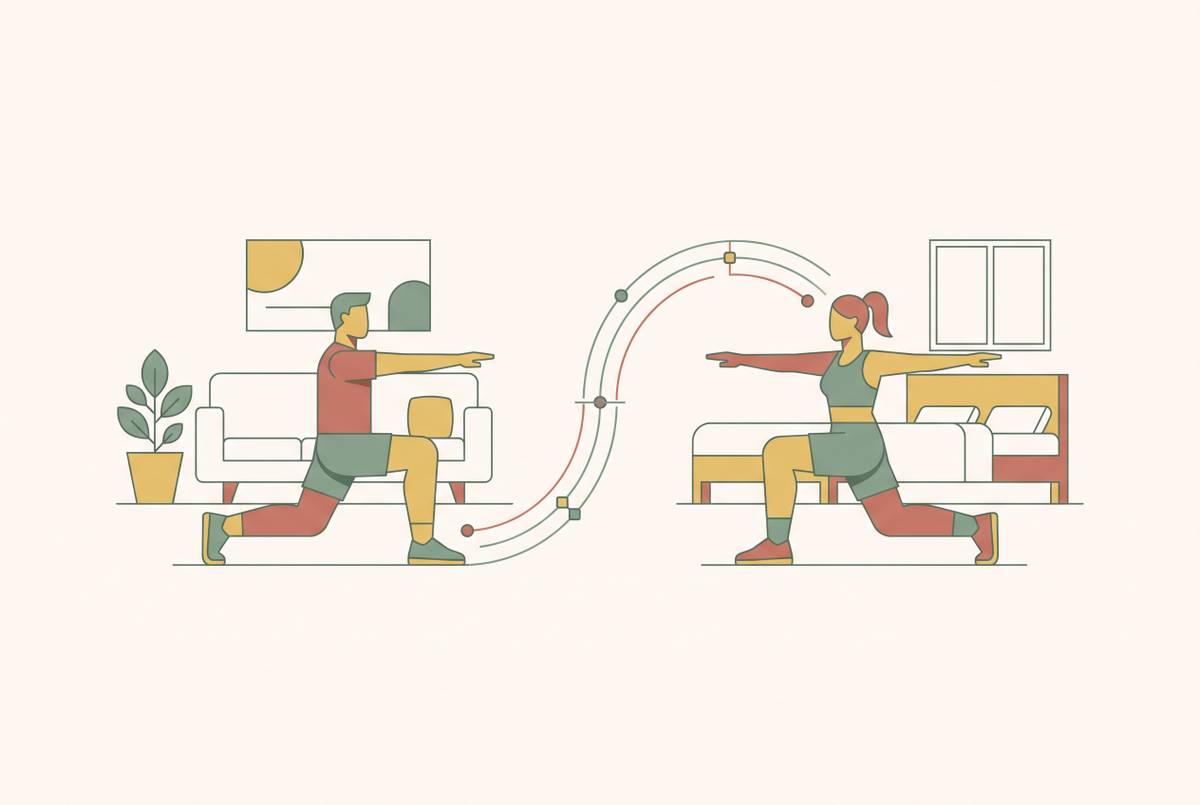
To stay fit together in a long-distance relationship, build a shared routine with workout photo check-ins, regular chats, and support for each other, even when gym schedules differ. For brides and grooms preparing for a wedding, that same accountability loop makes consistency easier than willpower alone. Even across different time zones, the goal is to see each other showing up.
Why couples who train together stay on track longer than those who go it alone
Couples who joined a fitness program together had a dramatically lower dropout rate than married people who joined alone. That contrast matters because a solo plan can quietly disappear when work gets busy and wedding decisions start multiplying. A shared plan has another person attached to it, someone who notices whether it is still happening. The accountability loop is therefore part of the plan itself.
The BYU study published in August 2026 in Family Relations found that roughly a third of couples in its sample exercised together, although the majority of individuals exercised. That gap separates having a fitness habit from building one as a couple. A shared system, such as Sweatmates or regular partner check-ins, makes individual effort visible to the other person. Partners who live apart can use that system to work toward a shared goal while they work out on their own.
The BYU study also found that couples who exercise together say they communicate better, work through conflict better, and have less stress in their marriage than those who work out separately. The Kohler motivation gain effect helps explain why people try harder when they work alongside a partner who can do more than they can. Engagement gives both partners a clear goal and a set deadline, something they can agree on before the seating plan starts testing diplomatic relations.
What "accountability" actually means in a pre-wedding fitness context
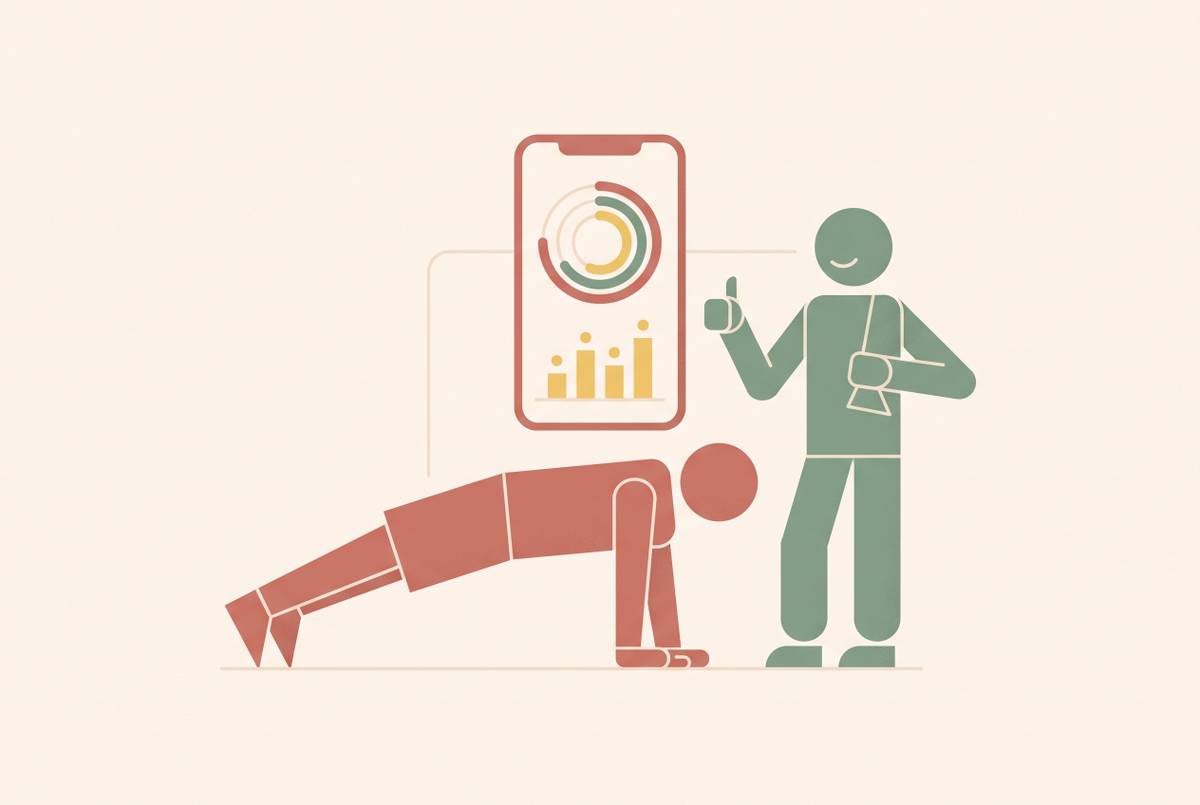
Accountability has three working parts, which are visibility, regular check-ins, and a light-stakes consequence. Visibility means a partner can see whether the workout happened, rather than hearing a general promise to exercise more. Regular check-ins set a time to talk about those workouts, so neither partner has to remember to ask. A light-stakes consequence, such as dinner or a chore, puts a small cost on missing a workout without making it a sign of bad character.
The Hawthorne Effect describes why people may change what they do when someone is watching, even if that person says nothing. Both partners participate as peers, and neither acquires a clipboard or the right to issue performance warnings. The check-in asks whether they did what they agreed to do, without asking either partner to judge how hard the other tried.
Sweatmates brings these three parts into one place through workout visibility, weekly recaps, and friendly wagers. Couples can also send photo messages and set times to talk so they can both see how the plan is going. The tool matters less than the agreement it carries. The consequence should keep the loop engaging, while the tone stays supportive.
How to time the plan so the accountability loop has room to work
The wedding calendar has a fixed destination, but the fitness calendar needs room for repetition. Starting three to six months before the wedding gives both partners time to get used to a shared routine so they can stop working it out anew each day. A six-to-nine-month runway allows more room for sustainable changes in muscle tone and energy. Neither window is an invitation to spend the early months designing the perfect plan while the trainers remain in their box.
The first dress or suit fitting gives the couple an earlier milestone within that runway. Reaching the target shape by that fitting, then moving into maintenance, keeps the wedding itself from becoming the deadline for every physical change.
Ordinary life will still interfere. The “never miss twice” rule belongs in the plan from the start. One missed session calls for a return. Several months give both partners room to absorb interruptions without treating each one as a crisis. That extra time helps when vendor calls, tastings, and group chats begin eating the evening.
Session length must account for that pressure, because an available hour on paper is not always an available hour in wedding season. Short enough to repeat is more useful than impressive enough to announce. For long-distance couples, the start can be shared even when the workout hours differ. The runway only becomes a joint strategy when both partners commit to the same start date.
How to stay fit together in a long-distance relationship with workouts both partners can keep
A shared workout structure needs to be a floor both partners can stand on. A balanced weekly rhythm includes two to three strength sessions, two cardio sessions, one mobility or yoga session, and one to two genuine rest days. These activities can fit within the week without each requiring a separate, demanding appointment. The structure has to balance effort with recovery and fit both partners' starting points.
For beginners, the entry point is regular cardio a few times a week, starting slowly. Strength work can use foundational movements, including squats, lunges, rows, presses, deadlifts, and planks. These movements scale across experience levels, so a beginner and a seasoned partner can follow the same broad session at different loads.
Nor does it require identical workouts or matching time zones. Partners can work out on their own and check in to the same system, keeping a shared rhythm without forcing their calendars into a wrestling match. Shared hikes, dance lessons, and Pilates classes offer ways to combine movement with time together when that is possible. When it is not, the commitment remains mutual even though the sessions happen apart.
Repeatability is the deciding test because an overly intense plan can leave someone sore, burnt out, or injured in the final weeks. Keeping track of sessions together, celebrating small wins, and keeping goals simple makes the routine easier to stick with. Whether couples use shared check-ins or Sweatmates, the system should help them stick to what they can manage without pushing them to do more. The plan succeeds when both partners can return to it over months.
Why photo check-ins form the habit faster than progress tracking
One partner posts a sweaty mirror photo at 7 a.m., and the other sees it and heads to the gym. That small scene captures the purpose of a photo check-in. It makes a partner's commitment tangible at the moment another person is deciding what to do. In different time zones, the same photo can link partners' separate workout times without their having to join a live session.
SweatCam turns that gesture into a workout check-in that the other partner can see immediately. A photo from the gym entrance at 6 a.m. communicates that someone arrived without demanding pace comparisons, calorie counts, or data entry. SweatCam is available on both iPhone and Android and is designed for exactly two people.
The advantage over progress tracking is clearest in the early weeks, when showing up is the behavior being built. The completion effect gives the act of checking in its own sense of completion, reinforcing the loop. A beginner's first visit and an experienced partner's heavy lift can use the same gesture.
There is an obvious objection, because someone could photograph the entrance and skip the workout. A photo's role is to make attendance visible within a relationship built on trust that the training session was completed, and it should be sold as such. Adding more metrics would change the bargain and restore the friction the photo removes. The useful response to a missing check-in is a partner noticing.
Handling nutrition accountability between partners without it becoming controlling
Food accountability needs more care because eating decisions are frequent and often invisible to a partner. Kayley George, registered dietitian formerly at Bells & Barbells Wedding Fitness, identifies accountability as key to helping brides and grooms stay with their diet. Her point is that another person can help someone pick the plan back up after a slip.
Commenting on a partner's plate, tracking their intake, or treating missed meals as failures turns encouragement into control. Even with a wedding deadline, each person has the right to decide what they eat. This risk deserves a clear boundary because the same visibility that helps with workouts can become intrusive around eating. Support should make food decisions easier to manage.
It is safer to share meals, plan grocery runs, and check in on how each person feels without asking them to report what they ate. Whole, nutrient-dense foods most of the time leave room for cake tastings and celebratory dinners. Restrictive crash dieting instead risks “bridal burnout” precisely when wedding planning already demands energy.
Couples who live apart can plan food together while leaving each other free to decide what goes on their plate. The presence-over-performance mindset applies here too, with attention on participation in the routine. When partners can cook together, a weekly meal prep session puts that idea into practice. It combines a joint activity, accountability, and stress reduction in one repeatable part of the week.
What to do when one partner loses momentum
When one partner's check-ins stop, the first task is to make returning easier. A low-key invitation to go together tonight does that more directly than asking for an explanation of the entire missing week. For partners living apart, the check-in can still be an invitation back into the shared routine.
A friendly wager can keep this moment small. Missing a weekly goal might mean buying dinner or doing a chore, rather than having a heavy conversation about failure. But the wager only serves its purpose while both partners experience it as play. Once it becomes a way to apply pressure, it is no longer supporting the peer relationship the plan needs. The consequence should be lighter than the barrier to coming back.
A reduced week during a stressful planning period is not the same thing as abandoning fitness. The BYU research published in Family Relations found that even walking together creates an opportunity to communicate. When the workout plan falls apart, that makes a walk a fallback. It preserves time together without requiring either partner to pretend there is energy for a harder session.
Over time, showing up together can become part of how the couple understands itself. That shared identity gives the habit a reason to continue after the fittings, photographs, and wedding deadline have passed. The habits built before the wedding are the ones most likely to travel beyond it because both partners already know how to return after an imperfect week. The wedding is a launchpad, and the useful achievement is a routine neither person has to carry alone.